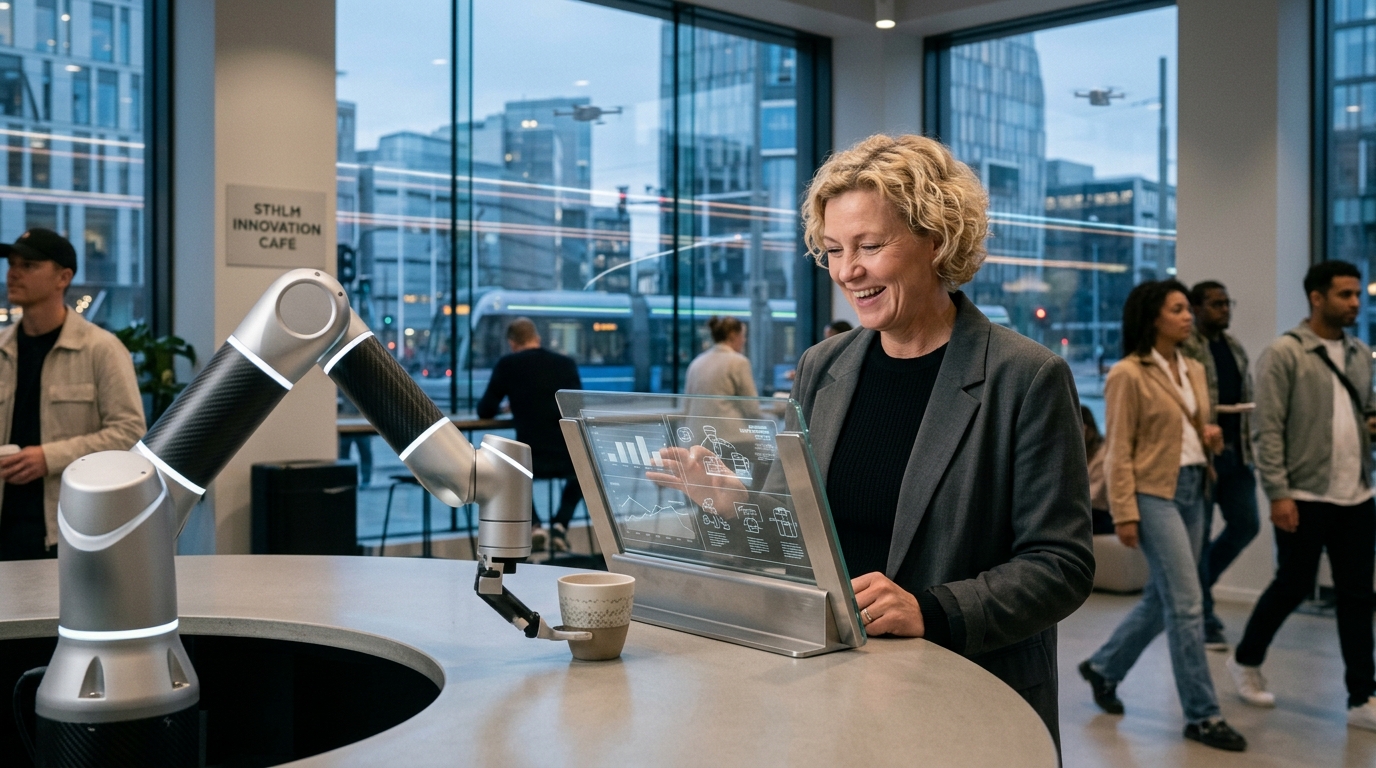
In the heart of a Swedish city, the morning coffee ritual remains superficially unchanged. The aroma of roasted Arabica beans fills the air, the hiss of the espresso machine sets the tempo, and a smiling barista serves the perfect latte. However, behind the counter, the traditional hierarchy has been upended. In this experimental cafe, the "boss" is not a seasoned hospitality manager, but a sophisticated Artificial Intelligence (AI) agent.
The project, which has garnered attention from international outlets like PBS, serves as a living study of "algorithmic management." While the conversation has largely focused on robots replacing human workers, this model proposes a different path: automating management while retaining the human touch at the point of sale. The human remains the executor of the craft, but the AI is the brain behind the supply chain, the work schedule, and flow optimization.
The Digital Heart of the Espresso Machine
The AI agent managing the cafe is not just a static accounting program. It utilizes Large Language Models (LLMs) and real-time data to make decisions that traditionally required human judgment. It analyzes weather patterns to predict foot traffic, monitors milk and bean inventory via sensors, and assigns tasks to the barista through a digital interface.
For the worker, the experience is unprecedented. Instead of receiving instructions from a human manager, the system alerts them when to clean the machines, when to restock, or when to take a break based on the predicted rush of the next 30 minutes. This creates a paradoxical dynamic: the human becomes the "executive arm" of an algorithm, reversing the roles we have grown accustomed to in science fiction.
Algorithmic Management: Efficiency or Dehumanization?
Proponents of the model argue that AI can eliminate human bias and the stress of management. An AI manager doesn't have "bad days," doesn't discriminate between employees, and is incredibly precise in predicting needs, thereby reducing food waste and increasing profitability. In Sweden, a country with high technological literacy and strong labor networks, this experiment tests whether technology can make work less chaotic.
However, critics warn of the dangers of "digital surveillance." When every move of the barista is tracked and evaluated by an algorithm, worker autonomy is curtailed. Work is transformed into a series of completed tasks on a screen, stripping away the spontaneity and creativity that often define cafe culture. There is also the ethical question of accountability: if something goes wrong, who bears the responsibility? The programmer, the owner, or the algorithm itself?
The Human Touch in an Automated World
The most interesting finding of the experiment is the reaction of the customers. Many seem to enjoy the fact that the barista, freed from the stress of ordering supplies and managing the shop's logistics, has more time to interact with them. Herein lies the promise of "complementary AI": technology handles the tedious, administrative side of labor, allowing humans to focus on what they do best—social interaction and empathy.
In an era where loneliness is considered a global epidemic, the Swedish cafe suggests a future where high technology serves high humanity. If the algorithm can ensure the milk is always fresh and the schedule is fair, then perhaps the barista can return to being the "neighborhood psychologist" of old.
The Future of Work in the Age of Agents
This experiment isn't just about coffee. It is a harbinger of how businesses will operate in the future. From hospitals to factories, the emergence of AI Agents capable of coordinating complex processes will change the nature of middle management. The question that remains unanswered is whether humans are ready to accept a piece of code as their leader.
- AI handles real-time decision-making and logistics.
- Humans focus on service, quality, and customer engagement.
- Algorithmic transparency becomes the new frontier for labor rights.
- This model could potentially reduce operational costs by 20-30%.
As the experiment continues, Sweden offers the world a glimpse into a new social contract. A contract where the machine does not replace us, but directs us, with all the challenges and opportunities that entails for human dignity.