The Fourth Industrial Revolution (Industry 4.0) is no longer a theoretical concept discussed in academic circles; it is a living reality taking shape on factory floors worldwide. The recent highlight of a South Texas College (STC) graduate’s career path, who is now leading the integration of Artificial Intelligence (AI) in manufacturing, offers a unique glimpse into how technology is fundamentally altering the nature of work. This is not merely a story of machines replacing humans, but of the emergence of a new class of professionals: "new-collar" workers who blend technical craftsmanship with digital intelligence.
The Shift from Automation to Intelligence
For decades, industrial production relied on static automation—robots programmed to perform the same repetitive motion thousands of times a day. The introduction of AI is disrupting this paradigm. Today, machine learning allows systems to "learn" from sensor data, predict equipment failures before they occur (predictive maintenance), and adjust operations in real-time to optimize energy consumption and minimize waste.
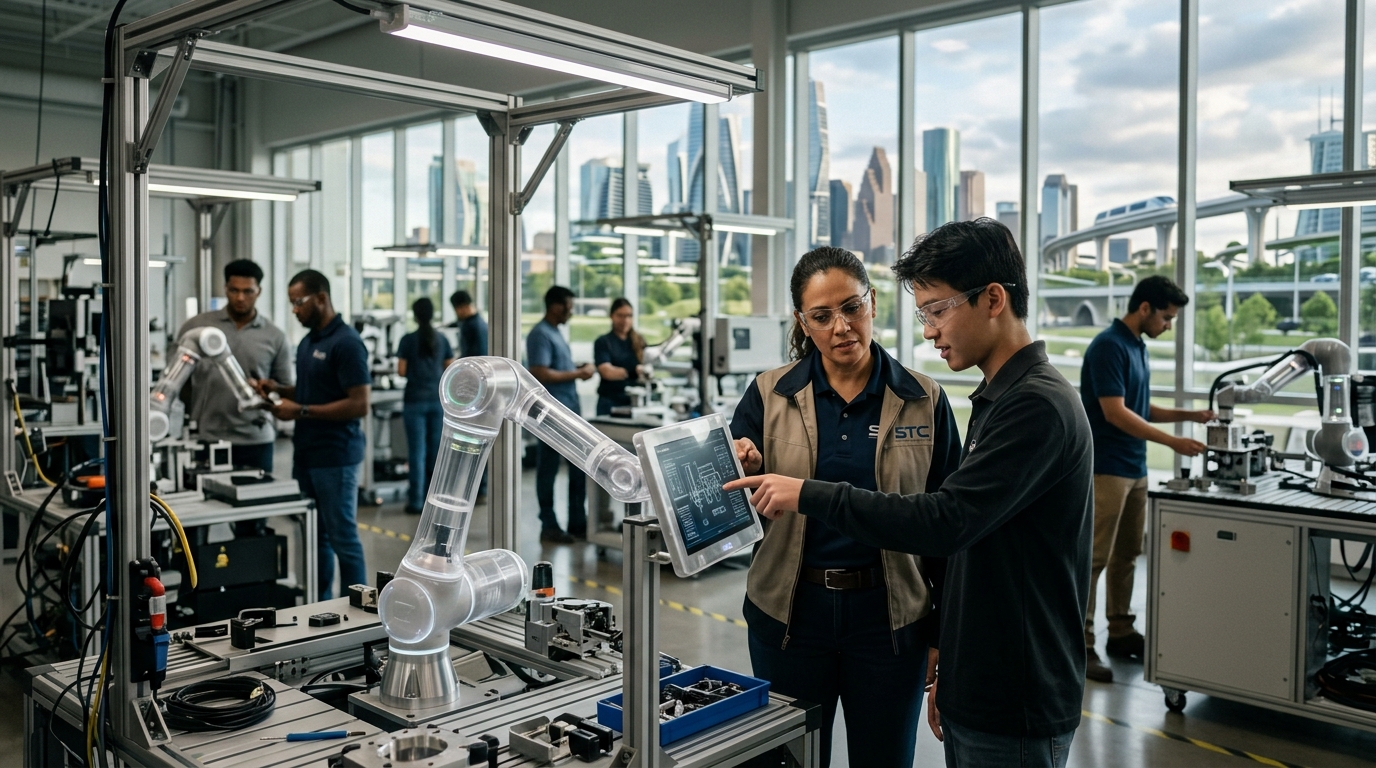
The STC graduate serves as a prime example of how specialized education can bridge the gap between traditional mechanical engineering and data science. At South Texas College, the Advanced Manufacturing Technology program is designed to teach students not just how to operate machinery, but how to interact with the algorithms that control entire production lines. This shift is essential as manufacturing moves from simple assembly to "smart" manufacturing.
The Role of Community Colleges in Democratizing AI
Discussions regarding Artificial Intelligence often center on Silicon Valley or elite research universities. However, the practical application of AI in the "real-world" economy is increasingly happening through institutions like STC. Community colleges serve as the primary pipeline for the workforce in industrial zones, such as the Rio Grande Valley in Texas, which is a critical hub for international trade and manufacturing.
"Education in Industry 4.0 is not just about learning to code; it is about understanding the flow of data within a physical environment," industry experts note.
The ability of a graduate to analyze data from a production line and propose improvements via AI models is what gives local businesses a competitive edge over cheaper, but less technologically advanced, offshore factories. This reinforces the trend of "nearshoring," where companies move production closer to final markets (like the US) to mitigate supply chain risks and leverage a highly skilled, local workforce.
Challenges and the Future of the Workforce
Despite the prevailing optimism, the integration of AI in manufacturing brings significant challenges. The primary concern is the potential displacement of low-skilled workers. While AI creates new roles for those with the right skill sets, those who remain tethered to traditional methods risk obsolescence. The STC case study suggests that the solution lies in aggressive and continuous reskilling.
- Predictive Maintenance: Reducing downtime by up to 50% through predictive algorithms.
- Quality Control: Utilizing computer vision to detect microscopic defects that the human eye might miss.
- Collaborative Robots (Cobots): Machines that work alongside humans, taking over hazardous or repetitive tasks.
In conclusion, the success story of this graduate from South Texas is more than a local triumph. It is a roadmap for how education, technology, and industry can collaborate to build a more resilient and efficient economy. The future of manufacturing belongs to those who can speak both the language of machines and the language of data.