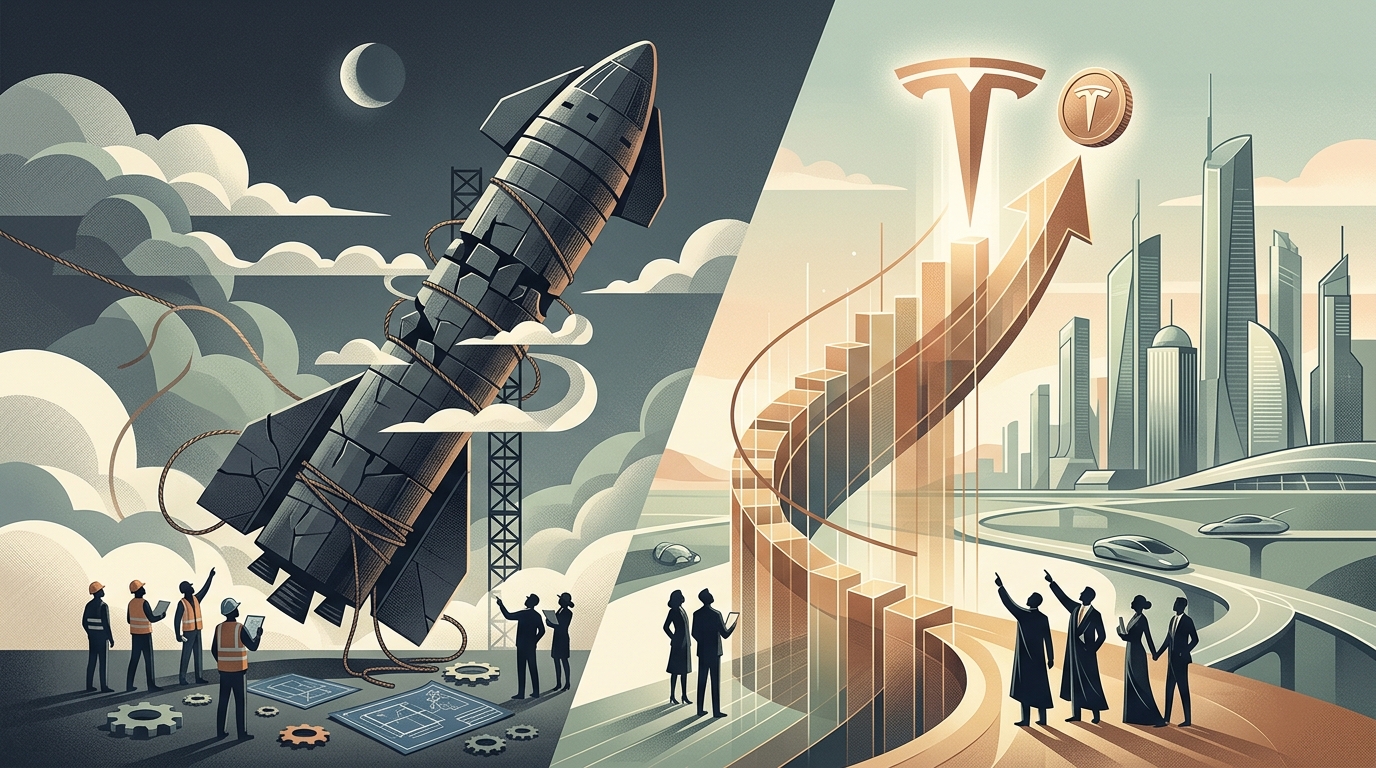
In the wake of the recent postponement of Starship’s highly anticipated test flight, the world's attention is fixed not only on the launch pads of Boca Chica but also on the boardrooms of Wall Street. SpaceX, the company that redefined the space industry, appears to be preparing for a move that could redraw the global economic map: an Initial Public Offering (IPO) that could potentially make Elon Musk the world’s first trillionaire.
The Technical Challenge of Starship
The launch delay, while disappointing for space enthusiasts, comes as no surprise to industry analysts. Starship is not just a rocket; it is the largest and most powerful launch system ever built, designed to carry humans and cargo to the Moon, Mars, and beyond. The complexity of the Raptor engines, the management of cryogenic fuels, and the challenge of full reusability demand absolute precision.
According to internal sources, the latest delay was caused by an anomaly in the upper stage pressurization system. Unlike in the past, where SpaceX followed a "fail fast, learn faster" philosophy, the stakes are now significantly higher. With NASA’s Artemis program relying on Starship to return astronauts to the lunar surface, SpaceX has no room for spectacular failures that could trigger political and regulatory setbacks.
The IPO of the Century
While engineers grapple with valves and sensors, investment bankers are laying the groundwork for what many are calling the "IPO of the century." Rumors of SpaceX—or at least its profitable subsidiary, Starlink—going public have intensified. The company's private market valuation has already surpassed $200 billion, but a public listing could skyrocket that figure to levels approaching half a trillion dollars.
- Starlink’s dominance in the satellite internet market provides the steady cash flow investors crave.
- A near-monopoly on cargo launches for the US government and private entities ensures long-term contracts.
- The technological gap between SpaceX and its competitors (Blue Origin, Boeing) remains vast.
Financial analysis suggests that if SpaceX maintains its current growth trajectory, Musk’s personal fortune—heavily tied to his ownership stake—could exceed $1 trillion by the end of the decade. This would grant him economic power exceeding the GDP of many developed nations, raising serious questions about the influence of a single individual on global affairs.
Geopolitical and Social Implications
SpaceX is no longer a mere commercial enterprise; it is a strategic asset for the West. The use of Starlink in the Ukraine conflict and NASA’s dependence on Falcon 9 rockets have made the company an integral part of US national security. An IPO would bring the company under stricter scrutiny, but it would also provide the capital necessary for Musk’s ultimate goal: the colonization of Mars.
"We are not just building a rocket; we are building a bridge for humanity’s future as a multi-planetary species," Musk stated in a recent address.
However, criticism remains sharp. Many argue that concentrating such wealth and technological power in the hands of one man is inherently dangerous. Concerns about space debris from thousands of Starlink satellites and the impact on ground-based astronomy are issues SpaceX will have to address as it transitions into a public company accountable to shareholders and global regulators.
The Future of the Space Economy
As we await the new launch window, it is clear that SpaceX has already won the battle of perception. Even with delays, the company remains the undisputed leader. The IPO will not just be a financial transaction but the validation of a new era where space is the next major economic frontier. For the global community, the challenge is not to remain mere spectators in this trillion-dollar race but to find ways to participate in the burgeoning space value chain.