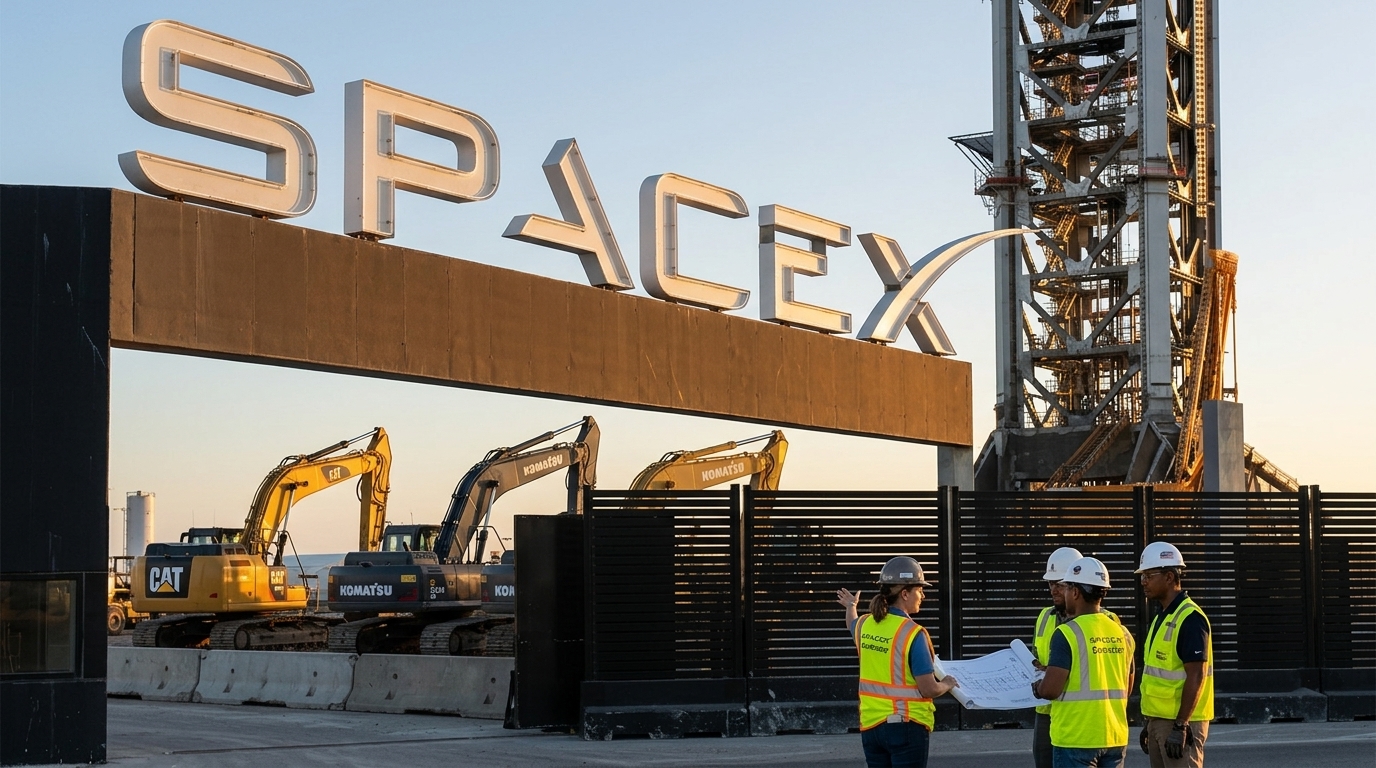
In a move that further cements SpaceX’s dominance within the U.S. military-industrial complex, Elon Musk’s aerospace giant has secured a staggering $2.29 billion contract from the U.S. Space Force. The project, designated as the Space Data Network (SDN) Backbone, aims to construct a sophisticated data infrastructure in Low Earth Orbit (LEO), facilitating instantaneous communication between sensors and weapon systems on a global scale.
This award is not merely a financial windfall for SpaceX; it represents a fundamental shift in how the Pentagon perceives data security and decision-making speed on the battlefield. The SDN Backbone will leverage inter-satellite optical links (laser crosslinks), allowing data to traverse space at the speed of light, bypassing the latency and vulnerability of traditional ground-based relay stations.
The Architecture of Next-Gen Warfare
The SDN Backbone serves as the central nervous system for the Proliferated Warfighter Space Architecture (PWSA). Moving away from a few, large, and vulnerable satellites, the Space Force is pivoting toward a resilient mesh of hundreds of smaller satellites. SpaceX, through its dedicated military division, Starshield, will build and deploy this network, drawing heavily from the technological foundations of its commercial Starlink constellation.
The technical hurdles are significant. The network must be inherently jam-resistant and feature national-security-grade encryption, all while remaining interoperable with legacy Pentagon systems. The ability to transmit data from a drone in a contested environment directly to a command center in the U.S. or a destroyer at sea within milliseconds fundamentally transforms the Joint All-Domain Command and Control (JADC2) doctrine.
Starshield: The Militarization of Innovation
The establishment of Starshield in 2022 was the first clear signal that SpaceX was looking beyond the commercial market and Mars colonization toward the lucrative and strategic sector of national defense. While Starlink serves consumers and enterprises, Starshield is a closed, government-owned and operated system. This new contract for the SDN Backbone confirms that SpaceX has outpaced traditional defense titans like Lockheed Martin and Northrop Grumman in terms of deployment speed and cost-efficiency.
However, the increasing reliance of the United States on a single private entity—led by a figure as polarizing as Elon Musk—has sparked intense debate in Washington. SpaceX’s unrivaled launch cadence provides a strategic advantage that no other nation or company can match, yet it also creates a potential single point of failure for national security infrastructure.
Geopolitical Implications and the New Space Race
This initiative by the U.S. is a direct response to the rapid advancements made by China and Russia. Beijing is currently developing its own mega-constellation, "Guowang," recognizing that information superiority in space will dictate the outcome of 21st-century conflicts. The SDN Backbone is designed to make American forces immune to disruptions of undersea cables or terrestrial telecommunications.
Per the contract timeline, the first operational prototype of the network is expected to be in orbit by 2027. Between now and then, SpaceX must demonstrate that it can safeguard the network against sophisticated cyberattacks and physical threats, such as anti-satellite (ASAT) weapons. The success of the SDN will determine whether space remains a support domain or evolves into the primary theater of future warfare.
- The SDN Backbone contract is valued at $2.29 billion.
- The technology utilizes laser optical links for high-speed, low-latency data transfer.
- The network will interconnect sensors, drones, and weapon systems in real-time.
- A functional prototype is slated for deployment by 2027.
- SpaceX is now the primary pillar of U.S. space-based defense infrastructure.