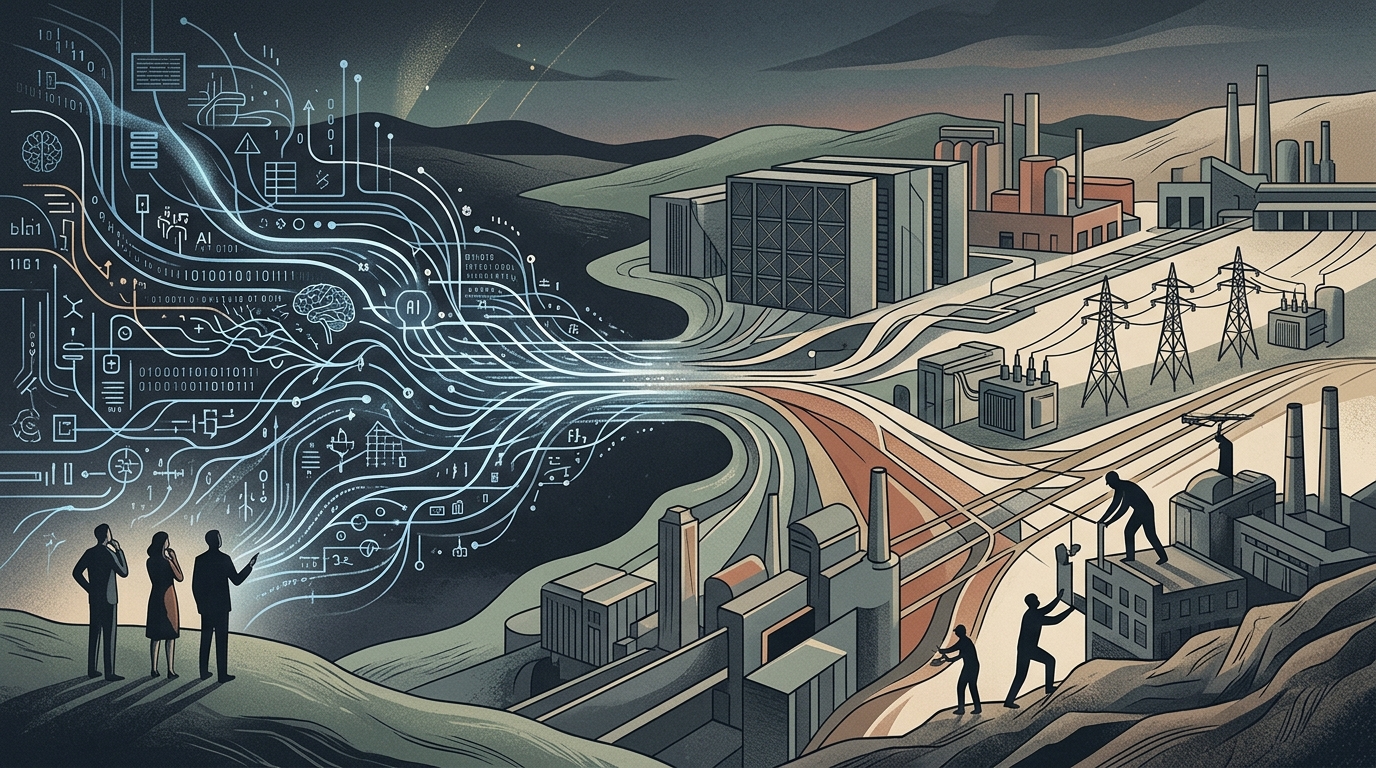
In an era where Artificial Intelligence (AI) is no longer a futuristic promise but a daily productive reality, Southeastern Louisiana University is taking a leading role with the creation of the "Artificial Intelligence Launchpad." This initiative, recently announced, aims to transform the academic institution into a living laboratory of innovation, where students, researchers, and local businesses collaborate to develop AI-based solutions. This move reflects a broader global trend: universities are ceasing to be mere transmitters of theoretical knowledge and are becoming active hubs of economic and technological development.
The Philosophy Behind the Launchpad
The AI Launchpad is not just a series of seminars. It is a comprehensive ecosystem that includes computing power infrastructure, access to advanced language models, and, most importantly, a network of mentors from the global technology market. The goal is to demystify AI and provide practical tools to participants. As program directors point out, understanding how to "talk" to a machine (prompt engineering) or how to train specialized models on local data is now a basic skill, analogous to reading and writing in the 20th century.
The program focuses on three pillars: education, entrepreneurship, and ethics. Participants do not just learn the code; they also learn the social implications of algorithms. At a time when concerns about job displacement are intensifying, Southeastern chooses the path of "augmentation" rather than replacement, teaching students how to use AI to become more creative and efficient.
Bridging the Gap with the Job Market
One of the most significant problems in modern higher education is the speed at which knowledge becomes obsolete. In the field of information technology, what a freshman learns may be outdated by the time they graduate. The AI Launchpad addresses this challenge through direct connection with the industry. Local businesses from the supply chain, healthcare, and agricultural production sectors submit real problems for resolution. Students work on these projects, gaining experience that no theoretical lecture can offer.
- Developing algorithms for demand forecasting in local retail stores.
- Using computer vision to improve crop quality in the region.
- Creating personalized educational assistants for primary school students.
This approach creates a "win-win" situation: businesses gain access to innovative low-cost solutions, while students build a strong portfolio before they even receive their degree.
Ethics and Social Responsibility
"Technology without an ethical compass is a road to nowhere,"states one of the program's lead instructors. The Launchpad dedicates a significant part of its curriculum to analyzing the biases embedded in AI models. Students are taught how to identify and correct algorithmic discrimination, ensuring that the solutions they develop are fair and inclusive.
Furthermore, Southeastern emphasizes access. The Launchpad is not just for computer science students. Students from the humanities, arts, and business administration are encouraged to participate. Interdisciplinarity is the key to true innovation, as AI now requires an understanding of human psychology, linguistics, and sociology to function effectively in human environments.
Conclusion and Outlook
Southeastern's initiative serves as a beacon for how regional education can survive and thrive in the digital age. Instead of trying to compete with Silicon Valley giants, the university focuses on local application and specialization. The AI Launchpad is proof that the AI revolution will not only happen in major tech centers but in every classroom that dares to experiment. The future belongs to those who are not afraid to fail fast and learn even faster, and Southeastern seems to be providing the ideal launching pad for this journey.