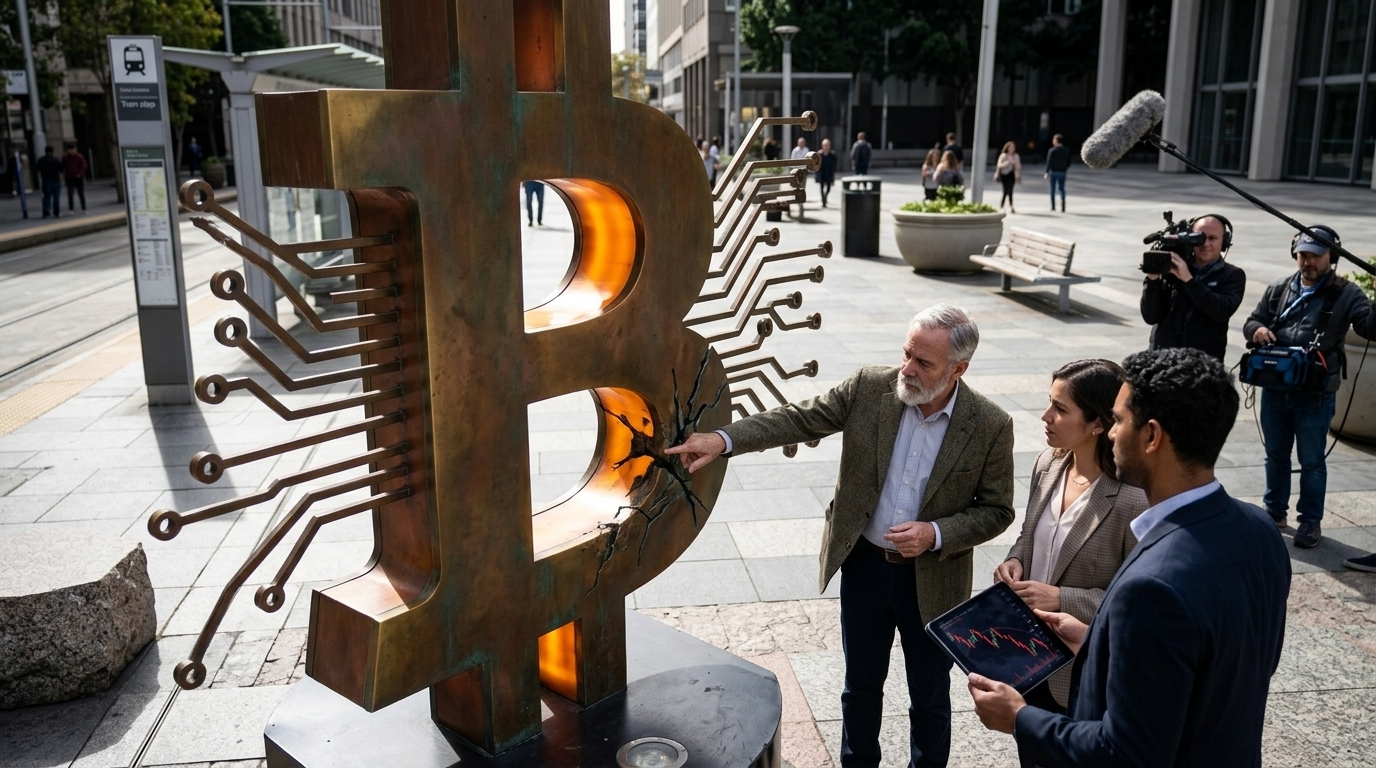
It is May 2026, and the conversation surrounding quantum computing has shifted from theoretical physics labs to the boardrooms of the world's largest financial institutions. The promise of quantum computers—processing power capable of solving problems in seconds that would take classical computers millennia—carries a dark corollary: the potential collapse of the cryptographic foundations upon which Bitcoin and the entire cryptocurrency ecosystem are built.
The Achilles' Heel of Elliptic Curve Cryptography
Bitcoin utilizes the Elliptic Curve Digital Signature Algorithm (ECDSA) to ensure that only the rightful owner of funds can spend them. This method relies on the difficulty of the discrete logarithm problem, which is virtually impossible to solve with current technology. However, Shor’s algorithm, a quantum procedure formulated back in the 1990s, can theoretically break this protection with ease.
The vulnerability is most acute for public addresses that have already conducted transactions. When a user sends Bitcoin, their public key is revealed to the network. A sufficiently powerful quantum computer could use this key to calculate the private key almost instantaneously, allowing an attacker to hijack the funds before the original transaction is even confirmed on the blockchain. This scenario, known as a 'transit attack,' represents the ultimate nightmare for Bitcoin core developers.
The 'Harvest Now, Decrypt Later' Strategy
While quantum computers with enough qubits to threaten Bitcoin are not yet fully operational on a commercial scale, the threat is already manifesting. State actors and malicious entities are currently employing a strategy known as 'Harvest Now, Decrypt Later.' They are collecting vast amounts of encrypted data and historical blockchain transactions today, anticipating that in 5 to 10 years, they will possess the quantum power to unlock them.
This means Bitcoin doesn't just need a future upgrade; it requires an immediate transition to Post-Quantum Cryptography (PQC). This process, however, is exceptionally complex in a decentralized network. It requires a 'soft fork' or 'hard fork' to introduce new, quantum-resistant address types and would necessitate millions of users migrating their funds to these new secure vaults.
Market Reaction and Institutional Preparedness
Major corporations, from Google and IBM to JPMorgan, are not standing idly by. As reported by Fortune, proactive preparation is now the gold standard. Institutions holding billions in digital assets are pushing for the adoption of NIST (National Institute of Standards and Technology) standards for quantum resilience.
- Development of hybrid systems combining classical and quantum cryptography.
- Investment in Quantum Key Distribution (QKD) for secure node-to-node communication.
- The creation of new blockchains that are 'quantum-native' by design.
The question is no longer if it will happen, but when. The so-called 'Q-Day'—the moment current encryption becomes obsolete—is approaching. For Bitcoin, survival depends on its ability to evolve without sacrificing its decentralized nature. If the community is slow to reach consensus on these vital changes, digital gold risks being transmuted into digital lead.
'The quantum threat is not a theoretical exercise; it is a countdown for the security of global wealth,' state cybersecurity analysts.
In conclusion, the dawn of the quantum era will force blockchain technology to mature. The tech that promised to eliminate intermediaries must now prove it can withstand the most formidable computational force humanity has ever devised. The preparation currently underway in major firms is the first step in a long and arduous transition.