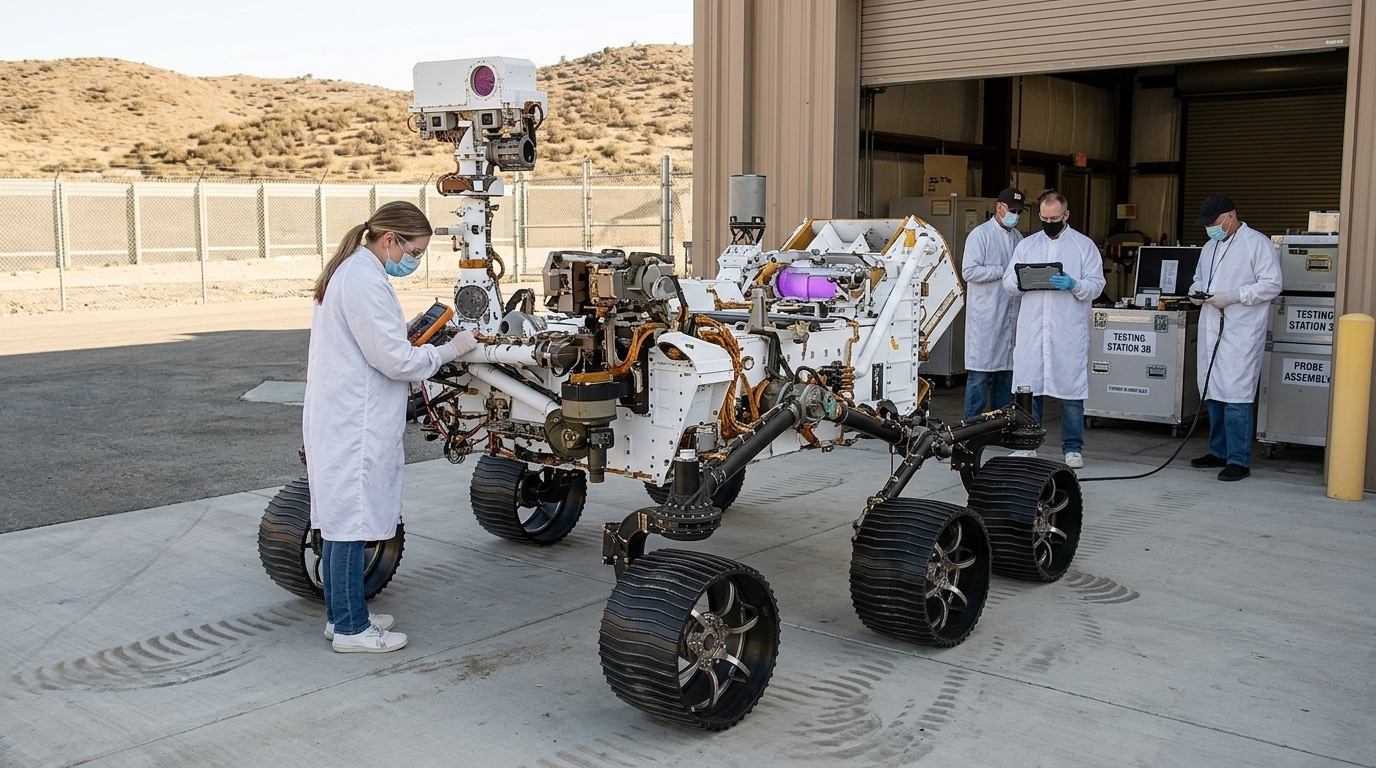
In a move that highlights the growing need for flexibility and fiscal prudence in space exploration, NASA is seriously considering sending a backup, nuclear-powered rover—originally intended for Mars—to the Moon. This proposal, gaining momentum within the US space agency, could solve one of the most persistent hurdles in lunar exploration: surviving the frigid, 14-day-long lunar night.
The Lunar Night Challenge and the Nuclear Solution
To date, most lunar rovers and landers have relied on solar power. This dependency means that as soon as the sun sets, missions must either enter a risky state of hibernation or cease operations entirely as temperatures plummet to -170 degrees Celsius (-274°F). The rover under consideration, essentially a sibling to the Perseverance or Curiosity rovers, utilizes a Multi-Mission Radioisotope Thermoelectric Generator (MMRTG). This technology converts heat from the natural radioactive decay of plutonium-238 into a steady stream of electricity.
Deploying nuclear power on the Moon would allow the rover to operate continuously, regardless of sunlight. This is particularly critical for exploring the lunar South Pole, home to Permanently Shadowed Regions (PSRs). These craters are believed to harbor vast deposits of water ice, a resource essential for sustaining future human presence and producing propellant for missions deeper into the solar system.
From Mars to the Moon: A Budgetary Necessity?
The decision to "reassign" a Mars rover to the Moon is not merely technical; it is deeply economic. The Mars Sample Return (MSR) program, aimed at bringing Martian soil back to Earth, is currently grappling with massive cost overruns and scheduling delays. With NASA's budget under intense scrutiny by Congress, repurposing existing hardware and technologies developed for Mars offers a cost-effective alternative to starting a lunar rover program from scratch.
The "Vigor" rover (as the spare hardware is often called) already boasts a sophisticated drivetrain, high-resolution cameras, and sampling arms. Adapting it for the lunar environment would require modifications primarily to its wheels—since lunar regolith is sharper and more abrasive than Martian sand—and its telecommunications suite, given the much shorter distance to Earth compared to Mars.
Geopolitical Implications and the Race with China
This strategic pivot comes at a time when the "Second Space Race" is intensifying. China has demonstrated impressive capabilities with its Chang'e program, successfully landing craft on the lunar farside and returning samples. Deploying a nuclear-powered rover would provide the United States with a significant strategic advantage, enabling long-duration missions in regions that competitors currently struggle to access.
- Continuous operation for years, rather than weeks.
- Capability to explore craters that never see sunlight.
- Leveraging existing hardware worth hundreds of millions of dollars.
- Accelerating the Artemis program's goals for sustainable human presence.
"The capability to have a vehicle that does not fear the dark on the Moon would fundamentally change how we plan our future bases," NASA sources indicate.
In conclusion, sending a Martian rover to the Moon is a bold admission that the future of space exploration depends on our ability to recycle not just materials, but strategies. If the plan moves forward, the Moon will soon host the most powerful robotic resident its surface has ever seen, bridging the gap between our lunar ambitions and our Martian dreams.