For decades, medicine and engineering have been the bastions of human expertise, requiring years of rigorous study and practical experience. However, the rapid integration of Artificial Intelligence (AI) into these fields is bringing a disturbing hypothesis to the fore: is the convenience offered by technology leading to the 'de-skilling' of our top scientists? A recent analysis highlights concerns regarding the erosion of cognitive ability and the critical judgment that has traditionally characterized these sectors.
The Atrophy of Clinical Intuition
In medicine, diagnosis is not merely a process of matching symptoms to diseases; it is an art based on empirical observation, intuition, and a deep understanding of human physiology. With the advent of AI-based diagnostic tools, doctors risk becoming mere data 'intermediaries.' When an algorithm can detect a tumor on an X-ray with greater precision than a radiologist, the human tendency is to blindly trust the machine.
The problem arises when AI makes a mistake. If a physician has lost the ability to challenge the output or has not cultivated the critical thinking required to spot an AI 'hallucination,' the consequences can be fatal. 'Cognitive atrophy' is a tangible risk: just as muscles waste away without exercise, the neural connections responsible for complex medical judgment may weaken if the burden of thought is shifted entirely to software.
Engineering in the Era of the 'Black Box'
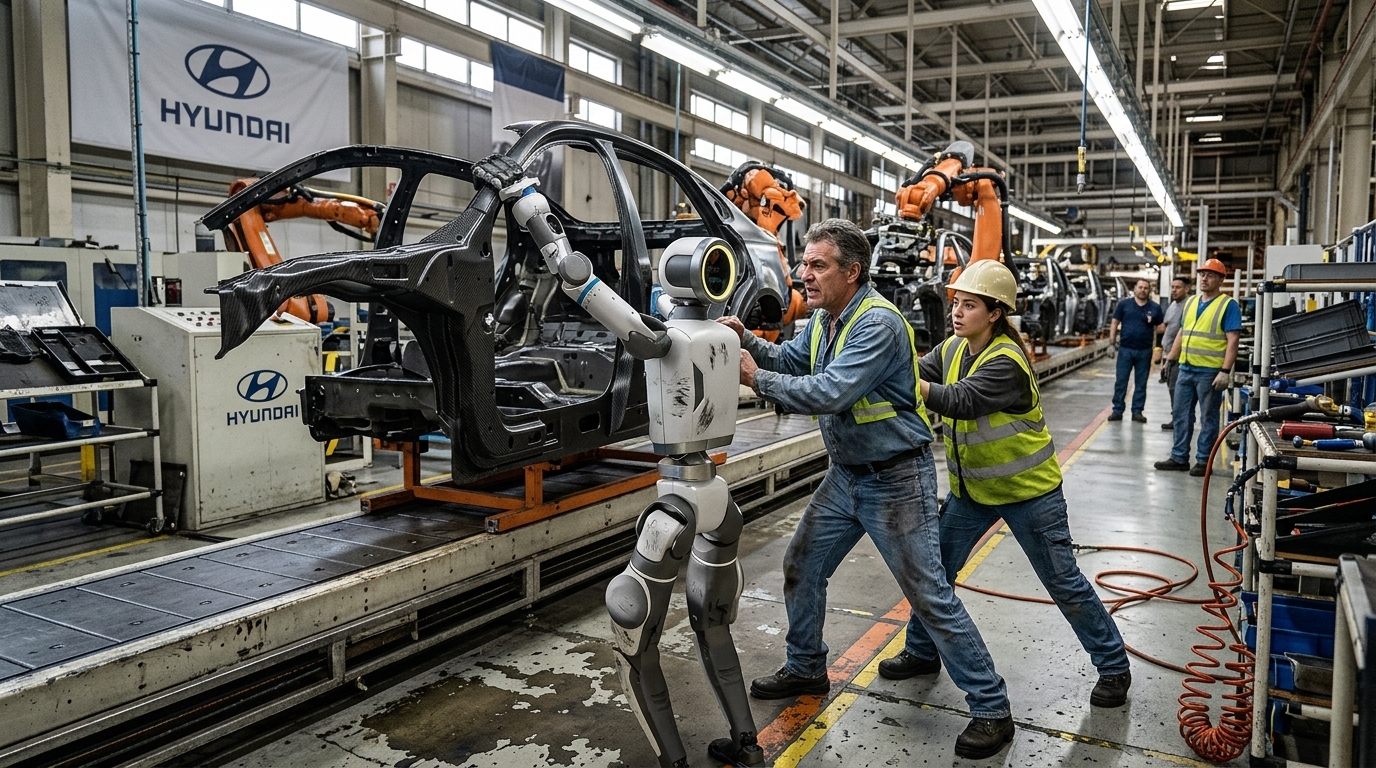
Similarly, in engineering, the use of generative AI for infrastructure design or software development is radically changing the landscape. Engineers now use tools that create optimized designs that the human mind might struggle to conceive. However, there is a critical gap: the understanding of fundamental principles. If a civil engineer relies on AI to calculate the structural loads of a bridge without fully grasping the physics behind the calculations, they lose the ability to intervene during a crisis.
- Loss of Fundamental Knowledge: The ease of using ready-made solutions reduces the incentive to learn 'hard' basic principles.
- Tool Dependency: An inability to function without digital support makes professionals vulnerable to technical failures.
- The Automation Paradox: The more reliable a system is, the less attentive the human supervisor becomes.
The Paradox of De-skilling and Education
The paradox lies in the fact that AI raises the 'floor' of capabilities (allowing the less experienced to perform well) but may simultaneously lower the 'ceiling' of human excellence. Future doctors and engineers might be excellent tool operators but mediocre scientists. This necessitates a radical overhaul of university education. Educational institutions must focus not only on AI usage but on fostering 'meta-cognition': the ability to understand how and why AI arrives at certain conclusions.
"Technology should be our crutch, not our wheelchair," industry analysts remark, emphasizing that maintaining manual and intellectual friction with the subject matter is essential for preserving high-level expertise.
In conclusion, the challenge for the next decade is not the integration of AI—that is already a given—but ensuring that human intelligence remains the final safety filter. De-skilling is not an inevitability, but a risk that requires vigilance, continuous training in core principles, and a healthy dose of skepticism toward the 'magical' solutions of algorithms.