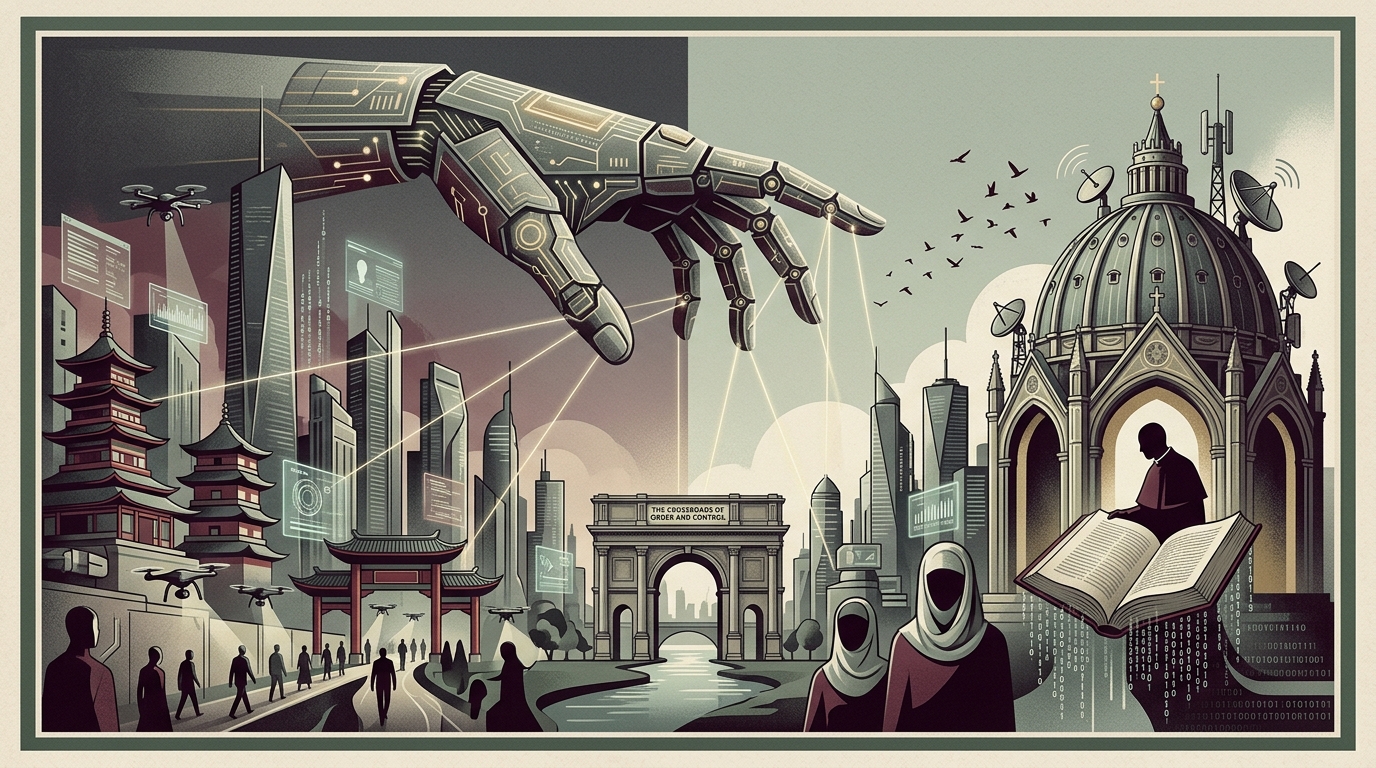
In an era where Large Language Models (LLMs) can compose essays, solve complex mathematical theorems, and write code in seconds, the traditional model of higher education faces an existential crisis. The recent proposal to establish "Human Intelligence Labs" (HI Labs) within universities is not merely an academic novelty; it is a necessary act of preservation for the human spirit. The core premise is both simple and radical: if technology can handle information processing, the university must become the sanctuary of judgment, empathy, and ethical complexity.
The Shift from Knowledge Transfer to Cognitive Refinement
For centuries, the university functioned as the primary conduit for the transmission of accumulated knowledge. Students entered lecture halls to gain access to information that was difficult to find elsewhere. Today, information is ubiquitous and free. Artificial Intelligence (AI) has effectively commodified knowledge. In this new landscape, the value of a degree can no longer rest on rote memorization or the execution of standardized tasks.
Human Intelligence Labs propose a pivot toward "metacognition"—the ability to understand and regulate one's own thinking processes. These spaces would not just be equipped with computers; they would be designed to facilitate dialogue, the Socratic method, and critical analysis. Their goal is to teach students how to question AI-generated data, how to identify algorithmic bias, and how to synthesize solutions for problems that lack a "correct" answer in any existing database.
Interdisciplinarity as an Antidote to Automation
One of the greatest flaws of current educational structures is departmental silos. AI excels at connecting data points within specific frameworks but struggles to grasp broader social, historical, and ethical contexts. New labs must function as bridges between the humanities and technology. For instance, it is no longer enough for a computer science student to know how to write code; they must understand the philosophical implications of privacy and social justice.
- Ethical Decision-Making: Training in managing dilemmas where there is no clear optimal outcome.
- Empathy and Design: The ability to design services and products centered on the human experience rather than just efficiency.
- Complex Problem Solving: Focusing on "wicked problems" like climate change, which require political, social, and technical foresight.
Reclaiming Authenticity in Thought and Action
In a world saturated with machine-generated content, "authenticity" becomes the new gold standard. Universities must cultivate each student’s unique voice. Human Intelligence Labs could focus on rhetoric, creative writing (without prompt assistance), and public debate. The ability to persuade, inspire, and lead remains deeply human and resilient to automation.
"AI can give us the answer, but only Human Intelligence can ask the question worth answering."
Furthermore, the emphasis on experiential learning—fieldwork, laboratory experiments, and community service—gains new importance. These activities provide "embodied" and "emotional" knowledge that digital models cannot fully simulate. The university of the future will not be a place where you consume content, but a place where you forge character and critical faculties.
Conclusion: A New Renaissance?
The challenge posed by AI might prove to be the greatest opportunity for higher education since the Enlightenment. Instead of trying to compete with machines in speed or information volume, universities can return to their roots: the cultivation of the free-thinking individual. Establishing Human Intelligence Labs is not a luxury; it is a safeguard against a future where thought risks becoming mechanical. Education must once again teach humans how to be the masters of their tools, rather than the servants of their algorithms.