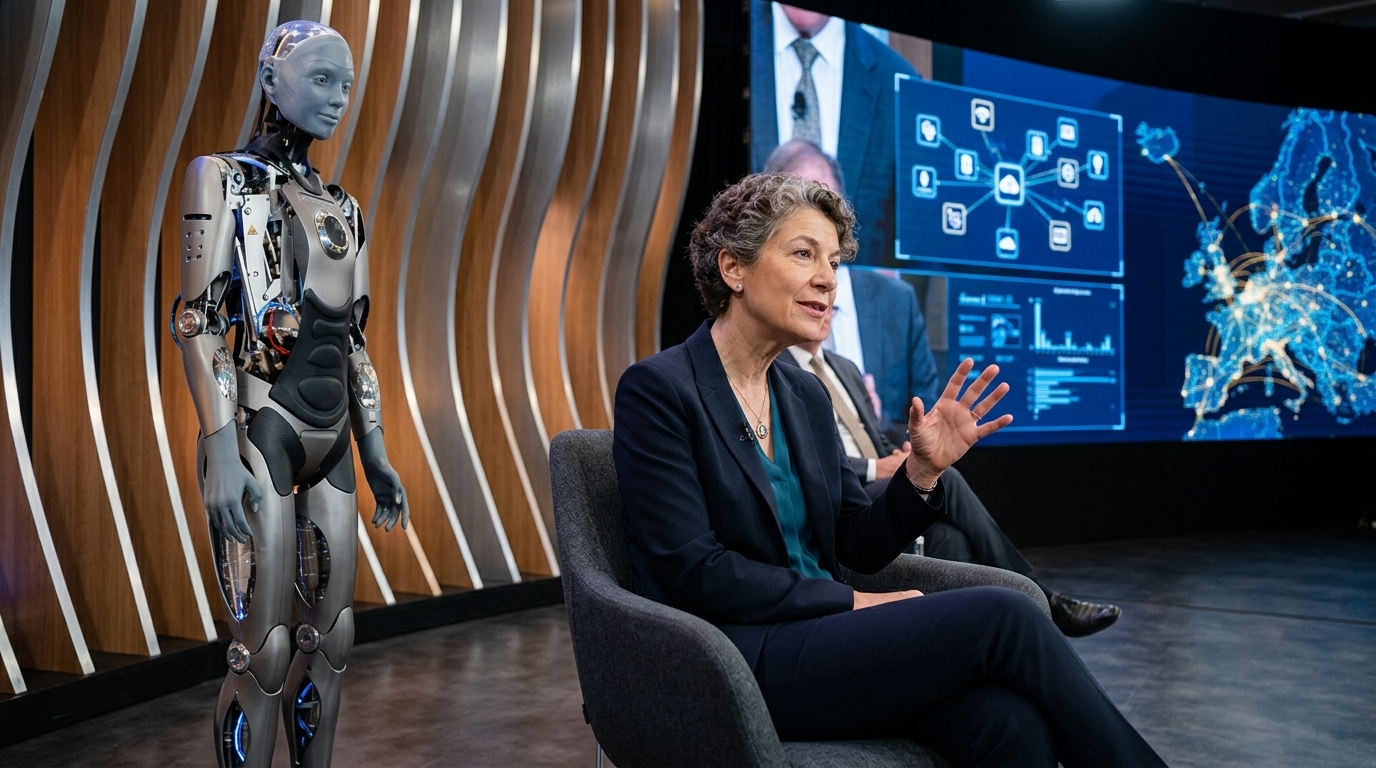
In an era where artificial intelligence (AI) is no longer a futuristic promise but the new geopolitical and economic arena, Mark Zuckerberg has set Meta on a course of total reorganization. After a decade of focusing on the 'Metaverse,' the company behind Facebook, Instagram, and WhatsApp is making an aggressive pivot toward Artificial General Intelligence (AGI) and Superintelligence. This move isn't just about improving recommendation algorithms; it's about fundamentally changing how humanity interacts with information.
Open Source as a Trojan Horse
The most striking aspect of Meta's strategy is its commitment to the open-source model through the Llama series. While OpenAI and Google fortify themselves behind closed systems, Zuckerberg chooses to release his most powerful models to the general public. This approach is not altruistic; it is a brilliant move to set global standards. By making Llama the foundation upon which millions of developers build, Meta ensures its technology remains the center of the ecosystem, while simultaneously undermining the business models of competitors who charge for model access.
However, this strategy carries risks. Critics argue that releasing such powerful tools without strict controls could facilitate misinformation or the creation of malware. Meta counters that the collective intelligence of the open-source community is the best defense against these risks, as thousands of eyes audit the code for vulnerabilities.
The Semiconductor Empire: The Compute Moat
To achieve his vision of superintelligence, Zuckerberg has embarked on an unprecedented accumulation of computing power. Meta has invested billions of dollars in purchasing hundreds of thousands of NVIDIA H100 GPUs, creating one of the world's largest stockpiles of compute. This 'Compute Moat' acts as a barrier to entry for any new player.
- Investments exceeding $35 billion annually in AI infrastructure.
- Development of proprietary chips (MTIA) to reduce reliance on NVIDIA.
- Construction of massive data centers operating exclusively for training next-generation models.
This physical infrastructure is the backbone of Llama 4 and future iterations, which aim to surpass human capabilities in complex reasoning and problem-solving.
Integration into Daily Life: From Social to AI-First
Meta possesses an advantage no other giant has: direct access to over 3 billion daily users. Integrating Meta AI into WhatsApp, Messenger, and Instagram transforms AI from a specialized tool into an everyday assistant. The strategy here is 'invisible' AI. Users don't need to visit a specific website; the AI is there, within their chat, ready to generate images, summarize texts, or suggest gifts.
"In the future, every business and every creator will have an AI agent that can interact with their customers and fans," Zuckerberg recently stated.
This vision is also closely linked to 'smart glasses' (Ray-Ban Meta). Zuckerberg is betting that the next big computing platform won't be the phone, but glasses that see what we see and hear what we hear, powered by a continuous stream of artificial intelligence.
Toward Superintelligence: The Final Frontier
Meta's pursuit of Superintelligence is not just a technical challenge, but a philosophical and political battle. If Zuckerberg succeeds in creating an AI that surpasses average human intelligence and offers it as open software, he will have shifted the global balance of power. He will have made top-tier technology accessible to every nation and every business, stripping the monopoly from the closed elites of Silicon Valley.
Yet, the question remains: can a company that has faced intense criticism over data management and youth mental health be considered a trustworthy custodian of superintelligence? Meta's answer is transparency through open source, but history has shown that power of this magnitude rarely remains without side effects.