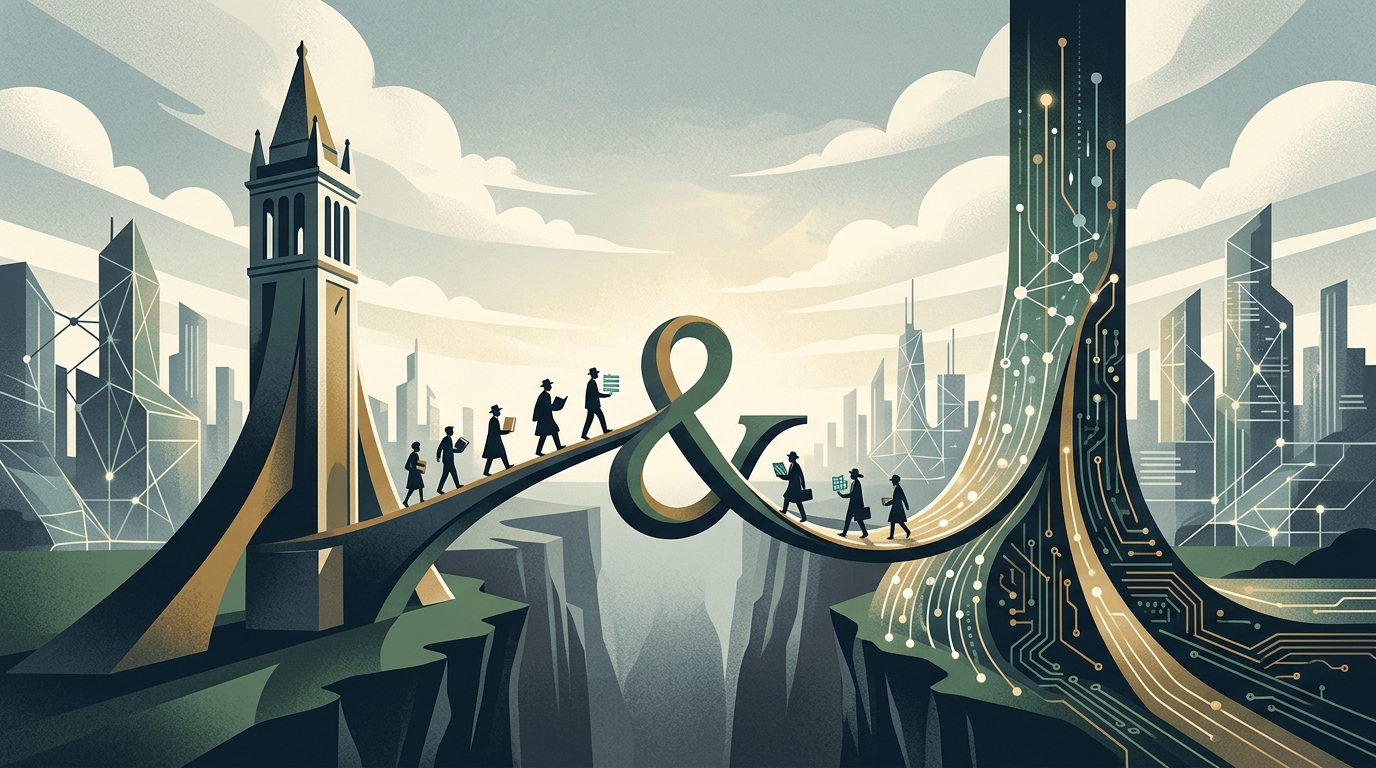
The history of humanity has been defined by technological shifts that redefined the meaning of knowledge. From the invention of the printing press to the advent of the internet, every leap required a new form of "literacy." Today, as the train of the 4th Industrial Revolution departs at breakneck speed, we face a new, more complex challenge: Artificial Intelligence (AI) illiteracy. This is not merely about knowing how to use software; it is about a deep understanding of how algorithms shape reality, the economy, and democracy itself.
Defining the New Literacy
AI literacy goes far beyond the ability to write a "prompt" for a chatbot. It encompasses a wide spectrum of skills: from understanding how Large Language Models (LLMs) process data to the critical evaluation of their outputs. An AI-literate citizen must be able to recognize algorithmic bias, understand data privacy concepts, and distinguish between machine-generated and human-created content. Without these foundations, modern individuals risk becoming passive consumers of a technology they cannot control or comprehend.
The Socioeconomic Dimensions of the Divide
The danger of a new social fracture is imminent. In the labor market, the gap between those who can collaborate with AI and those who ignore it will determine not only wages but employability itself. As noted in recent analyses, the primary commodity of this era is AI knowledge. Businesses that fail to upskill their workforce and nations that delay integrating AI into their educational curricula will soon find themselves on the periphery of the global economy.
- Professional Displacement: It is not AI that will take jobs, but humans who know how to use it replacing those who don't.
- Cognitive Dependency: Over-reliance on algorithms without critical thinking leads to the atrophy of human decision-making skills.
- Democratic Deficit: The inability to understand deepfakes and algorithmic manipulation undermines the integrity of the political process.
Education: The Urgent Need for Reform
Educational systems, both in Greece and globally, often seem to be preparing students for a world that no longer exists. Rote memorization loses its value in a world where information is ubiquitous and instantly accessible. The emphasis must shift toward "algorithmic thinking" and the ethics of technology. Universities and schools must teach not only how to use the tools but how to question their logic. Artificial Intelligence should not be treated as a separate computer science subject but as a horizontal skill that permeates all disciplines, from law and medicine to the humanities.
"The illiterate of the 21st century will not be those who cannot read and write, but those who cannot learn, unlearn, and relearn." – Alvin Toffler
Ethics, Transparency, and the Road Ahead
Ultimately, AI literacy is a matter of ethics. When citizens do not understand how decisions affecting them are made—from loan approvals to job candidate screening—transparency is lost. Fighting illiteracy is the only defense against "algorithmic tyranny." The state, the private sector, and civil society must collaborate to ensure that technological progress leaves no one behind. The stakes are not just technological; they are profoundly human-centric. As we navigate this transition, the goal must be to empower individuals to be masters of the machine, not its subjects.