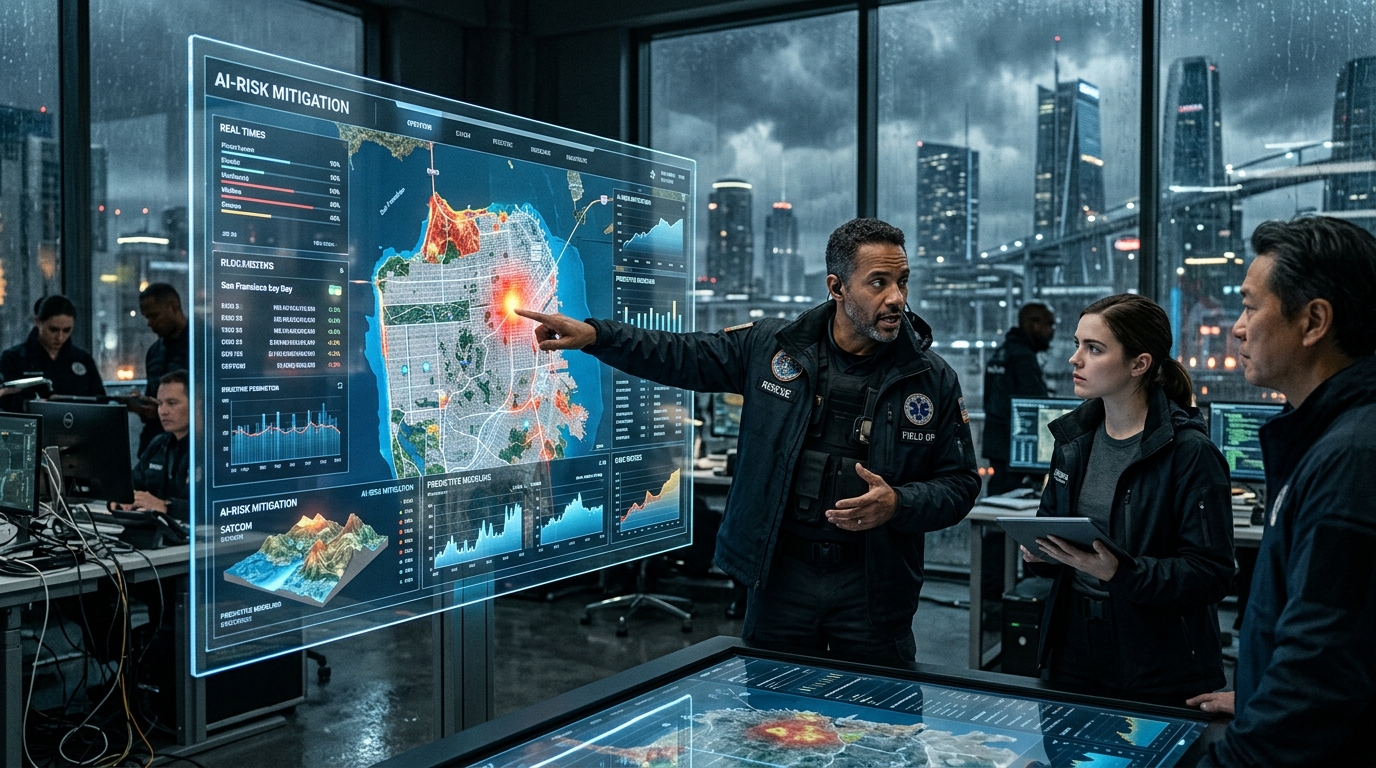
In a world increasingly besieged by extreme weather events, humanity is desperately seeking new tools to protect its communities and infrastructure. The traditional approach to disaster management, which relied heavily on post-event reaction, is now giving way to a proactive model powered by Artificial Intelligence (AI). Recent developments, highlighted by international organizations and tech giants, indicate that this is not merely a technological upgrade but a fundamental paradigm shift.
The Power of Prediction: From Data to Early Warning
The heart of the AI revolution in disaster management lies in its ability to process vast amounts of data in real-time. Machine learning systems analyze satellite imagery, meteorological data, and ground sensors to identify patterns that the human eye cannot discern. For instance, Google has developed AI models capable of predicting river floods up to seven days in advance, providing critical time for evacuations in parts of Asia and Africa.
These systems are not limited to floods. In California and Australia, computer vision algorithms continuously scan high-definition camera feeds in forested areas, detecting smoke in fractions of a second—often before it is even noticed by residents or foresters. This speed is the difference between a contained fire and an uncontrollable wildfire.
Rescue Operations and Field Robotics
When disaster strikes, AI moves from data centers to the field of operations. Autonomous drones equipped with thermal cameras and LiDAR sensors can fly over areas affected by earthquakes or hurricanes, mapping damage and locating survivors under rubble or in isolated regions. These drones do not require constant human guidance; they can navigate complex environments, avoiding obstacles and optimizing search routes.
"Artificial intelligence does not replace the rescuer, but it provides the 'eyes' and the speed required when every second counts," state civil protection experts.
Furthermore, AI is being used to optimize supply chains during crises. Algorithms analyze road conditions and population density to direct trucks carrying food and medicine to where the need is greatest, bypassing areas that have become inaccessible.
Recovery and the Digital Divide
After the disaster passes, the challenge shifts to damage assessment and reconstruction. The traditional assessment process for insurance claims or government aid could take months. Today, AI can compare "before and after" satellite images and issue an accurate damage report for entire cities within hours. This accelerates the flow of capital to those affected, enabling a faster return to normalcy.
However, the adoption of these technologies highlights a serious inequality. While developed nations invest billions in "smart" resilience infrastructure, the Global South—which is often hardest hit by climate change—lacks the necessary data and computing power. The "democratization" of AI in disaster management has become an urgent necessity for the international community, as the climate crisis knows no borders.
Ethical Challenges and the Future
Despite the promises, the use of AI raises questions. Who bears responsibility if an algorithm fails to predict a disaster? How do we ensure that the personal data of those affected is protected during information gathering by drones? The transparency of algorithms and the maintenance of the "human element" in decision-making remain critical parameters.
In conclusion, Artificial Intelligence is emerging as humanity's most valuable ally against natural disasters. The transition from luck to planning and from despair to precision is already underway. The challenge for the coming years is to ensure that this technological shield is available in every corner of the planet, protecting life regardless of geographical location.