It was May 5, 2010. A day indelibly etched into Greece's collective memory, not for the mass protests against austerity measures, but for the horrific deaths of three young people within the burning walls of the Marfin Bank branch on Stadiou Street. Angeliki Papathanasopoulou, four months pregnant, Epameinondas Tsakalis, and Paraskevi Zoulia became the symbols of a national tragedy that remained an open wound for years, as the perpetrators stayed beyond the reach of the law. Today, in 2026, this case is being "resurrected" thanks to technological progress and the persistence of the authorities.
Technology in the Service of Justice
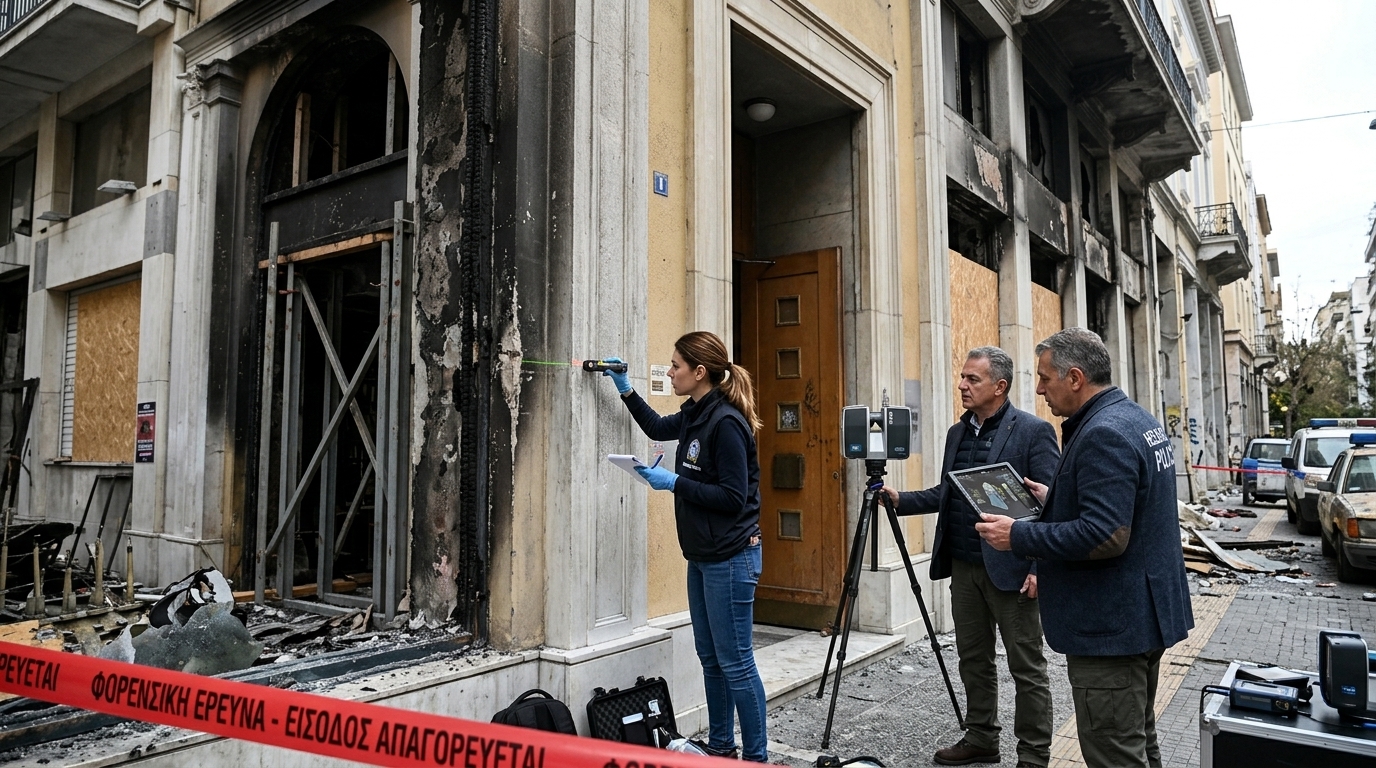
The major breakthrough in the investigation came from the laboratories of the Forensic Science Division, where advanced Artificial Intelligence algorithms were used to analyze audiovisual material previously considered "useless." In 2010, security cameras and amateur mobile phone footage were of low resolution and poor lighting, making it impossible to identify faces hidden under hoods and helmets. However, modern AI now offers the capability for image enhancement and, most importantly, biometric gait analysis.
These algorithms analyzed thousands of hours of footage from that day, comparing body types, walking patterns, and specific characteristics not covered by masks. This digital re-examination allowed authorities to "see" back through time, identifying individuals involved in the Molotov cocktail attack. The utilization of AI was not limited to imagery but also involved the cross-referencing of communication data and digital footprints collected at the time, which could not be effectively combined without today's processing power.
Extradition from Britain and the New Wave of Arrests
A central figure in the new developments is a 46-year-old woman located in the United Kingdom. The suspect, who reportedly fled abroad shortly after the events, was arrested following a European Arrest Warrant. Her extradition process was recently completed, and her return to Greece marks the beginning of a new judicial phase. The charges she faces are severe, involving participation in the arson attack that led to the deaths of the three employees.
Simultaneously, authorities proceeded with two more arrests on Greek soil. These individuals had been under surveillance for the past months, as new evidence from the AI analysis placed them at the scene of the tragedy. Police emphasize that the investigation remains dynamic, as there are indications of other persons who may be involved, either as perpetrators or as accomplices who provided cover.
The Social and Political Impact
Marfin was never just a criminal case. It was a turning point for Greek society, a moment where blind fanaticism met absolute horror. The 16-year delay in delivering justice had created a sense of impunity, which was often exploited in political confrontations. The revival of the case today brings the traumas of the bailout era back to the surface, but with a hope for catharsis.
However, the use of AI to solve crimes after so many years also raises ethical questions. While society demands justice, legal circles discuss the limits of digital evidence and the reliability of algorithms in courtrooms. Is "digital memory" enough to convict someone sixteen years later? The response of the Greek Justice system will serve as a global precedent for how technology can correct the mistakes of the past.
"Justice delayed is justice denied, but technology has given us a second chance to honor the victims of Marfin with the truth." — Senior Police Official
The Future of Cold Case Investigations
The Marfin case is setting a new standard for cold case investigations in Europe. By integrating AI into forensic workflows, the Hellenic Police are demonstrating that the passage of time is no longer an absolute barrier to accountability. This approach is expected to be applied to other unsolved cases from the turbulent 2010-2015 period in Greece.
As the 46-year-old suspect prepares to face the magistrate, the families of the victims find themselves at the center of a media storm once again. For them, this is not about technology or politics; it is about the final recognition of the crime that shattered their lives. The upcoming trial will be one of the most significant of the decade, closing a cycle of blood that haunted modern Greece.