In an era where top-tier university graduates traditionally compete for a seat at Fortune 500 tech giants, Mark Cuban, the billionaire entrepreneur and star of Shark Tank, is proposing a radically different direction. According to Cuban, the true Artificial Intelligence (AI) revolution won't be decided in the laboratories of Google or Microsoft, but in how small and medium-sized enterprises (SMEs) manage to integrate these technologies into their daily operations.
Cuban’s analysis is based on a simple yet powerful observation: while large corporations have the resources to hire armies of data scientists, small businesses—which form the backbone of the global economy—are often left in the dark. This "knowledge gap" represents a golden opportunity for a new generation of workers who are native to Generative AI tools.
The Emergence of the "AI Navigator"
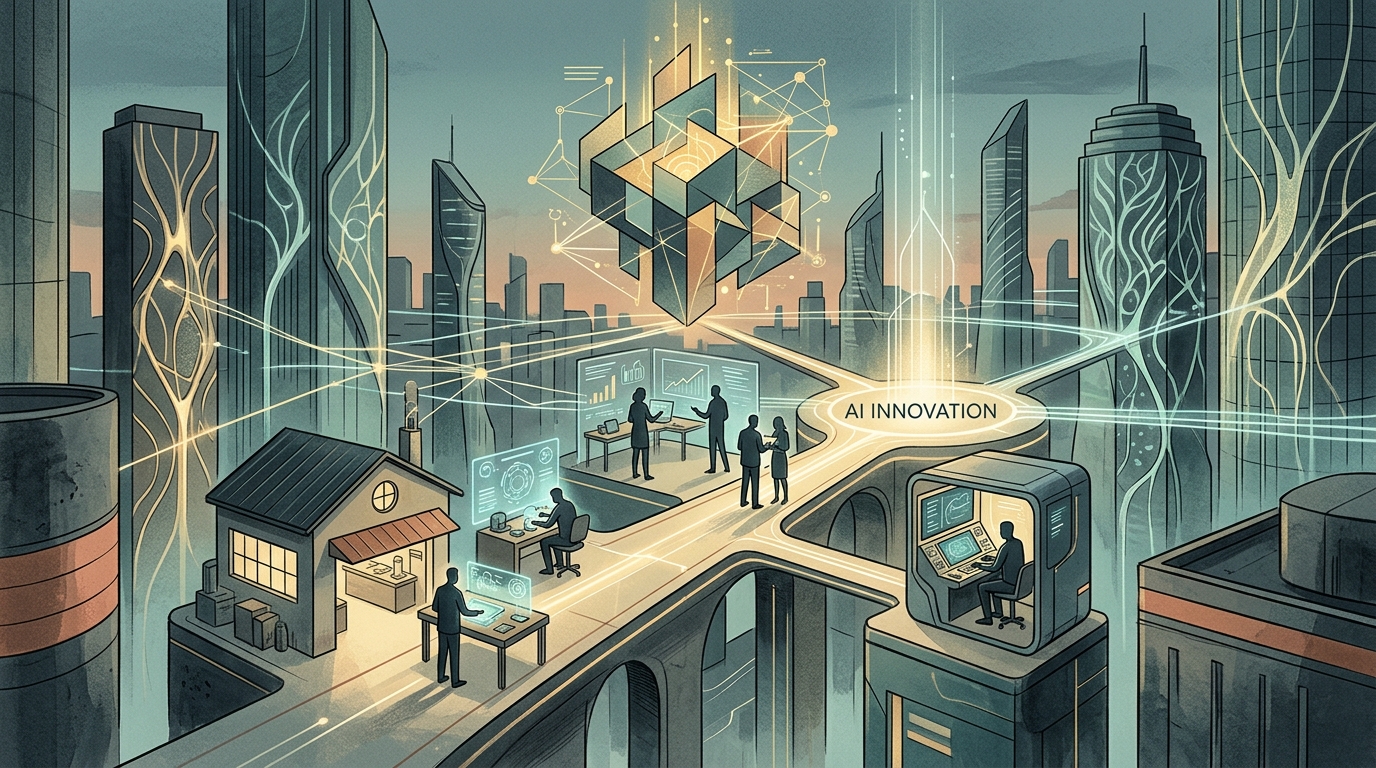
Cuban argues that young workers should not see themselves as mere employees, but as "AI Navigators." In a small business, a young person who knows how to utilize ChatGPT, Claude, or specialized automation tools can become immediately indispensable. For instance, a local construction firm or a law office might not have the luxury of an IT department, but they have a desperate need for someone who can automate contract drafting, optimize the supply chain, or upgrade customer service via AI.
According to Cuban, the value of an employee in this environment is multiplicative. "If you go to work at Goldman Sachs, you're just a number. If you go to a company with 20 employees and show them how to increase productivity by 30% using AI, you're the hero of the company and its future leader," he has famously noted.
Democratization of Power and Agility
One of Cuban’s most significant arguments is that AI acts as the great equalizer. In the past, small businesses could not compete with large ones due to a lack of scale and capital. Today, access to advanced AI models is relatively inexpensive. The problem is not the cost of the software, but its implementation. Small businesses are inherently more agile than cumbersome bureaucratic organizations. They can pivot their entire business model in a matter of weeks if someone shows them the way.
This agility allows young professionals to experiment and see the results of their work in real-time. In large companies, adopting a new technology might require months of approvals and legal reviews. In a small business, the decision is made at the kitchen table or during a brief Zoom call, and implementation begins the next day.
Risks and Career Resilience
Of course, Cuban's strategy is not without risk. Small businesses have higher failure rates and often offer fewer benefits compared to multinational giants. However, Cuban counters that the "security" of large corporations is an illusion in the AI age. Mass layoffs in the tech sector over recent years prove that no one is immune.
Conversely, acquiring "AI integration" skills in real market conditions offers a form of professional resilience that cannot be bought. A worker who learns how to transform a traditional business into an AI-driven entity will be in high demand in any industry for the next decade. It is the transition from "knowing how to code" to "knowing how to solve business problems with technology."
Conclusion: A New Professional Ethic
Mark Cuban’s advice reflects a broader shift in the global economy. As AI becomes a commodity, value shifts from the creation of the tool to its application. For young people worldwide, the message is clear: Don't wait for an invitation from Silicon Valley. The next big opportunity might be at the business next door, waiting for someone to unlock its potential.