In the heart of Suzhou’s industrial hub, a company once dismissed as a mere domestic follower of Japanese giants has emerged as the central protagonist in the new era of humanoid robotics. Leader Harmonious Drive Systems Co. (Leaderdrive) has reported impressive financial results for the past year and the first quarter of 2026, confirming that China’s strategy for AI and robotics dominance is not limited to software but extends to the critical "bones and muscles" of the machines.
The Technology Behind the Motion
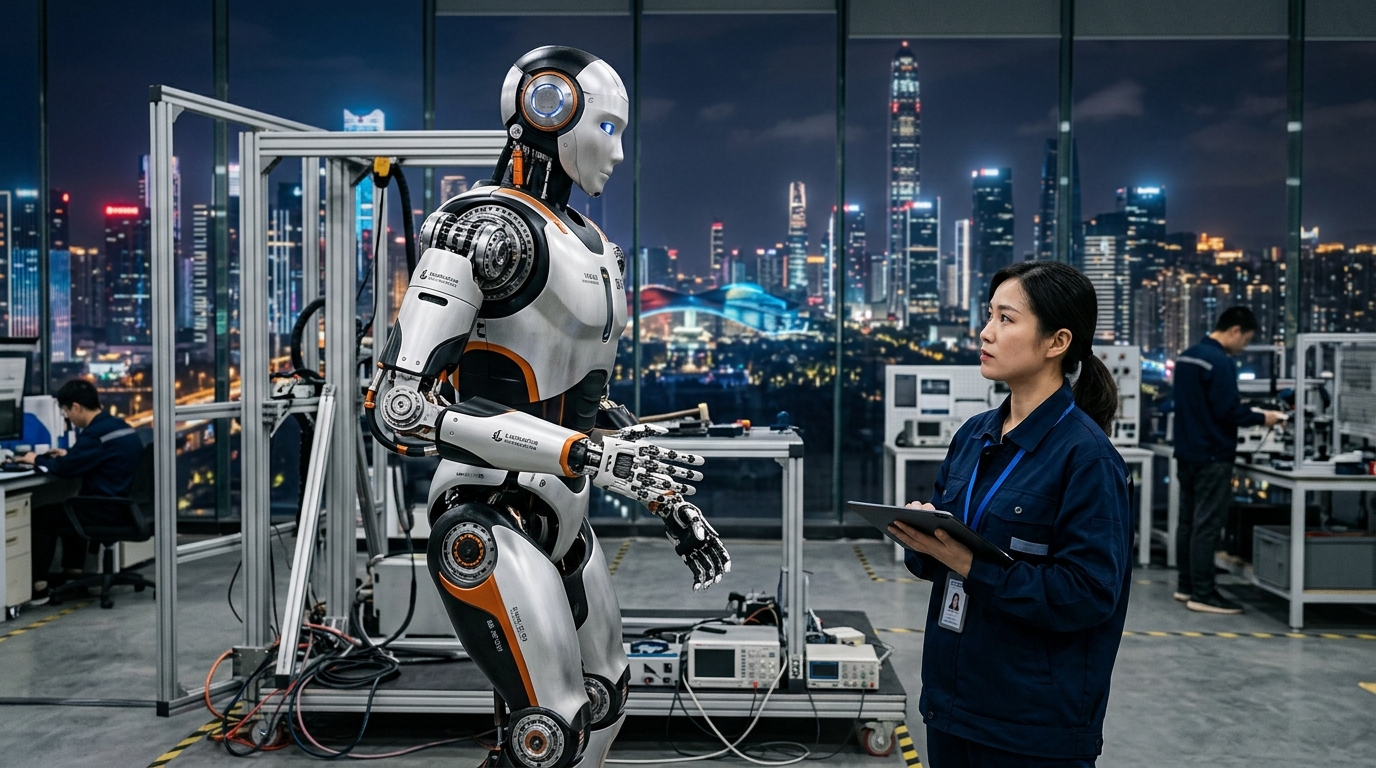
For the uninitiated, harmonic drives are the key to humanoid robot mobility. These are strain wave gear systems that allow robots to move with extreme precision, high torque, and minimal weight. Without them, the delicate kinematics required for a robot to climb stairs or pick up an egg without breaking it would be impossible. Leaderdrive has successfully broken the monopoly of Japanese firms, offering components that are not only competitive in quality but also significantly cheaper, enabling the mass production of humanoids.
The surge in Leaderdrive’s profits coincides with an explosion of Chinese startups unveiling humanoid robots. From Unitree and Fourier Intelligence to the ambitious plans of tech giants like Xiaomi, the demand for domestic components has skyrocketed. The Chinese government has set a goal for mass production of humanoid robots by 2027, viewing them as the next "disruptive" product following electric vehicles (EVs).
The Geopolitics of Robotics
The rise of Leaderdrive is not just a business success; it is a geopolitical statement. In an era where supply chains are weaponized in international relations, China’s ability to produce its own critical robotics components reduces its dependence on the West and Japan. Analysts point out that while the US leads in AI algorithms (such as ChatGPT and Sora), China is focusing on "Embodied AI"—the physical manifestation of intelligence.
"Leaderdrive isn't just selling gears. It is selling the infrastructure upon which China's future economy will be built, where machines replace a shrinking labor force," says a Shanghai-based market analyst.
Challenges and the Road Ahead
Despite the optimism, the path is not without obstacles. Competition from Japan’s Harmonic Drive Systems Inc. remains fierce, especially in high-precision applications required in medical robotics and aerospace. Furthermore, the humanoid robot market is still in an embryonic stage regarding actual commercial utility. Many robots seen in demonstrations are prototypes, and the transition to full functionality in non-factory environments remains a technical challenge.
However, investors seem to be betting on the long term. Leaderdrive’s stock reflects the belief that robots will soon become commonplace in hospitals, warehouses, and perhaps even our homes. With the support of the Chinese state and a supply chain that is becoming increasingly autonomous, the Suzhou-based company is no longer following trends—it is setting them.
- Leaderdrive now controls over 60% of the Chinese market for harmonic reducers.
- The company invests over 10% of its revenue back into Research and Development (R&D).
- The global humanoid robot market is projected to exceed $38 billion by 2035.
In conclusion, Leaderdrive serves as a prime example of how China is converting its manufacturing prowess into technological hegemony. As humanoid robots begin to walk among us, their "harmonious" movements will largely be owed to the precision of Chinese gearing.