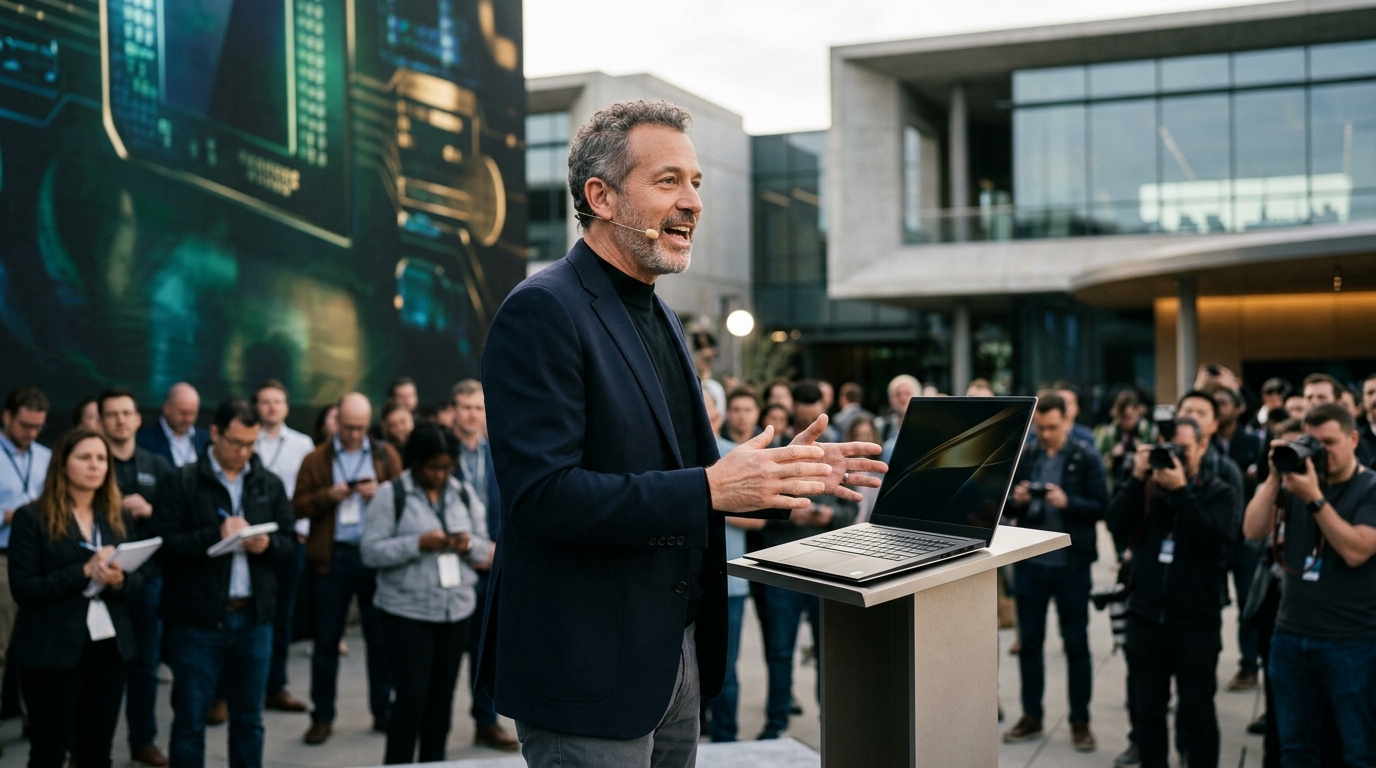
When Ray Kurzweil published 'The Singularity Is Near' in 2005, most academics dismissed him as a fanciful science fiction writer rather than a serious futurist. Today, as we navigate 2026 and Artificial Intelligence has already disrupted global labor markets and knowledge production, Kurzweil’s predictions no longer resemble Hollywood scripts but the inevitable news cycle of tomorrow. The man who 'introduced' AI to the world twenty years ago remains steadfast in his boldest claim: by 2029, Artificial Intelligence will have achieved human-level intelligence (AGI).
The Law of Accelerating Returns
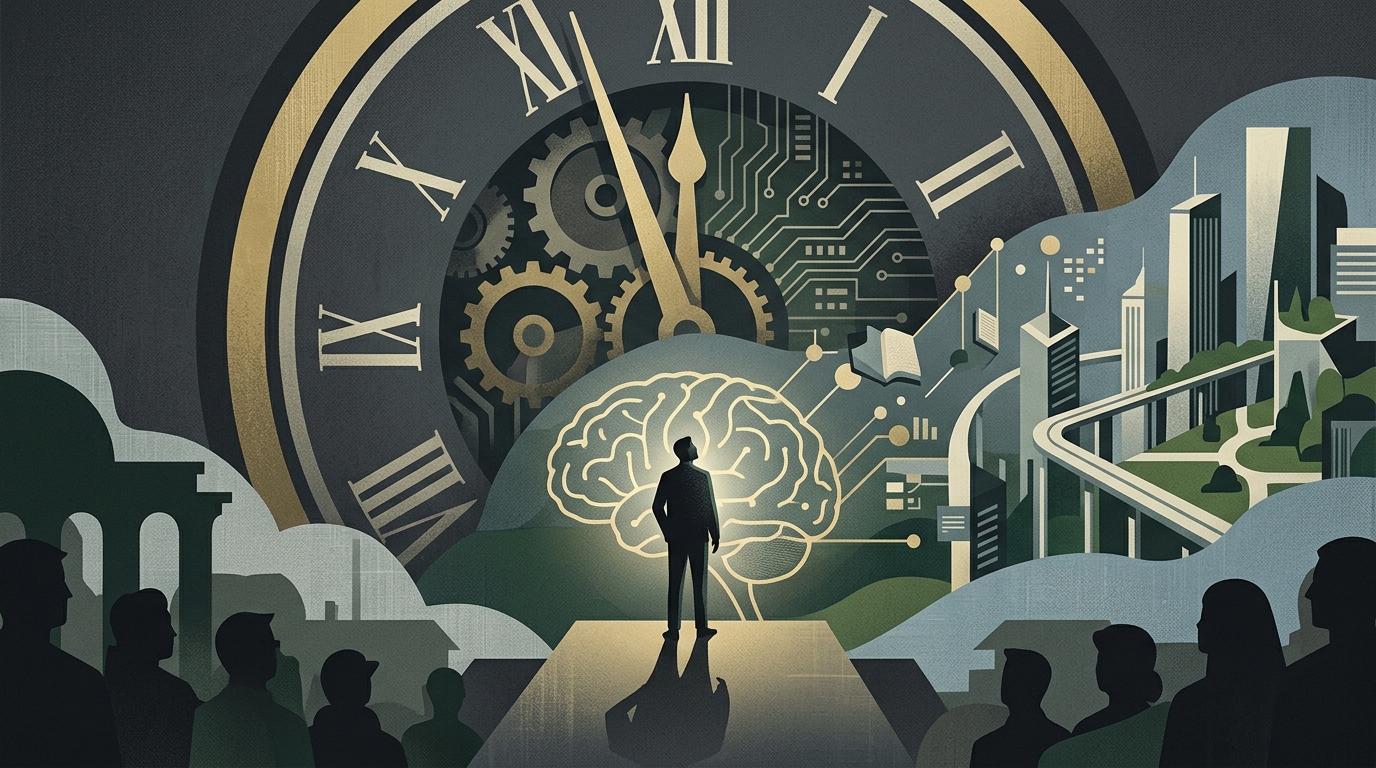
The core of Kurzweil’s argument is not intuition, but mathematics. The 'Law of Accelerating Returns' posits that technological progress is not linear but exponential. While the human brain is evolutionarily programmed to think linearly—assuming the next ten years will look like the previous ten—technology doubles its power at increasingly shorter intervals. According to Kurzweil, what we have witnessed over the last three years with Large Language Models (LLMs) is merely the steepening curve of exponential growth.
The year 2029 was not chosen at random. It is the year in which, according to his calculations, the computational power purchasable for $1,000 will equal the processing capacity of the human brain. But intelligence is not just raw power; it is algorithms. Progress in software, with models capable of self-improvement and training on synthetic data, is closing the gap faster than even the most optimistic Silicon Valley advocates predicted.
From Simulation to Reality
Criticism of Kurzweil often focuses on the distinction between 'simulation' and 'understanding.' Skeptics argue that a machine can pass the Turing test—something Kurzweil believes will definitively happen by 2029—without possessing true consciousness or an inner life. However, Kurzweil counters that beyond a certain level of complexity, this distinction ceases to matter for social and economic reality. If an AI can diagnose diseases better than a doctor, write code better than a programmer, and compose music that moves people to tears, the philosophical debate over the machine's 'soul' will give way to practical integration.
- The achievement of AGI will signal the end of labor as we know it, transforming human activity from a survival necessity into a creative choice.
- Medicine will enter the era of 'longevity escape velocity,' where for every passing year, science adds more than a year to life expectancy.
- Education will become fully personalized, with digital tutors that understand each student’s psychology in depth.
The Path to 2045: The Singularity Moment
If 2029 is the station of equality, 2045 is, for Kurzweil, the station of union. The 'Singularity' refers to the point where human intelligence will merge with artificial intelligence, expanding our cognitive abilities a billion-fold. Already in 2026, we are seeing the first trials of brain-computer interfaces (BCIs) moving out of labs and into clinical stages. Kurzweil envisions a future where our neocortex will connect directly to the cloud, allowing us to 'download' knowledge or communicate telepathically via digital protocols.
However, this transition is not without peril. The concentration of such power in the hands of a few corporations or states could lead to a new form of digital feudalism. The challenge for the next three years, leading up to the 2029 milestone, is not just technical but primarily political and ethical. We must decide how the wealth generated by AGI will be distributed and how we will ensure that machine values remain aligned with human ones.
"Technology is not something outside of us. It is the way we extend the reach of our humanity," Kurzweil often remarks.
As we approach the end of the decade, the prediction of the man who 20 years ago seemed like a heretic has become the roadmap for global evolution. The question is no longer whether it will happen, but whether we are prepared for what our encounter with a superior intelligence will mean.