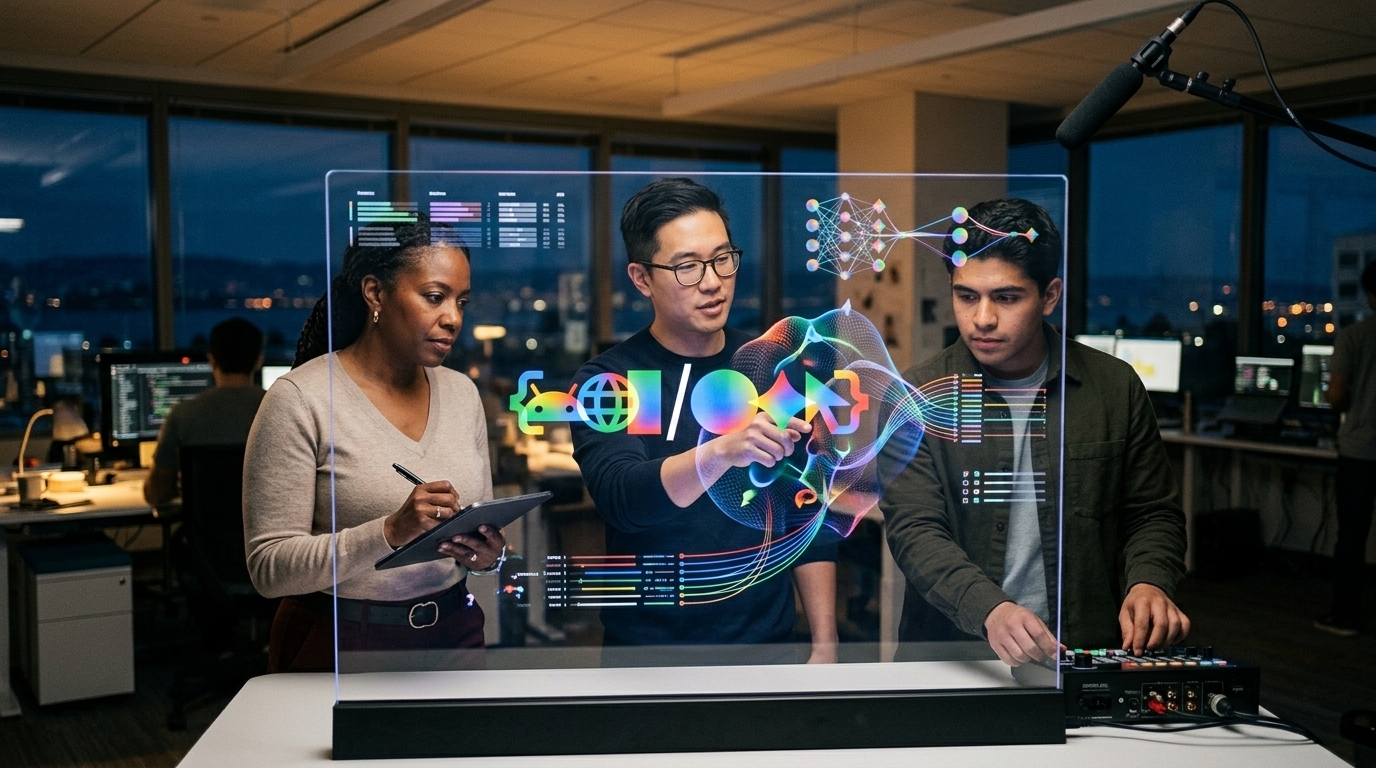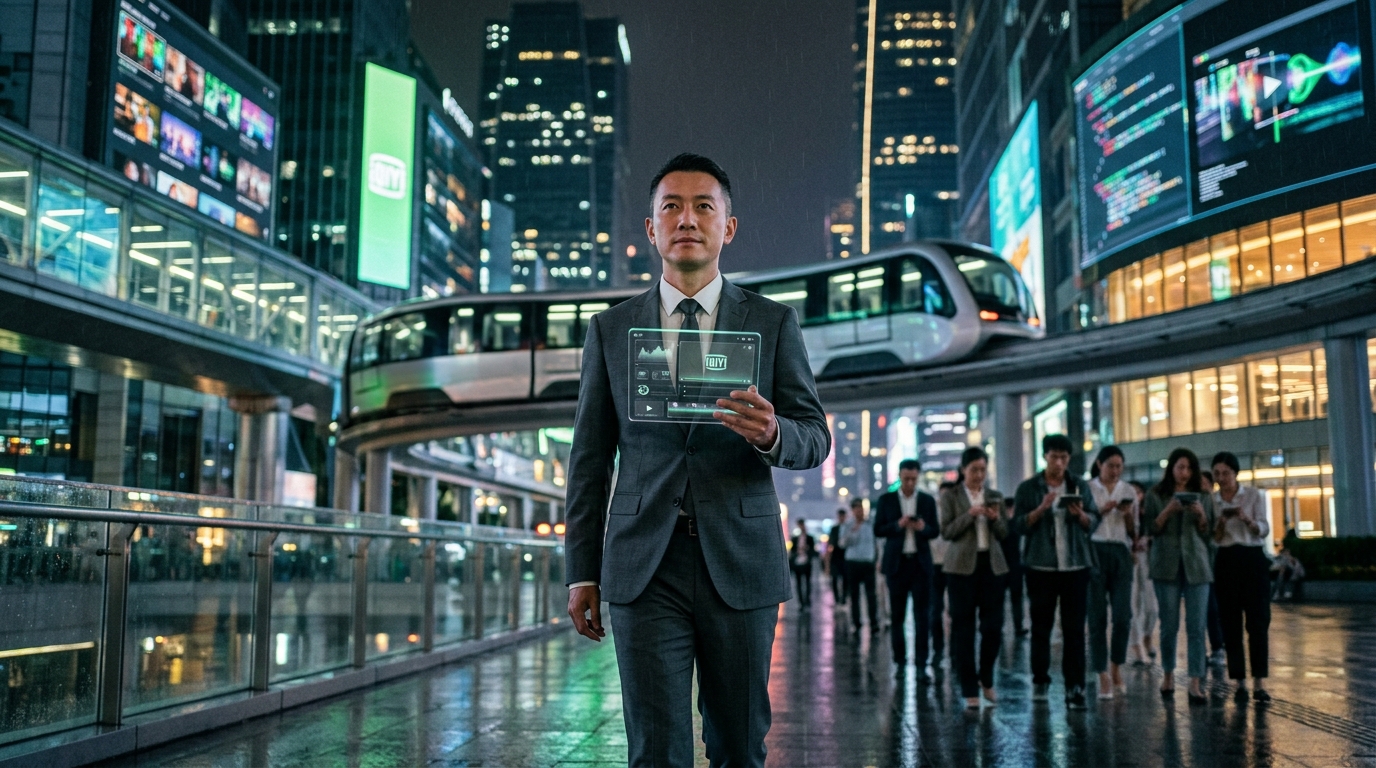
The entertainment industry is standing on the precipice of a structural transformation, and this time, the momentum is not coming from Hollywood, but from Beijing. iQIYI, the platform often dubbed the 'Netflix of China,' has announced an ambitious strategic plan that places Generative Artificial Intelligence (AIGC) at the heart of its creative process for the next five years. Gong Yu, the company's founder and CEO, does not view AI merely as a supportive tool, but as the catalyst that will redefine the cost, speed, and nature of storytelling.
The 'Next Five Years' Strategy
In recent statements, Gong Yu outlined a future where content production is liberated from the constraints of physical shoots and expensive sets. According to him, within the next three to five years, AI will be capable of producing entire scenes, digital actors, and complex scripts with minimal human intervention. iQIYI has already begun integrating AI models for script evaluation, casting optimization, and image processing, reducing production time by 20% to 30% on certain projects.
This move is not coincidental. The Chinese streaming market is characterized by grueling competition between iQIYI, Tencent Video, and Youku (Alibaba). In an environment where profit margins are thin and viewer demand for fresh content is relentless, AI offers a way out: high-quality mass production at a fraction of current costs.
Technological Superiority and the Ernie Model
iQIYI's close relationship with Baidu—the Chinese search giant and its major shareholder—gives it a significant edge. The platform leverages Ernie Bot, Baidu's advanced large language model, to generate dialogue and analyze user trends. The use of AI also extends to 'virtual production,' where actors perform in front of massive LED screens displaying computer-generated environments in real-time, eliminating the need for green screens and months of post-production.
- Automated subtitle creation and dubbing for international expansion.
- Using AI to predict a series' success before filming even begins.
- Creating 'virtual idols' to star in their own dedicated shows.
This technological pivot, however, raises serious questions about artistic integrity. Can an algorithm understand the depth of human emotion or create a story that touches the viewer's soul? Gong Yu argues that AI will not replace creators but will 'liberate' them from technical minutiae, allowing them to focus on pure creativity.
Social and Labor Implications
While Hollywood's writers' and actors' strikes in 2023 and 2024 focused on protection against AI, the approach in China appears more technocratic. The Beijing government encourages AI development as part of its national 'digital economy' strategy, though it maintains strict controls over content. iQIYI's adoption of AI is expected to reshape the professional landscape of the media industry in Asia.
"Artificial intelligence is the new engine of our industry. Those who do not adapt will be left behind in the era of silent films," company executives state.
In conclusion, iQIYI is betting that the future of entertainment will be a blend of human inspiration and algorithmic execution. If the experiment succeeds, China may be able to export its cultural products with unprecedented speed, challenging the dominance of Western platforms on a global scale.