As we navigate the second quarter of 2026, the discourse surrounding Artificial Intelligence has undergone a seismic shift. We are no longer discussing mere "smart chatbots" or productivity tools that help humans draft emails faster. As a prominent futurist recently articulated in an analysis for HealthExec, we have officially entered "Phase Two." In this new era, AI no longer feels like software; it feels like a new species of workforce.
The Evolution from Tool to Entity
During the first phase of the generative AI revolution (2022-2024), technology was treated as a sophisticated digital assistant. It was the professional's "right hand," a mechanism that required constant prompting and human oversight to yield results. Today, in 2026, the emergence of "agentic" systems—AI agents capable of long-term reasoning, planning, and autonomous decision-making—has shattered that paradigm. AI no longer waits for step-by-step instructions. It adopts goals, manages resources, and solves complex problems independently.
This transformation is what led analysts to categorize AI as a "new species of workforce." Unlike traditional software, which is static, deterministic, and predictable, modern AI learns from its environment, adapts to the specific nuances of a business, and, most importantly, possesses a form of "digital initiative." In the healthcare sector, for instance, we are not just seeing programs that archive data; we are seeing autonomous digital partners that monitor patient trajectories in real-time, suggest treatment adjustments, and coordinate communications across disparate medical specialties.
The Economics of Autonomy and Labor
Phase Two brings with it a massive economic challenge. If AI is a "workforce," then how do we redefine the value of human labor? Corporations globally are beginning to treat AI costs not as software expenditures (SaaS), but as labor costs (payroll). Investing in AI agents is now viewed as hiring digital employees who do not tire, do not make fatigue-driven errors, and possess the sum of human knowledge at their fingertips.
- Autonomy: AI agents execute complex workflows without human intervention.
- Learning: Systems improve through experience within specific organizational contexts.
- Scalability: A company can "hire" thousands of digital workers in seconds to meet demand.
- Reasoning: Transition from pattern matching to multi-step logical deduction.
However, this evolution generates profound concerns for the social fabric. The transition from "tool" to "species" means that jobs based on processing, coordination, and logical synthesis are more vulnerable than ever. The market's response has been a pivot toward "deeply human" skills: empathy, ethical judgment, and the strategic synthesis that requires lived, embodied experience.
The Governance Challenge of Phase Two
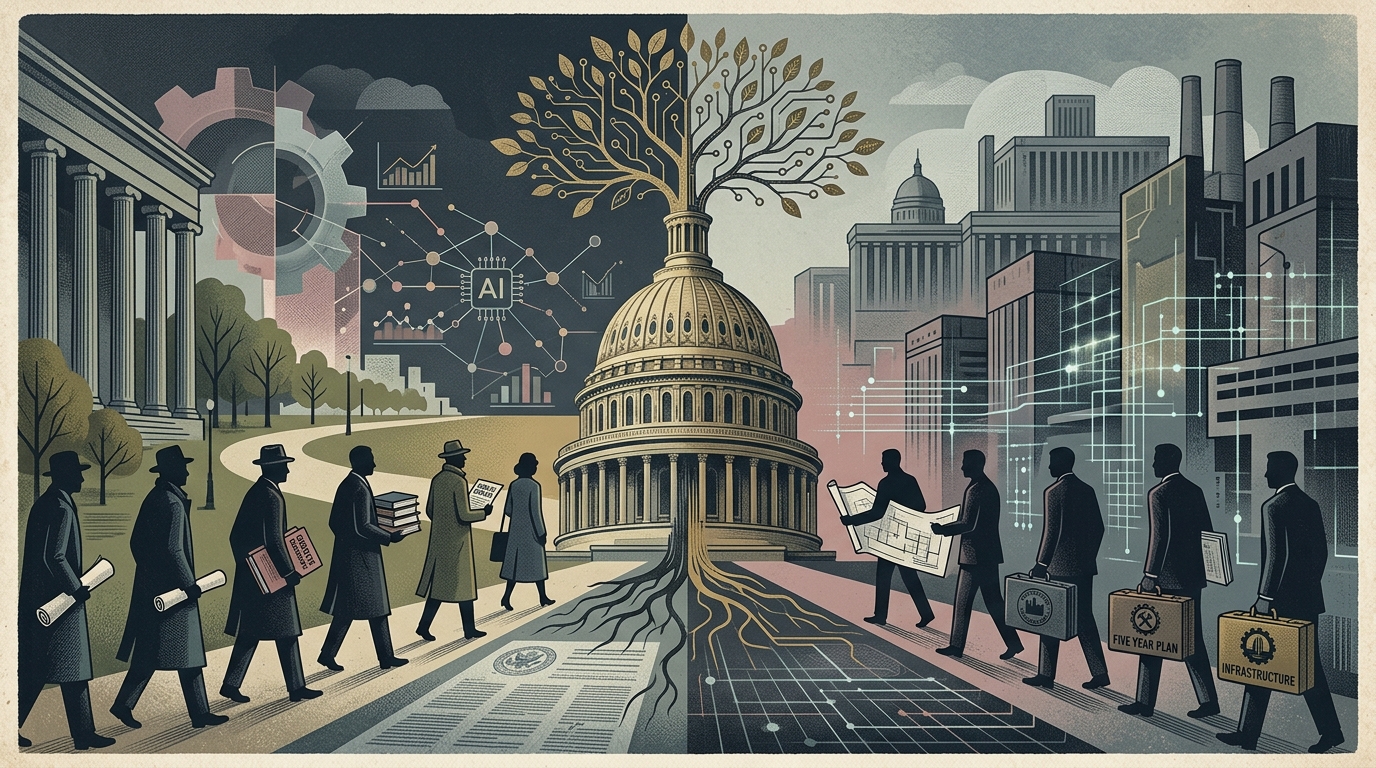
As AI assumes the characteristics of a workforce, regulators in the EU and the US are facing unprecedented questions. How do you tax a digital worker? Who bears the liability for a medical error committed by an autonomous agent? Phase Two demands a new social contract. It is no longer enough to regulate technology; we must regulate the coexistence of two different species of workforce within the same economic ecosystem.
"We are no longer buying licenses; we are investing in digital intelligence that acts on our behalf. The responsibility of leadership now is to ensure that this new species remains in service to humanity rather than eclipsing it."
In conclusion, the futurist's warning is clear: those who continue to view AI as a simple program on their computer will find themselves dangerously unprepared. Phase Two is here, and the integration of this "new species" into our society will be the defining test of the 21st century. The boundary between the user and the used is blurring, and the workforce of the future is no longer exclusively human.