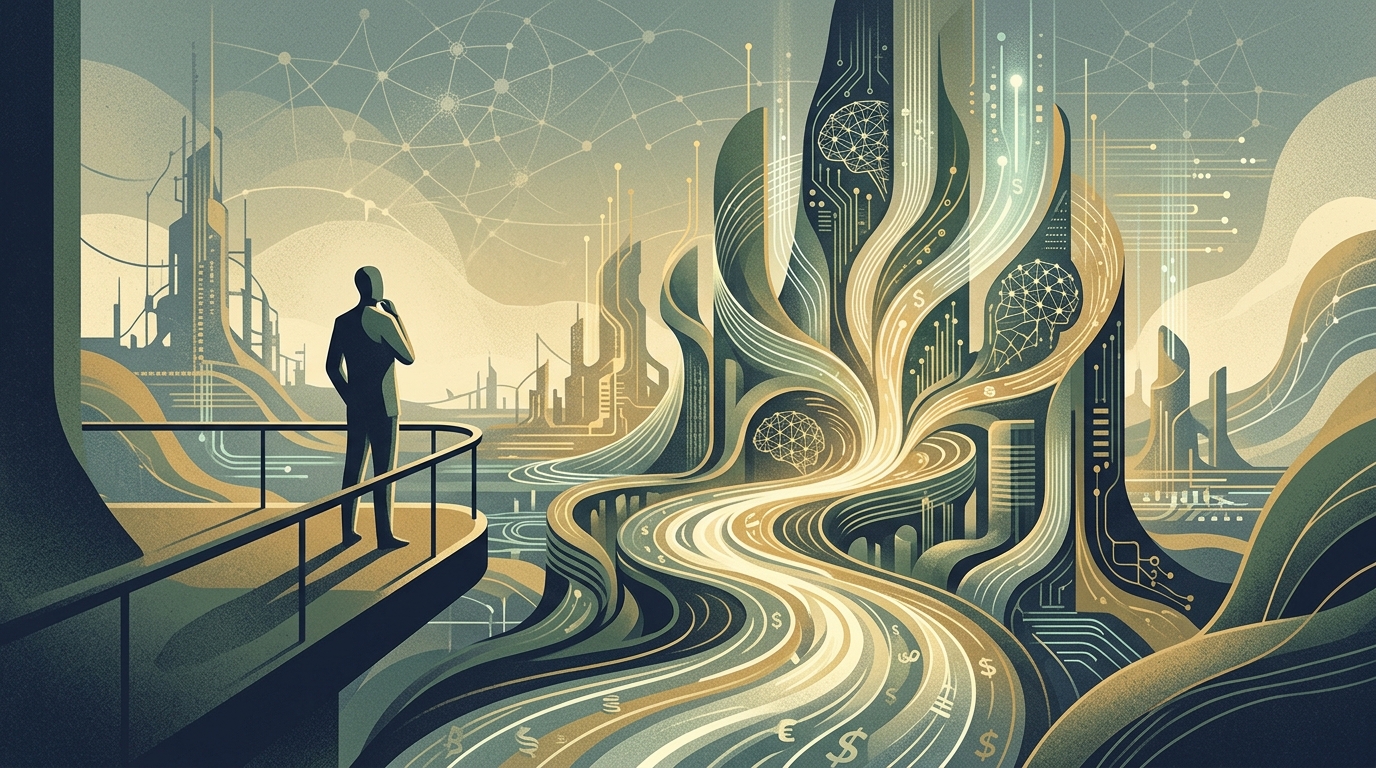
As we navigate the middle of 2026, the global conversation surrounding Artificial Intelligence (AI) has undergone a fundamental shift. We have moved past the initial shock of what AI can do, and we are now rigorously defining the boundaries of what it cannot. As Large Language Models (LLMs) and autonomous agents become staples of the modern office, a new hierarchy of labor is emerging. According to leading workplace experts and organizational psychologists, there is a core set of human attributes that remain beyond the reach of silicon and code, forming a resilient "human moat" in the professional landscape.
The Supremacy of Emotional Intelligence (EQ)
The most significant domain of human superiority remains Emotional Intelligence. While AI systems have become adept at sentiment analysis—identifying keywords that suggest frustration or satisfaction—they lack the biological hardware to actually *experience* or *empathize*. A machine can process a transcript of a meeting, but it cannot feel the tension in the room, nor can it understand the unspoken subtext of a team member's hesitation.
Workplace experts emphasize that high-stakes leadership, mentorship, and complex negotiations rely heavily on EQ. The ability to build trust, to inspire a discouraged workforce, or to navigate the delicate ego dynamics of a boardroom requires a level of social intuition that is inherently human. In fields like mental health, social work, and high-level management, the "human touch" isn't just a luxury; it is the primary engine of value. AI can provide a script, but it cannot provide presence.
Critical Thinking and Ethical Navigation
Another area where humans maintain a decisive edge is critical thinking within ambiguous or "wicked" problems. AI excels in environments with clear rules and vast datasets (closed systems). However, the real world is an open system characterized by noise, missing information, and ethical complexity. Critical thinking involves questioning the premise of a problem, not just solving for the variables provided.
- Contextual Synthesis: Humans can draw parallels between disparate fields—like applying a lesson from history to a modern tech crisis.
- Ethical Judgment: AI lacks a moral compass; it follows an objective function. Decisions that involve justice, fairness, and long-term societal impact require a human conscience.
- Navigating Uncertainty: When there is no historical data to guide an algorithm, human intuition and strategic risk-taking become indispensable.
As one expert noted, "AI can optimize a supply chain for maximum profit, but it cannot decide if that optimization is worth the cost of exploiting a local community or damaging a long-term geopolitical relationship."
Moravec’s Paradox and Physical Adaptability
It is a profound irony of the digital age that the hardest jobs to automate are often those we consider "blue-collar." Moravec’s Paradox posits that high-level reasoning requires very little computation, but low-level sensorimotor skills require enormous computational resources. This is why an AI can pass a bar exam but a robot still struggles to fold laundry or navigate a cluttered construction site.
Skilled trades—plumbing, electrical work, specialized nursing, and artisanal craftsmanship—require a level of physical dexterity and real-time environmental adaptation that remains light-years ahead of current robotics. Each task in these fields is unique; a plumber doesn't just follow a map; they feel the vibration of a pipe and adjust their pressure based on decades of tactile experience. This "embodied intelligence" is a safeguard against the current wave of automation.
The Spark of Authentic Creativity
Finally, there is the matter of the "creative spark." While generative AI can produce breathtaking imagery and coherent prose, it is essentially a sophisticated mirror, reflecting and recombining the sum of human knowledge. It lacks intentionality. Authentic creativity is driven by a desire to communicate a specific human experience, a struggle, or a vision for the future.
In the coming years, we expect to see a "human premium" in the market. As the world becomes saturated with AI-generated content, the value of original thought, groundbreaking scientific hypotheses, and art that possesses a soul will skyrocket. The ability to innovate—to create something truly *new* that doesn't exist in the training data—remains the ultimate human superpower. Experts suggest that instead of competing with AI on speed and volume, workers should focus on the depth and originality of their contributions.