As the global appetite for Artificial Intelligence (AI) pushes energy infrastructure to its breaking point, a radical solution is emerging from the heart of modern suburbia. Instead of erecting gargantuan, monolithic data centers that consume the power of entire cities, a new generation of startups, in partnership with giants like Nvidia, is proposing something once unthinkable: dispersing computing power directly into our homes.
The Convergence of Energy and Compute
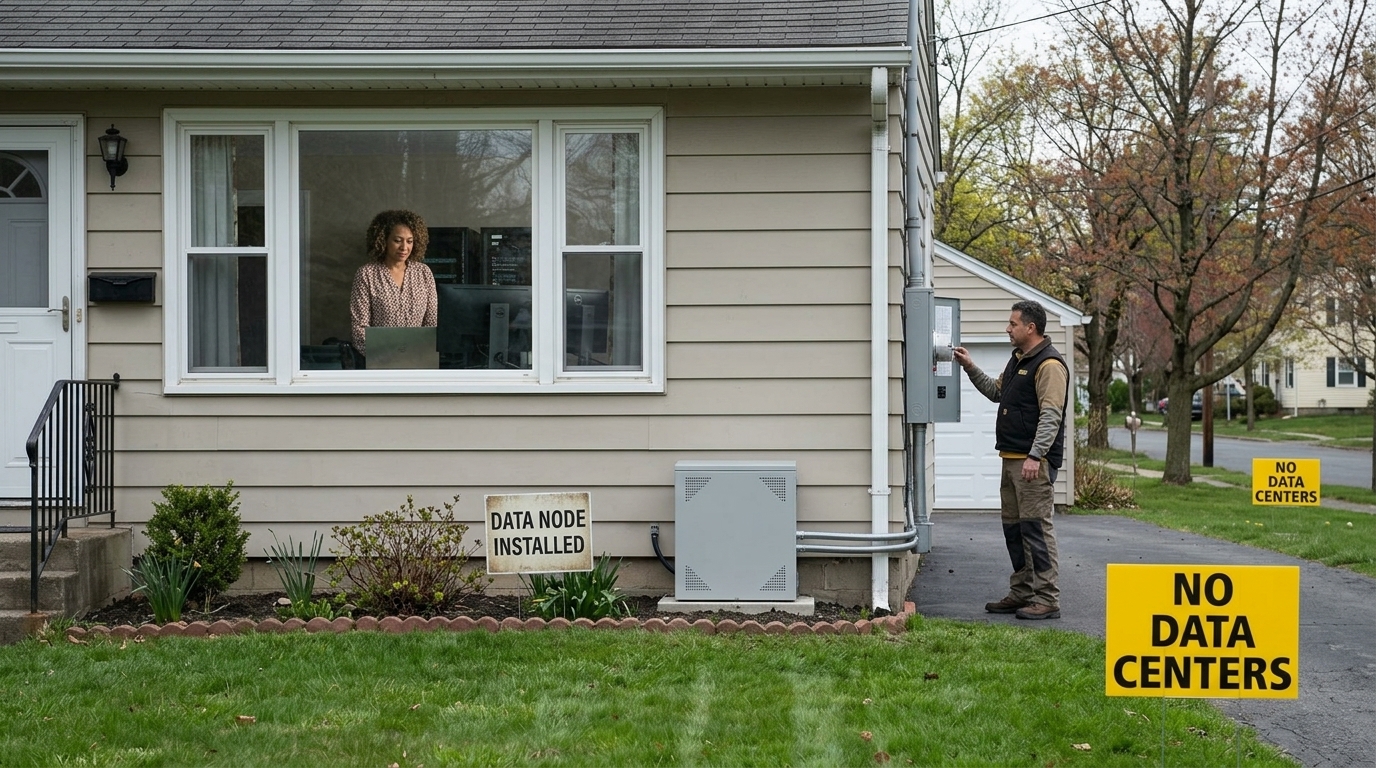
The strategic partnership between Span, a pioneer in smart electrical panels, Nvidia, and PulteGroup, one of the largest homebuilders in the U.S., marks a historic turning point. The project taps into the underutilized electrical capacity of modern residences. Most homes are equipped with electrical services (often 200 amps) that are rarely used to their full potential. By installing tiny, silent data centers—often no larger than a shoebox—these companies are transforming the home into an active node of the global digital web.
Span provides the "brain" of this installation. Its smart panel can manage the load in real-time, ensuring that AI data processing occurs only when there is excess energy or when the grid is not at peak demand. Nvidia, for its part, supplies the specialized processors that execute the computational tasks, while PulteGroup integrates this technology directly into the foundations of new "AI-ready" neighborhoods.
Heating from the Cloud: The Heata Model
The concept isn't just about grid management. British startup Heata has already shown the way by using the heat generated by servers to warm domestic hot water. This is an elegant solution to the problem of thermodynamic loss: instead of spending vast sums to cool data centers, the waste heat becomes a valuable resource for the consumer. In the new Span-Nvidia model, this circular energy economy could drastically reduce household electricity bills, as tech companies essentially "rent" the home's space and power, subsidizing the cost of living.
- Reduction of energy transmission losses through local consumption.
- Utilization of surplus solar energy from residential PV systems.
- Provision of low-latency computing power for local AI applications.
- Creation of a more resilient and decentralized electrical grid.
Challenges and Ethical Questions
However, turning private space into industrial infrastructure is not without risks. The primary concern is privacy. Although companies assure that the data processed by home servers is encrypted and unrelated to the residents' activities, the physical presence of corporate hardware in the home is unsettling. Furthermore, there is the issue of maintenance: who gets access to the home if a server malfunctions?
"We aren't just building homes anymore; we are building the power and information plants of the 21st century," a PulteGroup executive stated during the pilot program's launch.
The geopolitical dimension is also significant. In an era where supply chains are fragile and large power plants are targets, decentralization offers a layer of security. If the grid consists of millions of small nodes, it is much harder to bring down entirely. Nevertheless, the dependence of our daily housing on the profitability of Nvidia's chips creates a new form of techno-feudalism, where the residence ceases to be a sanctuary and becomes a production unit for Silicon Valley.
The Future of Urban Living
By the end of 2026, it is expected that thousands of these units will have been installed in new homes across North America and Europe. If the experiment succeeds, we will see a radical revision of architecture. Homes will no longer be valued solely on square footage or location, but also on their computational throughput and thermal integration. The era when the data center was a remote fortress in the desert is ending. The cloud is coming down to earth—specifically, to our garages.