In the dystopian landscape of the Gaza Strip, where the sound of explosions often gives way to the silence of loss, a new form of architecture is literally emerging from the dust. As traditional construction material imports remain restricted or entirely blocked due to strict controls on 'dual-use' items, local residents and engineers are turning to a solution that blends desperation with innovation: transforming rubble into building blocks that resemble Lego bricks.
The Technology of Necessity
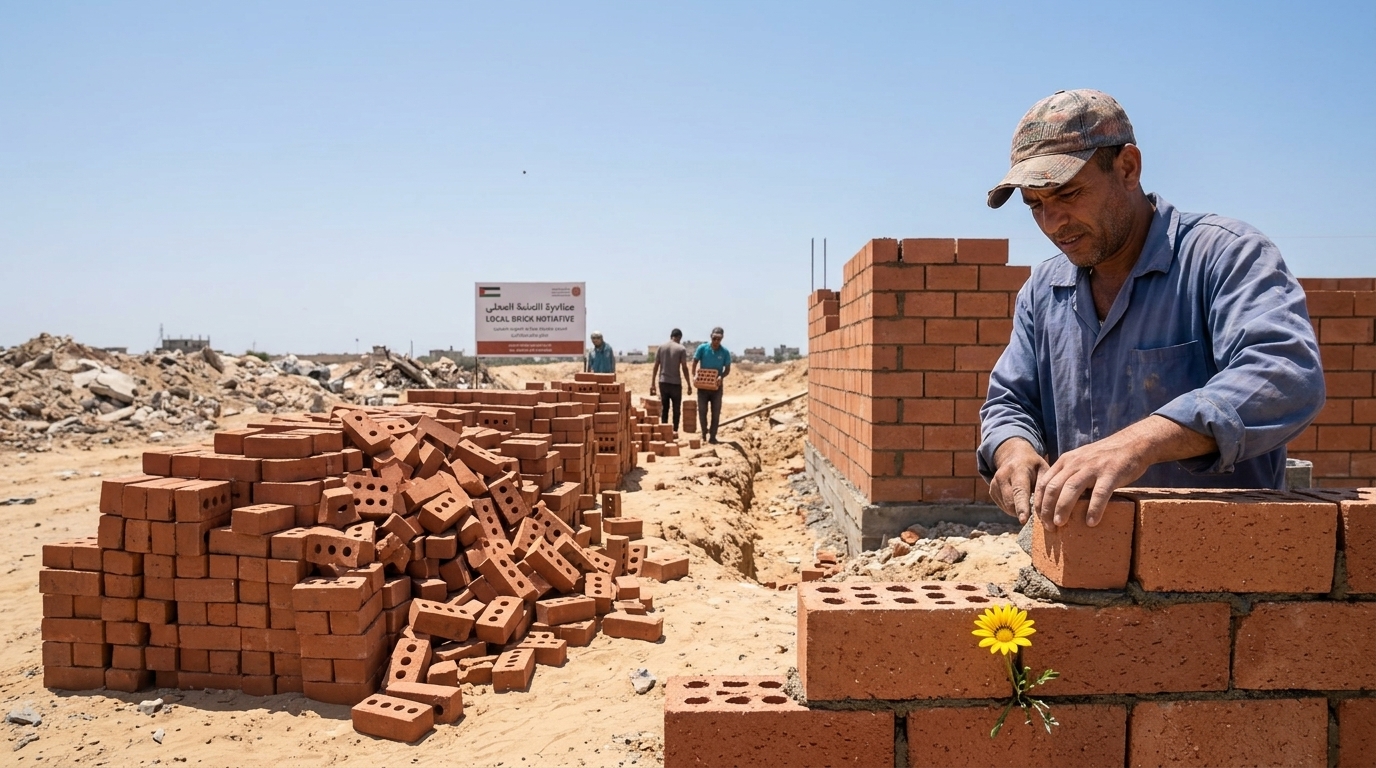
The process is as simple as it is revolutionary. Debris from bombed buildings is collected, cleared of metals, and then crushed into fine-grained materials. These fragments are mixed with minimal amounts of cement and water—far less than required for conventional bricks—and compressed into molds that create interlocking blocks. The result is a structural element that does not require mortar to stand, allowing for the quick and easy erection of shelters.
This approach is not just a technical solution; it is a response to a humanitarian crisis. With millions of tons of rubble covering Gaza, waste management is a titanic task in itself. Instead of the debris being an obstacle to reconstruction or a source of environmental pollution, it is being transformed into the raw material for the new homes of those who have lost everything.
Disaster Economy and Circular Innovation
The use of these blocks highlights an extreme form of circular economy. Unlike Western societies that adopt recycling as an ecological choice, for Gaza, it is a matter of life and death. The lack of access to raw materials like sand and cement has led to the development of local workshops operating with minimal resources. Crushing machines are often improvised, and knowledge is passed by word of mouth between communities.
However, significant challenges remain. The structural integrity of these materials must be carefully monitored, as rubble often contains impurities that can weaken the final product. Furthermore, the presence of unexploded ordnance within the debris makes collection and crushing an extremely hazardous process. Despite the risks, the urgent need for housing before winter pushes people to ignore their fears.
Political and Humanitarian Implications
The international community watches with a mix of admiration and unease. While humanitarian organizations praise the ingenuity of Palestinians, the reality remains that these 'Lego' bricks are the result of a failure of diplomacy. Rebuilding Gaza in this manner underscores the region's isolation. The resulting structures are often temporary or semi-permanent shelters that provide protection from the elements but fall far short of the infrastructure required for sustainable urban life.
The case of Gaza could serve as a lesson for other regions affected by conflict or natural disasters. The idea of using local rubble for immediate reconstruction reduces transportation costs, the carbon footprint, and dependence on external supply chains. It is a tragic irony: the very material that once formed someone's home and was turned to dust by a missile is now becoming the foundation for their next attempt to live with dignity.
"We are not just building walls; we are recycling our history to survive our present," says a local engineer involved in the project.
A Model for the Future?
While the focus is currently on survival, the technical data gathered from this large-scale experiment in Gaza could inform future green building practices worldwide. Interlocking bricks require less energy to produce and assemble than traditional concrete. If the safety and durability standards can be met, the 'Gaza model' might find applications in low-cost housing projects across the Global South.
- Significant reduction in construction costs compared to imported materials.
- Mitigation of environmental hazards from massive debris accumulation.
- Creation of local jobs in an environment of extreme unemployment.
At the end of the day, Gaza's Lego-like bricks are more than just building materials. They are symbols of a resilience that refuses to be defeated. As political discussions about the region's future continue in luxurious boardrooms, the people on the ground continue to build, brick by brick, a life upon the ruins of their past.