The European automotive industry stands at a critical juncture, as recent data reveals a steady recovery fueled almost exclusively by the adoption of alternative energy sources. For the third consecutive month, new vehicle registrations in Europe have shown positive growth, a development that offers a breath of optimism to a sector severely tested by supply chain disruptions and inflationary pressures in previous years. However, the real news is not the quantitative increase but the qualitative shift: internal combustion engine (ICE) vehicles are gradually losing ground, while hybrids and battery electric vehicles (BEVs) are establishing themselves as the new normalcy.
The Dominance of Hybrids as a Transition Bridge
Despite the hype surrounding full electrification, hybrid electric vehicles (HEVs) are emerging as the major winner of the current period. Consumers, still concerned about charging infrastructure and the high cost of pure electric models, are turning en masse to hybrids as a 'safe' and cost-effective solution. Data shows that the market share of hybrids has exceeded 30% in many European markets, offering a balance between emissions reduction and the practicality required for daily commuting without range anxiety.
Manufacturers, for their part, have recognized this trend. Companies like Toyota, Renault, and the Stellantis group are investing in increasingly efficient hybrid systems that allow for zero-emission city driving for the majority of trips. This 'hybrid revolution' serves as the necessary intermediate stage before the full prevalence of electrification, allowing the market to gradually adapt to the realities of 2035, when the sale of new petrol and diesel cars will be banned in the European Union.
The BEV Challenge and Chinese Competition
While hybrids are triumphing, battery electric vehicles (BEVs) continue their upward trajectory, albeit with some fluctuations depending on the state subsidy policies of each country. Germany, France, and the Nordic countries remain the pioneers, but the major question remains accessibility. The cost of purchasing an electric car is still higher than its conventional counterpart, despite the decrease in battery prices. This gap is being aggressively filled by Chinese automakers. Brands like BYD and MG have managed to offer competitive models with advanced technology at prices that cause headaches for European manufacturers.
The European Commission is closely monitoring this development, having already launched investigations into the subsidies received by Chinese manufacturers from Beijing. The threat to European industry is real: if traditional powers (Volkswagen, BMW, Mercedes) fail to reduce production costs and accelerate innovation, they risk losing dominance in their own home market. The battle for the 'affordable electric car'—one costing under 25,000 euros—is the industry's new holy grail.
Infrastructure and Regulatory Framework: The 2026 Stakes
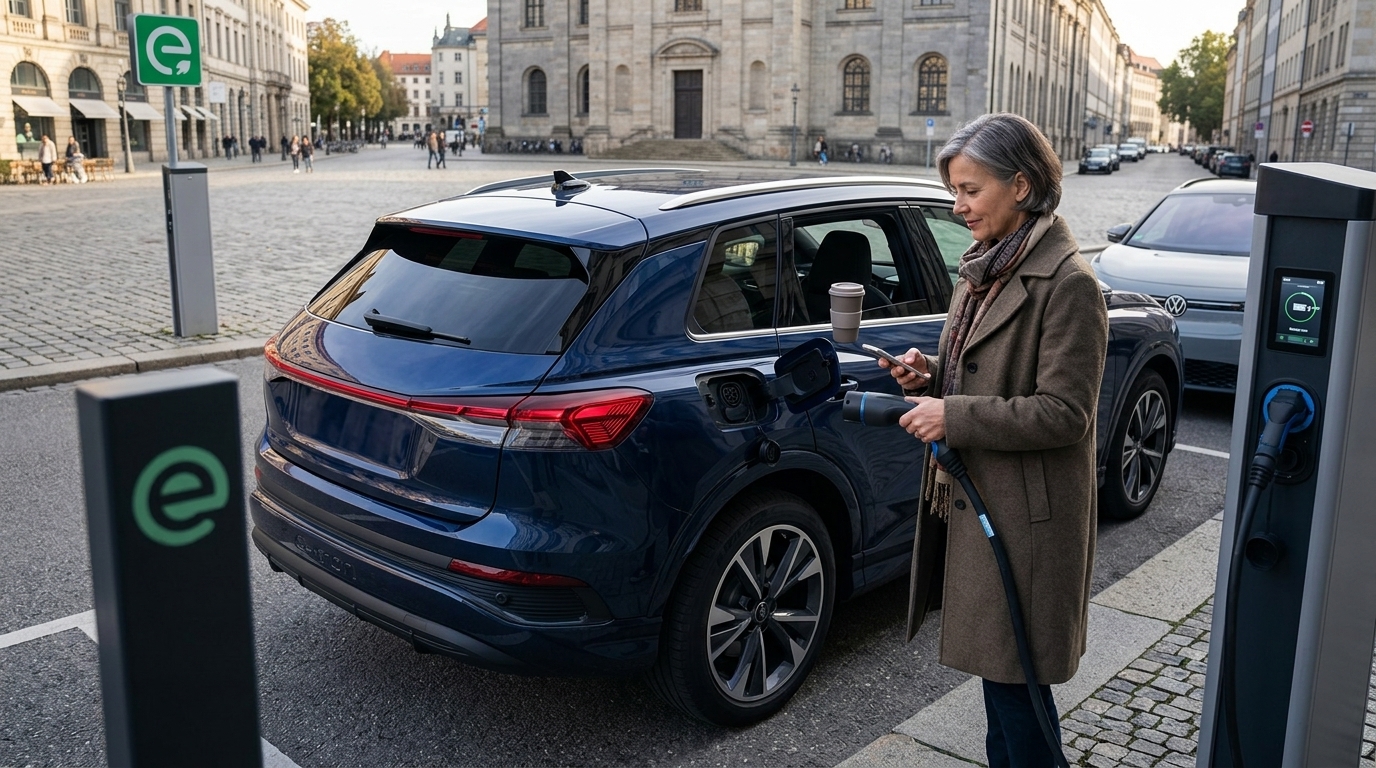
The increase in sales brings the infrastructure problem to the forefront. Despite the increase in charging points, their distribution across Europe remains uneven. While charging is relatively easy in the Netherlands and Germany, in the European South—including Greece—the situation remains problematic for those without private parking. The success of the green transition depends directly on the speed of implementation of the AFIR (Alternative Fuels Infrastructure Regulation), which mandates the installation of charging stations every few kilometers along the EU's main road axes.
At a political level, 2026 is a milestone year for evaluating the 'Fit for 55' goals. There are voices, mainly from the conservative wing of the European Parliament, calling for greater flexibility and a review of the internal combustion engine ban, citing the need for 'technological neutrality' (including e-fuels). However, the industry has already invested billions in electrification, and a sudden change of course could cause economic chaos. The future of European mobility is now irrevocably connected to the plug, whether through hybrid systems or pure electricity.