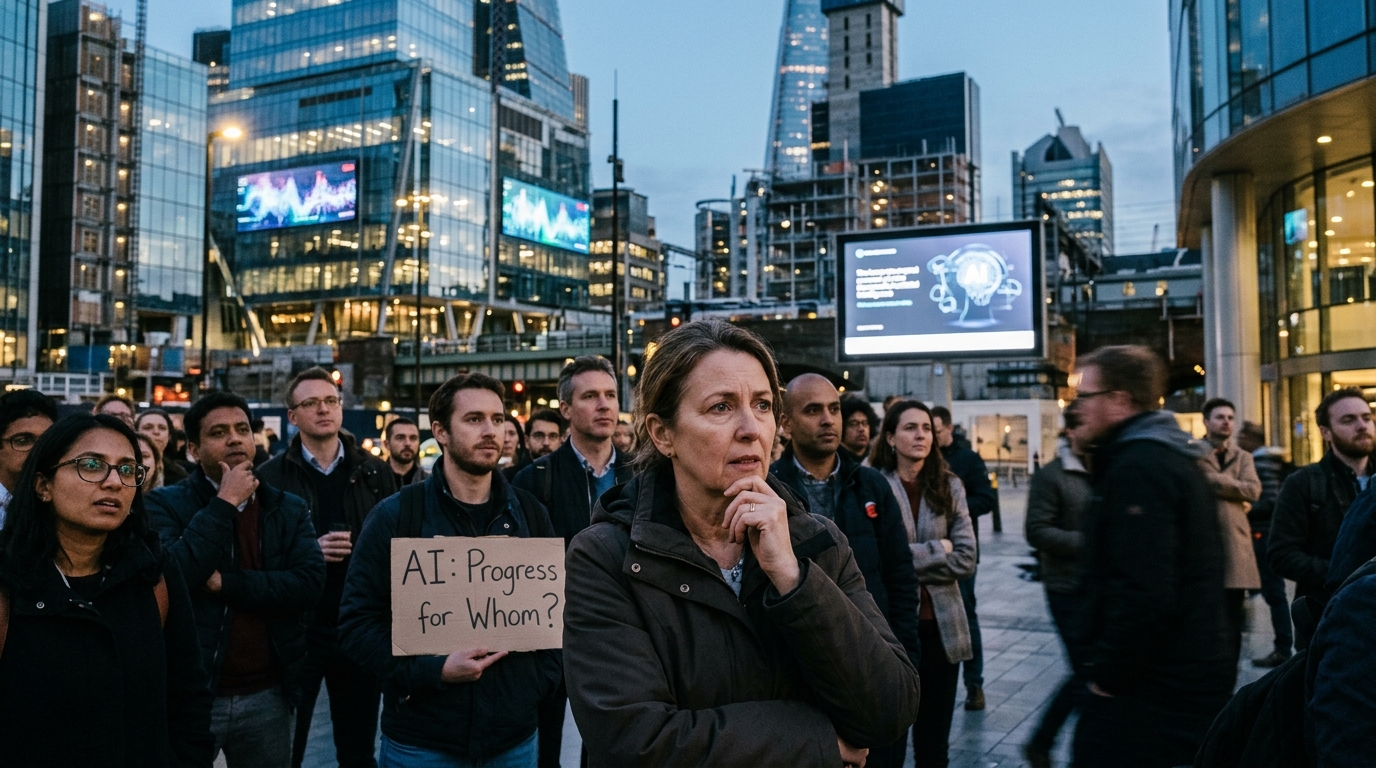
The discourse surrounding Artificial Intelligence (AI) is often confined to the glossy headquarters of Silicon Valley or the sterile boardrooms of multinational conglomerates. However, the true litmus test of any technological revolution is not found in the stock prices of Nvidia or Microsoft, but in how it is perceived and integrated by the broader public. Recent letters to the editor in local outlets, such as the Longmont Times-Call, reveal a deep and growing sense of unease. Citizens no longer view AI as a distant utopian vision, but as an intrusive force that threatens to degrade the quality of human communication and the reliability of information.
The Erosion of the Human Element
One of the primary concerns voiced by the public pertains to dehumanization. As businesses and public services replace human staff with chatbots and automated systems, citizens feel they are losing their right to meaningful interaction. AI, despite its ability to process vast amounts of data, lacks empathy and critical judgment. When an elderly citizen attempts to resolve a complex bureaucratic issue only to be met with an algorithm repeating scripted responses, the technology ceases to be a tool for progress and becomes a barrier to service.
This shift is particularly poignant in communities where personal relationships form the bedrock of social trust. The push for efficiency often ignores the psychological need for human validation. Digitalization is necessary, but total automation risks marginalizing those who lack digital literacy or those who simply seek human understanding during a difficult moment. The "difficulties" mentioned by the public aren't just technical glitches; they are existential questions about the kind of world we want to inhabit.
The Reliability Crisis and AI 'Hallucinations'
Another critical point raised by concerned citizens is the questionable validity of AI-generated information. The so-called "hallucinations" of Large Language Models (LLMs) are not merely technical bugs; they are cracks in the foundation of truth. When an AI presents false facts or non-existent sources with absolute certainty, it erodes public trust in the very concept of knowledge. In an era where misinformation is already rampant, adding another layer of unreliable information poses a significant threat to democratic discourse.
- The difficulty in distinguishing between human-authored and machine-generated content.
- The risk of creating algorithmic echo chambers that reinforce biases.
- The potential for AI to be used for the mass production of sophisticated propaganda.
Public feedback highlights the urgent need for stricter oversight and transparency. It is not enough to be told that AI is "smart"; we must know how it was trained, by whom, and what inherent biases it carries. The demand for accountability is not Luddism; it is political maturity. People are asking for a standard of truth that machines, currently, cannot guarantee.
Economic Anxiety and the Future of Labor
While the category of this discussion is the future, the economic dimension is inescapable. Anxiety regarding job displacement is no longer limited to manual labor. Professionals in writing, graphic design, and even software engineering are seeing AI encroach upon their livelihoods. The "difficulty" with AI, as noted in grassroots letters, lies in the fact that while productivity increases for corporations, security decreases for workers. The redistribution of wealth generated by automation remains an unanswered question that governments have yet to address with the necessary courage.
"Technology should be our servant, not our master. If Artificial Intelligence makes us more efficient but less human, then we have failed in our mission of progress."
In conclusion, the voices of citizens—from small towns like Longmont to global metropolises—send a clear message: Technological progress cannot be imposed in the absence of social consent. A sincere dialogue is required regarding the limits of automation, the protection of privacy, and the preservation of human dignity. AI has the potential to solve some of humanity's greatest challenges, but only if it is guided by values that transcend profit and speed. The difficulties we face today are a wake-up call to ensure that the future remains human-centric.