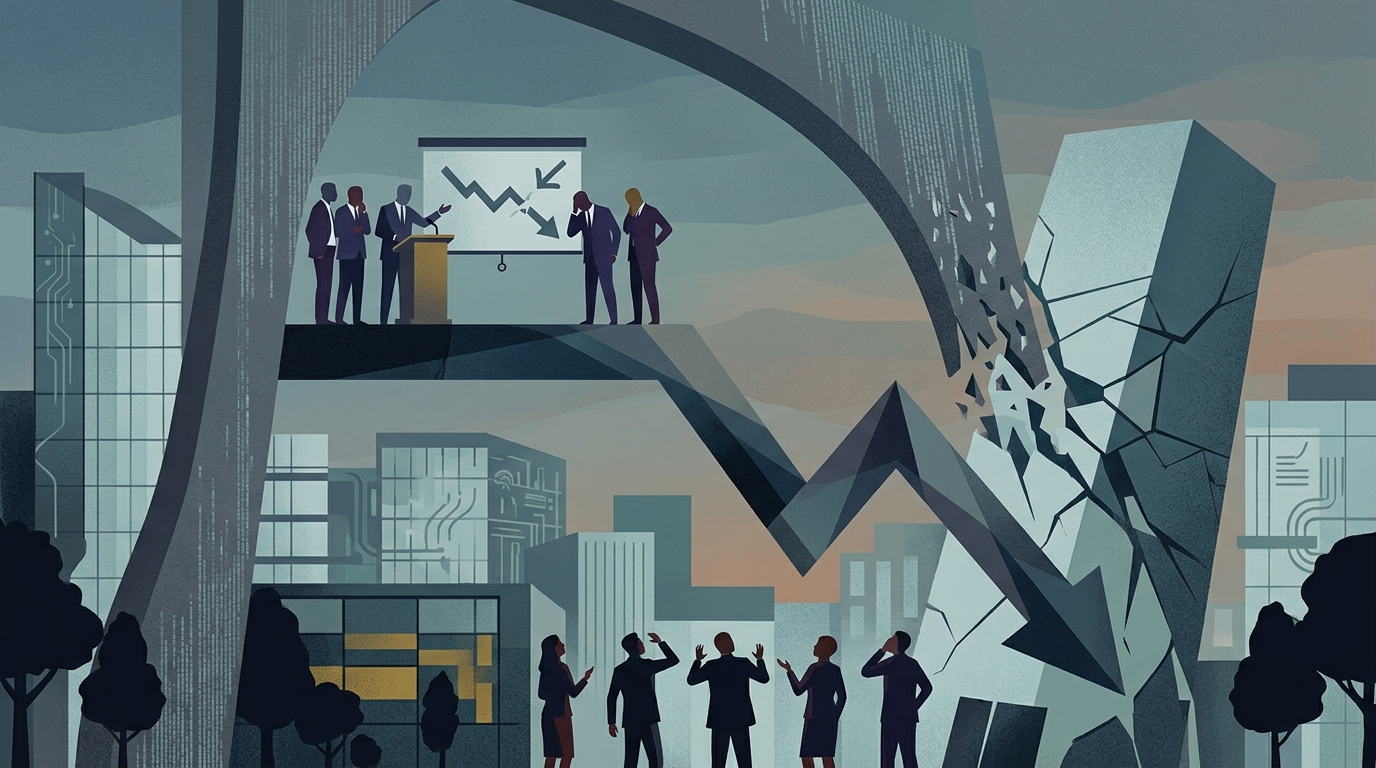
For over a decade, the dominant narrative surrounding Artificial Intelligence (AI) has been one of inevitable loss. From academic halls to Silicon Valley boardrooms, the forecast was grim: algorithms would gradually replace drivers, accountants, programmers, and eventually, the bulk of the global workforce. However, as a recent analysis by the Wall Street Journal highlights, there has been a sudden and coordinated shift in the rhetoric of the world's largest tech companies. The "wipeout" of jobs is no longer the central theme; it has been replaced by "augmentation."
The Strategy of Collaboration and the End of Fear
This pivot is not accidental. Companies like Microsoft, Google, and Salesforce are now promoting AI as a "copilot" or a "digital assistant" rather than a replacement. This change serves multiple purposes. First, it reduces resistance from employees and labor unions, who are the end-users of these tools. Second, it reassures regulators in the European Union and the US, who are concerned about the social implications of mass automation. The message is now clear: AI won't take your job, but a person using AI will.
In the global market, this shift carries significant weight. AI adoption is no longer presented as a cost-cutting measure through layoffs, but as a way to bridge the productivity gap that has plagued Western economies for years. Tech leaders now argue that AI will handle "boring and repetitive" tasks, freeing humans for more creative and strategic endeavors. However, critics of this theory wonder if there are enough "creative" roles to absorb the millions of workers whose traditional responsibilities will be automated.
Economic Realities and Demographic Data
One of the primary reasons for this rhetorical shift is the demographic crisis facing the West. With aging populations and labor shortages in sectors like healthcare, education, and manufacturing, Big Tech is positioning AI as the only solution for maintaining economic growth. In this context, AI is not a threat but a necessity. The WSJ analysis suggests that companies realized that scaring the market with "Armageddon" scenarios for jobs was actually hindering the sale of their products.
"Technology is not destiny. It is a tool that we shape. The augmentation narrative is an attempt to regain control over our relationship with machines," says an industry executive.
However, economic history teaches us that increased productivity often leads to headcount reduction, even if that isn't the immediate goal. If one worker, aided by AI, can do the work of three, the labor market will inevitably face pressure. Big Tech seems to be choosing a "softer" approach to buy time while AI infrastructure is deeply integrated into the fabric of the global economy.
The Productivity Trap and the Future of Work
The challenge for the coming years will be education and reskilling. If Big Tech’s new narrative is true, then the ability to collaborate with AI will become the core skill of the 21st century. This requires radical changes in education systems, which traditionally move much slower than technological evolution. The risk of a widening digital divide is real, and governments must ensure that older workers are not marginalized in this transition.
In conclusion, Big Tech’s sudden flip from fear to hope is a high-stakes strategic move. While the rhetoric of "augmentation" is certainly more appealing, market reality will be judged by its results. If AI succeeds in creating new industries and new needs, Big Tech will be vindicated. But if productivity rises without a corresponding increase in employment, the current narrative will be remembered as one of the greatest PR maneuvers in technological history.