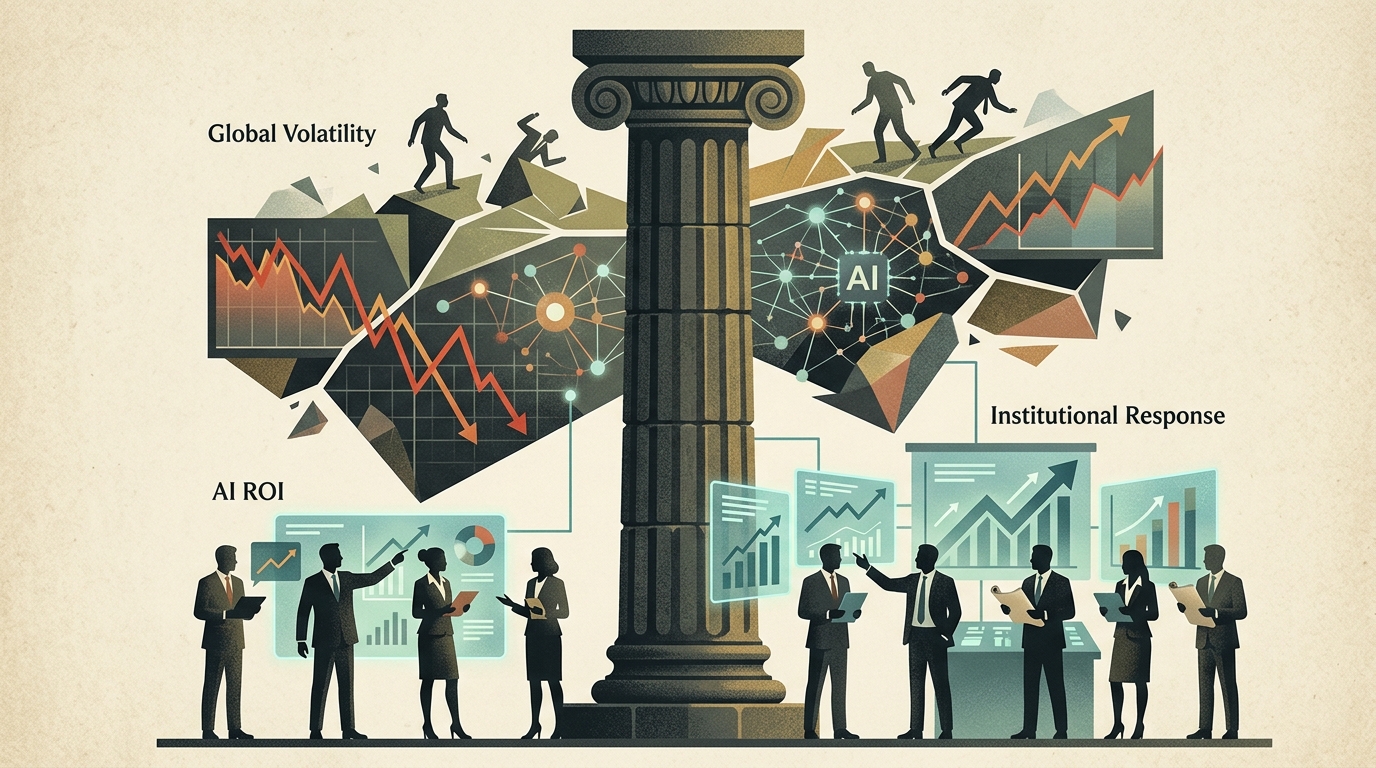
On July 13, IBM experienced the most significant single-day stock decline in its 115-year history, with shares plunging 25%. This collapse wiped out approximately $40 billion in market capitalization, raising urgent questions about the durability of the AI-driven market rally.
Anatomy of a Collapse
The market reaction was extreme despite a relatively modest revenue miss—$17.2 billion against a consensus of $17.9 billion (a 3.7% shortfall). IBM CEO Arvind Krishna admitted the company 'faltered' in a market requiring 'perfect' execution. The New York Times’ DealBook questioned if the miss was a 'canary in the tech coal mine,' while the Financial Times described it as a 'warning to the IT sector,' suggesting a secular shift where AI begins to displace traditional software.
The 'Dual Bubble' Theory
Steve Hanke, a professor of applied economics at Johns Hopkins, argues that investors are misinterpreting the AI boom. He suggests the market is facing two bubbles: a standard valuation bubble (price versus earnings) and a more insidious 'earnings bubble.' In the latter, profits themselves are unsustainable, potentially inflated by the massive capital expenditure cycle, circular investments, and private bank credit.
- Earnings bubbles are difficult to detect because analysts often only lower profit estimates after stock prices have already crashed.
- IBM serves as a potential signal that the market is losing faith in the profit growth narrative.
- The contrast with record bank profits, such as JPMorgan’s $21.2 billion, highlights the monetary mechanisms Hanke believes are fueling these bubbles.
Reality vs. Expectations
While bulls argue that AI leaders like Nvidia and Alphabet generate significant cash flow—unlike the profitless firms of the 2000 dot-com bubble—Peter Berezin of BCA Research warns that earnings bubbles often leave behind real excess capacity, such as idle data centers. IBM's crash suggests that even minor deviations from expectations can now trigger severe selloffs, as investors begin to question if AI-driven earnings were ever as solid as they appeared.