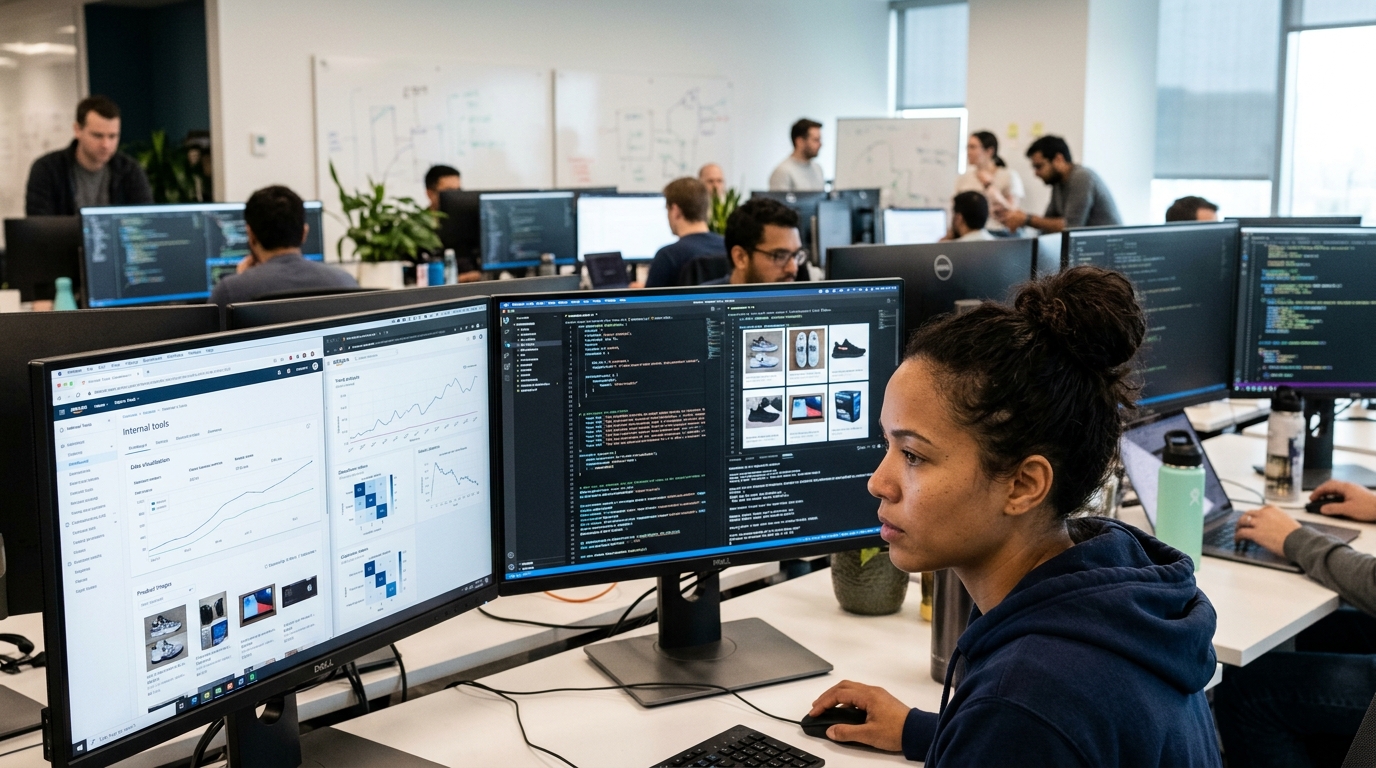
The era when a new biscuit flavor or a revolutionary shampoo required years of lab testing and focus groups is officially behind us. Today, the battle for the supermarket shelf is fought through high-powered processors and machine learning algorithms. Global giants like Unilever, Nestlé, Procter & Gamble, and Mondelez have integrated Artificial Intelligence (AI) into the core of their product development processes, achieving speeds that were previously unthinkable.
The Revolution in Speed and Cost
Traditional Research and Development (R&D) in the Consumer Packaged Goods (CPG) sector has always been a costly and time-consuming endeavor. Creating a new product involved hundreds of physical samples, chemical analyses, and months of consumer trials. With AI, this cycle is being compressed dramatically. Algorithms can now simulate thousands of ingredient combinations in seconds, predicting not only formula stability but also consumer acceptance.
- Reduction of development time from 2-3 years to just a few months.
- More accurate prediction of consumer trends before they go mainstream.
- Minimization of failed product launches that cost millions of dollars.
According to recent reports, the use of generative AI allows marketing teams to create virtual prototypes and test them on 'digital twins' of consumers, analyzing vast amounts of data from social media and retail sales patterns.
The Science of Taste and Scent
Perhaps the most impressive application of AI lies in the realm of the senses. Nestlé, for instance, uses AI tools to analyze consumer preferences across different geographical regions, adjusting coffee intensity or chocolate sweetness to suit local palates. In the personal care sector, Unilever leverages AI to study the skin microbiome, developing shampoos and creams that target specific biological needs with a precision that no human team could achieve manually.
"Artificial Intelligence is not just an automation tool, but a creative partner that allows us to see patterns that human intuition fails to grasp," says a technology executive from a major conglomerate.
Furthermore, AI is helping address supply chain crises. When a specific ingredient—such as sunflower oil or a particular fragrance—faces a shortage due to geopolitical disruptions, AI systems can immediately suggest alternative substances that maintain the same taste or texture, ensuring that production never halts.
Ethical Dilemmas and the Homogenization of Experience
However, the dominance of algorithms in the production of food and hygiene products raises serious questions. If all giants use similar data to satisfy the 'average' consumer, are we heading toward a global homogenization of taste? Authenticity and serendipity risk being sacrificed on the altar of profit optimization. Moreover, the collection of data regarding our most intimate preferences—from what we eat to how we smell—gives corporations an alarming degree of influence over our daily habits.
In conclusion, AI is turning the supermarket into a science fiction landscape. While the benefits in price and specialization are visible, the challenge for the future will be maintaining the human touch in a world designed by pixels and neural networks.