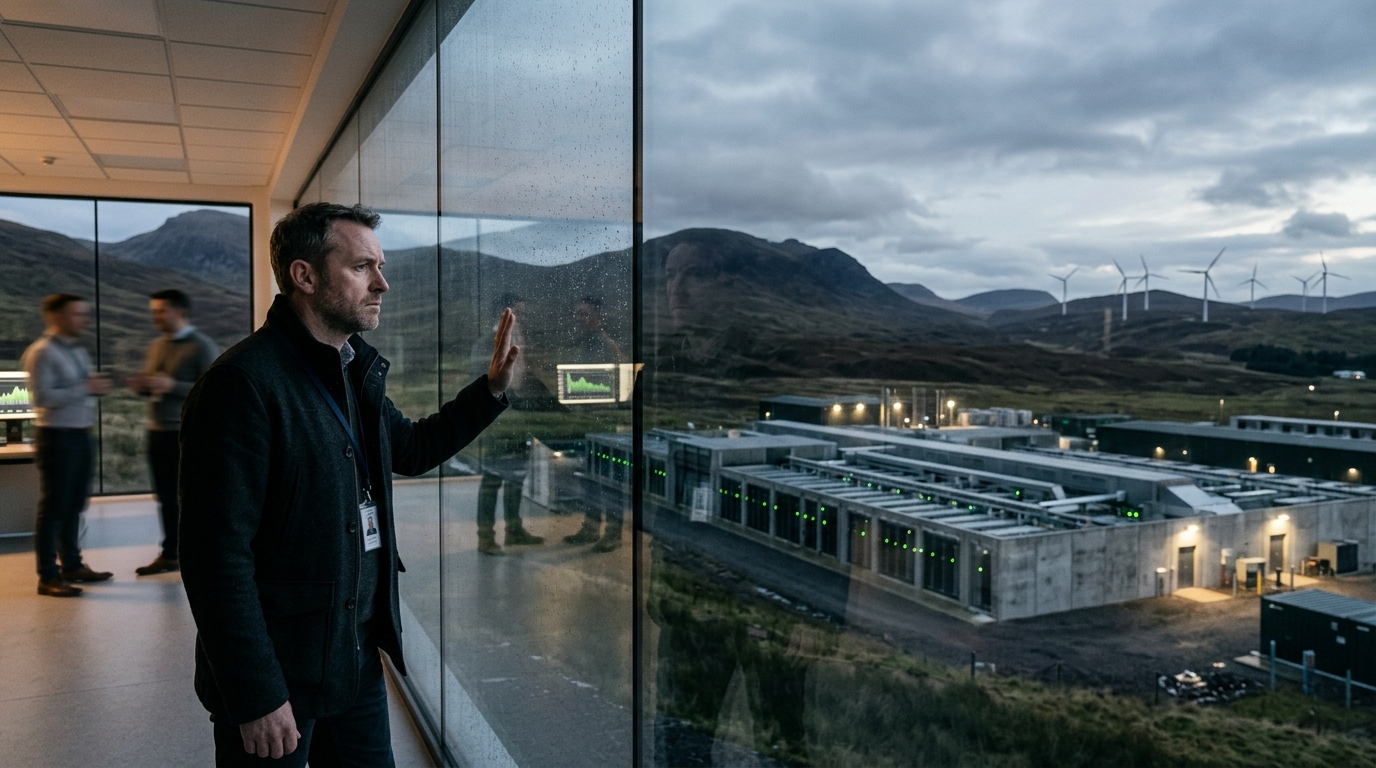
Scotland, with its windswept landscapes and long-standing tradition of engineering excellence, aimed to position itself as the global hub for 'Ethical and Green AI.' However, a recent investigation by The Guardian has shattered this image, revealing that a landmark AI project, which secured approval on the back of a 100% renewable energy promise, has no realistic prospect of meeting that goal. This revelation is more than a mere planning failure; it is a stark warning about the prevalence of 'greenwashing' in the high-stakes world of artificial intelligence.
The Chasm Between Rhetoric and Reality
The project in question, heavily promoted by the Scottish government as a blueprint for the future of sustainable data centers, was founded on the pledge that the colossal computing power required for AI training would be sourced entirely from local wind farms. Yet, internal assessments and grid analysis now suggest that the physical infrastructure is simply not there. The transmission network lacks the capacity to deliver a direct, constant stream of renewable energy to the site at the scale required.
The fundamental issue lies in the nature of AI workloads. Data centers require a 'baseload'—a constant, unwavering supply of electricity 24/7. Wind and solar energy are intermittent by nature. Without massive energy storage solutions, such as grid-scale battery arrays which are currently neither economically nor technically ready for this volume, the promise of '100% green' operation remains a marketing fiction rather than a technical reality. Consequently, the facility will inevitably draw power from the national grid, which remains carbon-intensive during peak periods.
The Ethics of Corporate Greenwashing
This disclosure raises profound ethical questions regarding transparency among tech giants and the governments that court them. When projects are approved based on environmental commitments that are known to be unachievable from the outset, public trust is eroded. AI is already an incredibly energy-hungry industry; masking its true environmental footprint under glossy PR slogans is a practice that actively hinders genuine climate action.
- The lack of transparency in Power Purchase Agreements (PPAs) that often hide actual grid usage.
- The pressure on local authorities to approve massive industrial sites in exchange for promised 'green' jobs.
- The risk of creating 'energy black holes' that divert clean energy away from other essential public infrastructure.
"We cannot build our digital future at the expense of our physical world by pretending that the laws of physics and infrastructure don't apply to Artificial Intelligence," say sustainability experts.
The Need for a New Approach to AI Infrastructure
To avoid similar failures in the future, a radical shift in how we approach data center development is required. Instead of isolated promises, we need integrated planning that prioritizes grid upgrades before the servers are even installed. The Scottish case demonstrates that political will for 'green growth' often crashes against the technical inertia of legacy energy networks.
Furthermore, the AI industry must begin to be evaluated not just on algorithmic accuracy, but on energy efficiency. If a model requires the energy equivalent of a small city to be trained, its cost to humanity may far outweigh its benefits. The ethics of AI are not limited to data bias or user safety; they encompass the survival of the planet that hosts the hardware.
Conclusion: A Lesson for the Global Tech Sector
The failure of the Scottish project to uphold its promise serves as a cautionary tale for the global technology sector. Transparency must be made mandatory. Data centers should be required to report their energy sources in real-time, and the use of 'green certificates' to mask carbon consumption should be strictly regulated. Only then can we move toward an AI that truly serves the common good without compromising the environment. The path to progress must be paved with honest engineering, not just optimistic press releases.