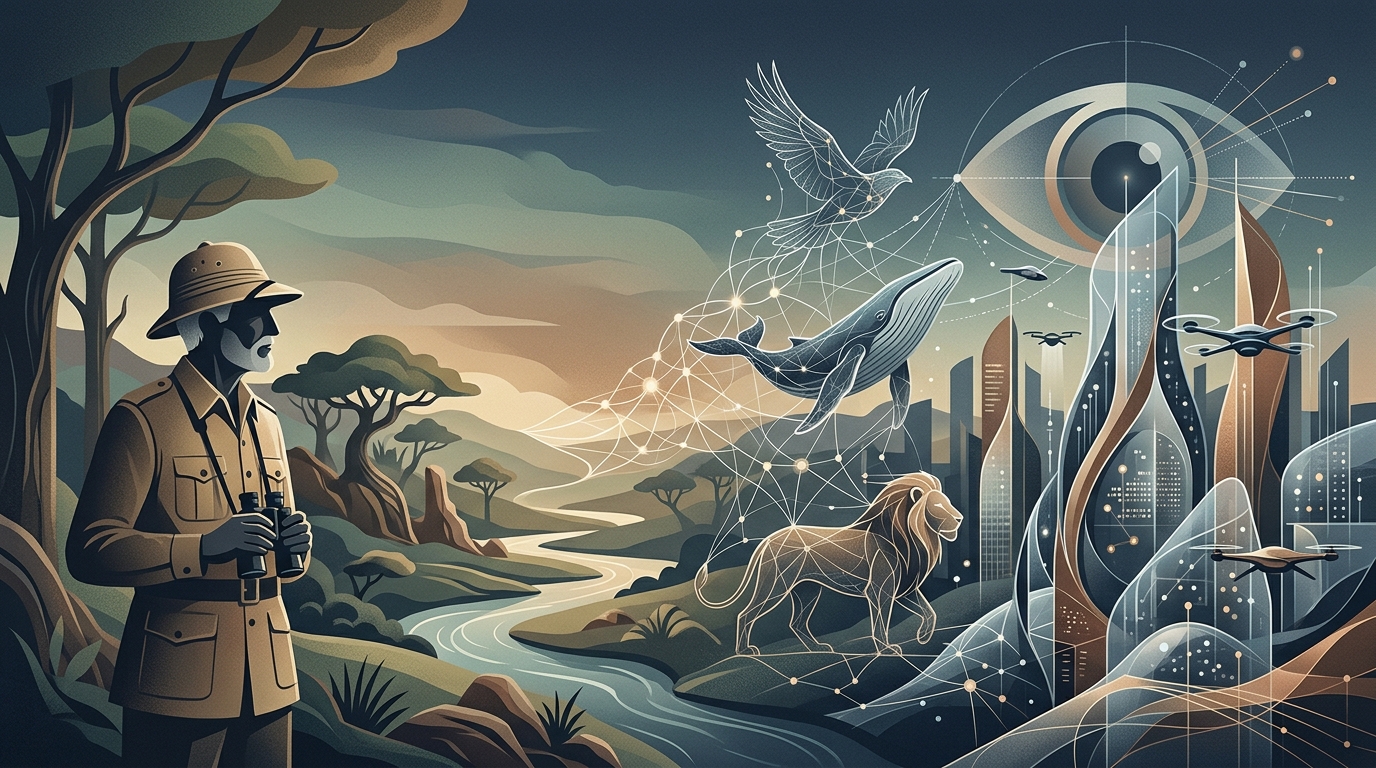
Today, May 9, 2026, the world pays tribute to a man who is not merely a broadcaster, but humanity's living bridge to the natural world. Sir David Attenborough celebrates his 100th birthday, marking a journey that began in the black-and-white era of the 1950s and has extended into the age of Virtual Reality and Artificial Intelligence. This centenary is not just a celebration of longevity, but a moment to reflect on how technology and storytelling can reshape the consciousness of an entire planet.
From Zoo Quest to the Digital Frontier
Attenborough’s career at the BBC began in 1952, at a time when television was in its infancy. Through series like Zoo Quest, he brought exotic wildlife into British living rooms for the first time. However, his true revolution came with Life on Earth in 1979. He was the man who democratized natural history, utilizing every technological advancement available—from color film to infrared cameras and drones—to unveil the mysteries of life.
Yet, his greatest contribution was not just documenting beauty, but his transformation into a global advocate. In the later decades of his career, Attenborough moved beyond being a neutral observer. With series like Blue Planet II, he sparked a global conversation on single-use plastics, leading to legislative changes across the European Union and beyond. The "Attenborough Effect" is now a recognized term in sociology and political economy, describing an individual's power to mobilize masses through authentic storytelling.
The AI Challenge: An Eternal Voice?
As Sir David enters his second century, technology poses a new ethical question: can his voice stay with us forever? Already, AI laboratories have developed voice models that mimic his distinct cadence and warmth with startling accuracy. While he has expressed reservations about the unauthorized use of his voice, the documentary industry is seriously considering his "digital immortality."
Using AI to archive and process the thousands of hours of footage he has recorded allows researchers today to discover patterns in animal behavior that were invisible to the human eye decades ago. Artificial Intelligence acts not only as a tool for voice replication but as a magnifying glass over the vast database he created by traveling to the most remote corners of the Earth. The ethical dilemma remains: how do we honor a man’s legacy without stripping it of its human soul through synthetic automation?
A Legacy for the Future
At 100, Attenborough’s message is more urgent than ever: "Nature can survive without us, but we cannot survive without nature." His journey teaches us that technology, from the first TV camera to today's algorithms, must serve the truth and the preservation of life. Sir David’s legacy lies not just in awards, but in the consciousness of billions who learned to love the planet through his eyes. The challenge for the next generation of AI creators is to maintain the moral integrity he championed in a world increasingly flooded with synthetic content.
- His contribution to environmental policy through mass media.
- The evolution of documentary technology under his stewardship.
- The ethical debate surrounding AI-generated voice cloning.
- The necessity of a new "deal with nature" in the 21st century.
In conclusion, Sir David Attenborough remains a beacon in an era of climate uncertainty. His voice, whether biological or digitally preserved, will continue to remind us of our responsibility toward the "only home we have."