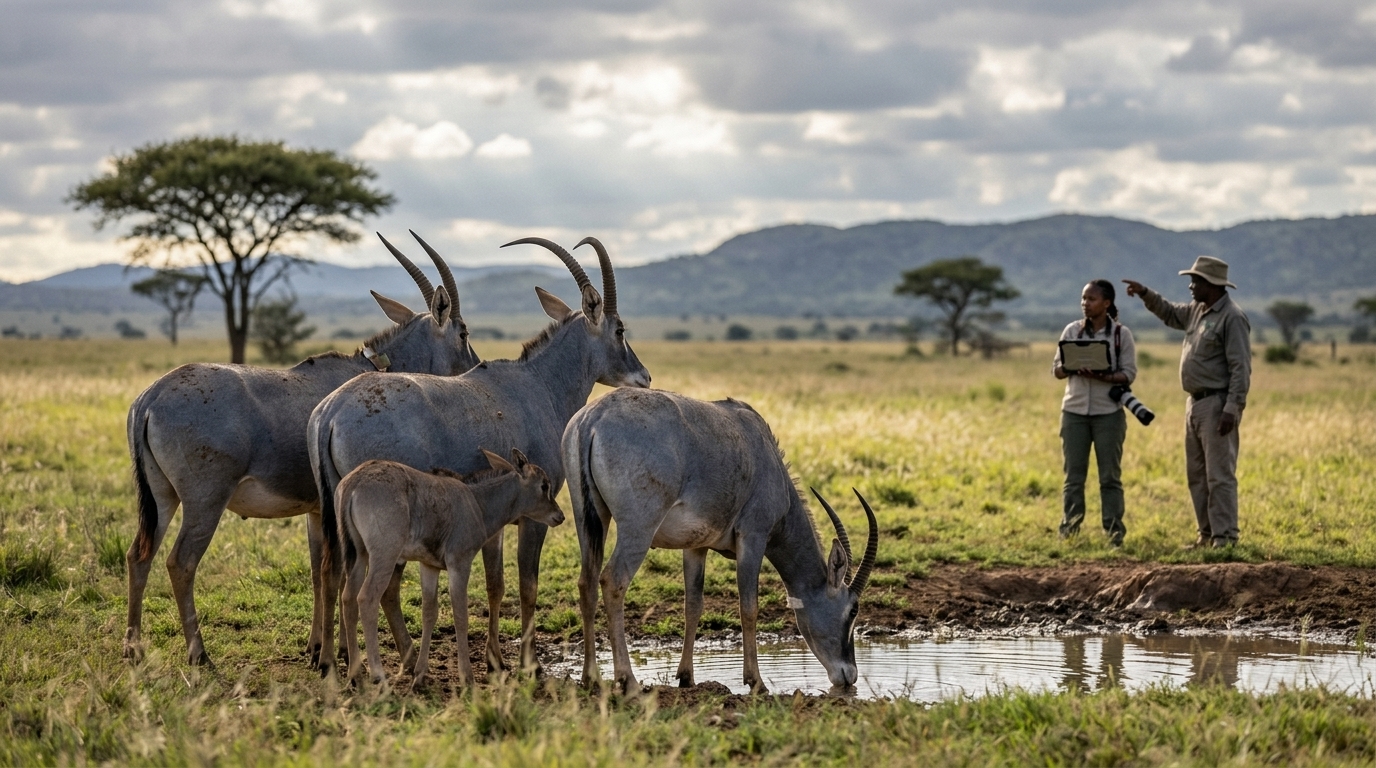
In the high-stakes world of modern biotechnology, the lines between science fiction and reality are blurring at an unprecedented pace. Colossal Biosciences, the company that gained global notoriety for its ambitious plan to bring back the woolly mammoth and the dodo bird, has recently announced an expansion of its "de-extinction" portfolio. This time, the scientific crosshairs are locked on the blue antelope (Hippotragus leucophaeus), the first large African mammal to be hunted to extinction by humans in historical times, as well as the legendary dire wolf (Aenocyon dirus).
This endeavor is not merely an exercise in genetic virtuosity; it is a profound political and ethical statement about the future of biodiversity on our planet. By leveraging CRISPR technology and advanced synthetic biology, Colossal seeks to correct humanity's historical "mistakes," reintroducing species lost to overhunting and habitat destruction.
The Blue Antelope: A Symbol of Loss and Potential Recovery
The blue antelope vanished around 1800, only decades after its first recorded contact with European settlers in South Africa's Cape Colony. Known for its distinctive bluish-grey coat and imposing stature, it was a unique component of the local ecosystem. Colossal has announced that it has successfully sequenced the species' genome using samples retrieved from museum specimens across Europe.
The next phase involves comparing this ancient genetic blueprint with its closest living relatives, such as the Roan and Sable antelopes. Scientists will use gene editing to "recode" the cells of living species to match those of the extinct blue buck. The process is extraordinarily complex, requiring not only precise genetic mapping but also ensuring that the resulting embryo can be successfully gestated by a surrogate mother of a different species.
Dire Wolves: Moving Beyond Pop Culture
Parallel to the blue antelope project, Colossal is working on the dire wolf, a formidable predator that roamed the Americas during the Pleistocene epoch before disappearing roughly 10,000 years ago. While the public primarily recognizes dire wolves from the hit series "Game of Thrones," for paleontologists, they represent a critical piece of canid evolutionary history.
Resurrecting the dire wolf presents a different set of challenges. Unlike the blue antelope, the dire wolf is not a direct ancestor of modern wolves but a distant cousin that followed an independent evolutionary path. This means the genetic gap to be bridged is significantly wider. However, Colossal maintains that its computational biology platform can reconstruct missing DNA segments, effectively "filling in the blanks" of the past.
Ethical Dilemmas and Ecological Realities
The prospect of de-extinction has ignited a firestorm within the scientific community. Many ecologists argue that the vast resources poured into reviving dead species should instead be directed toward protecting those currently on the brink of extinction. "Why spend millions to bring back the blue antelope when the black rhino might be gone tomorrow?" critics ask.
Furthermore, there is the question of rewilding and integration. A laboratory-born animal, raised by a different species, may lack the behavioral cues necessary for survival in the wild. Moreover, ecosystems have shifted dramatically since these animals last walked the earth. Reintroducing an apex predator like the dire wolf could cause unforeseen disruptions to existing food chains and local biodiversity.
- Colossal Biosciences has secured over $225 million in venture capital funding.
- CRISPR-Cas9 serves as the primary tool for high-precision genome editing.
- The blue antelope is viewed as an ideal candidate for restoring African grasslands.
- Critics warn that de-extinction represents a form of "technological hubris."
Despite the pushback, Colossal remains undeterred. CEO Ben Lamm emphasizes that the technologies developed for de-extinction have immediate applications in human medicine, sustainable agriculture, and the conservation of extant species. For the company, reviving the blue antelope is not just a tribute to the past, but a toolkit for safeguarding the future.
"We aren't just making animals; we are building the technologies that will allow nature to withstand the Anthropocene," says George Church, Colossal co-founder and Harvard geneticist.
As the planet undergoes its sixth mass extinction event, Colossal’s efforts appear as both a desperate and a magnificent attempt to turn back the clock. Whether they will succeed or inadvertently create new ecological imbalances remains to be seen in the coming years, as the first "resurrected" embryos take shape in their laboratories.