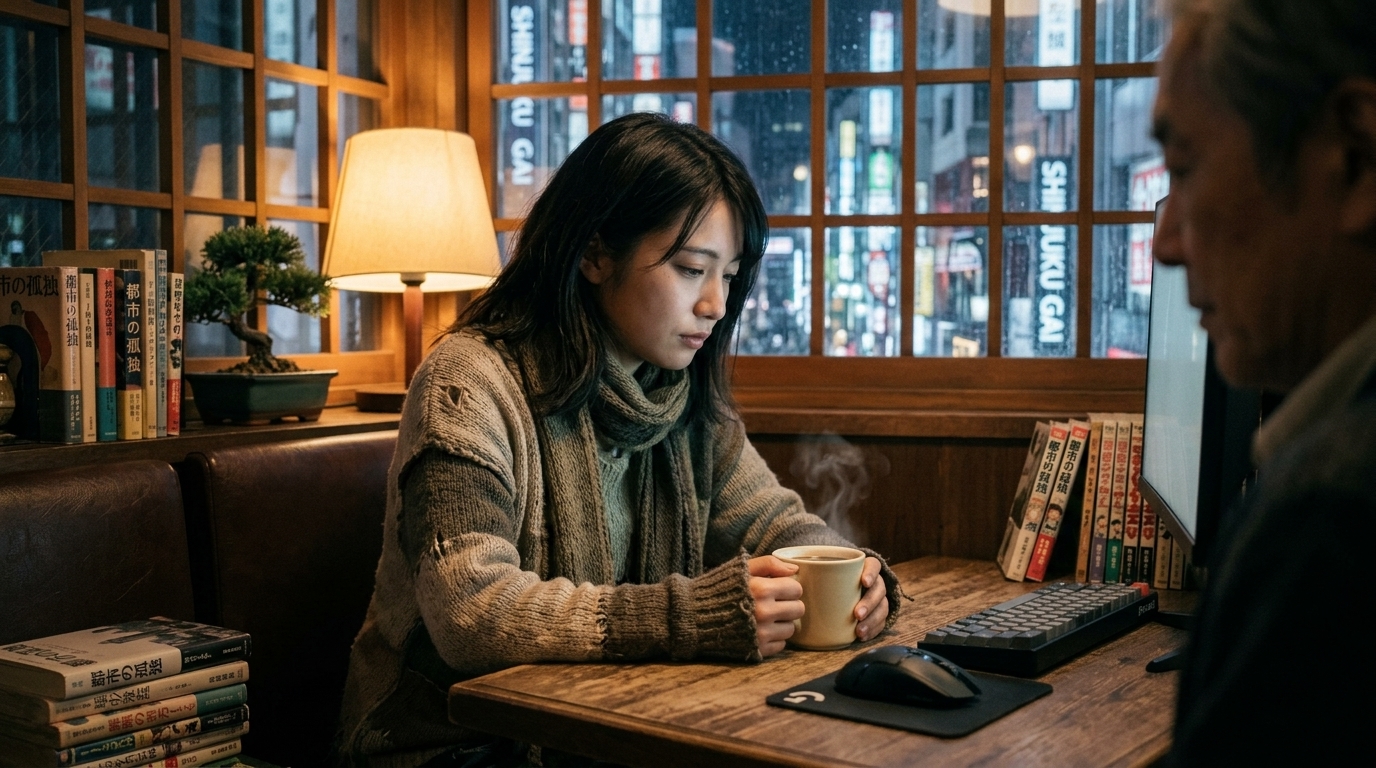
In a world that moves at a breakneck pace, the search for tranquility has shifted from the physical streets of metropolises to the digital avenues of pixels. The recent 'Coffee Talk Tokyo' is not merely a game; it is a study of the human need for connection, set in the heart of a nocturnal, rainy Japanese capital. As we navigate through 2026, the concept of the 'Third Place'—that social environment separate from home and work—is undergoing a radical transformation, with technology offering sanctuaries that the real-world economy often makes inaccessible.
The Philosophy of the 'Third Place' in the Digital Age
Sociologist Ray Oldenburg introduced the term 'Third Place' to describe locations like cafes, libraries, and squares where people meet freely. Today, with rising rents in major cities and the commercialization of every inch of public space, these areas are vanishing. Coffee Talk Tokyo steps in to fill this void. Through the screen, the player assumes the role of a barista who doesn't just serve hot drinks but offers a listening ear in a city that often ignores individual existence.
The choice of Tokyo as a setting is not accidental. The Japanese capital is a global symbol of 'lonely coexistence.' From traditional kissaten (coffee houses) to capsule hotels, Tokyo has perfected the art of providing privacy within a crowd. The game reproduces this feeling with a lo-fi aesthetic that calms the nervous system, offering an experience that psychologists call 'digital coziness.'
Barista as Confessor: The Art of Empathy
In Coffee Talk Tokyo, the action is not about speed or reflexes. It is about attention to detail and empathy. The characters—ranging from humans to mythical creatures in a modern urban context—share their concerns about careers, relationships, and identity. The player-barista is tasked with making the right drink, which acts as a catalyst for the conversation's progression. This game mechanic highlights a deeper truth: in the age of Artificial Intelligence, the ability to listen and understand remains the most valuable human skill.
- The 'Chill-hop' atmosphere and the use of rain sounds create an ASMR environment that reduces stress.
- Dialogues reflect contemporary social issues, from workplace burnout to the search for meaning in an automated world.
- Virtual coffee preparation offers a sense of control and creativity that is often missing from daily routines.
The Future of Digital Sociality
As VR and AR technologies mature, the experience offered by Coffee Talk Tokyo is only the beginning. We are already seeing the rise of virtual communities based not on competition, but on coexistence. These 'cozy games' represent a resistance to the culture of tension that dominates social media. Instead of likes and shares, the reward here is silence and meaningful interaction.
"Finding a cafe that fits you can be a revelatory experience. In the digital world, this revelation is now available to everyone, regardless of their geographical location."
In conclusion, Coffee Talk Tokyo is not just an escape; it is a mirror of our needs in 2026. It reminds us that even if the world around us becomes increasingly impersonal, we can always find a corner—even a digital one—where the warmth of a latte and a good conversation can make a difference. The success of such titles shows that the future of technology may not lie in increasing speed, but in providing the space and time to become human again.