In the rapidly evolving world of technology, the line between what we consider feasible and what belongs to the realm of science fiction is becoming increasingly blurred. Sunil Pai, one of the most influential figures in software engineering and a key executive at Cloudflare, recently set the stage for a new era: that of "building science fiction." This is not a metaphor, but a methodological approach to infrastructure development that allows applications to operate with speeds and intelligence once found only in the novels of William Gibson or Isaac Asimov.
The Shift from Core to Edge
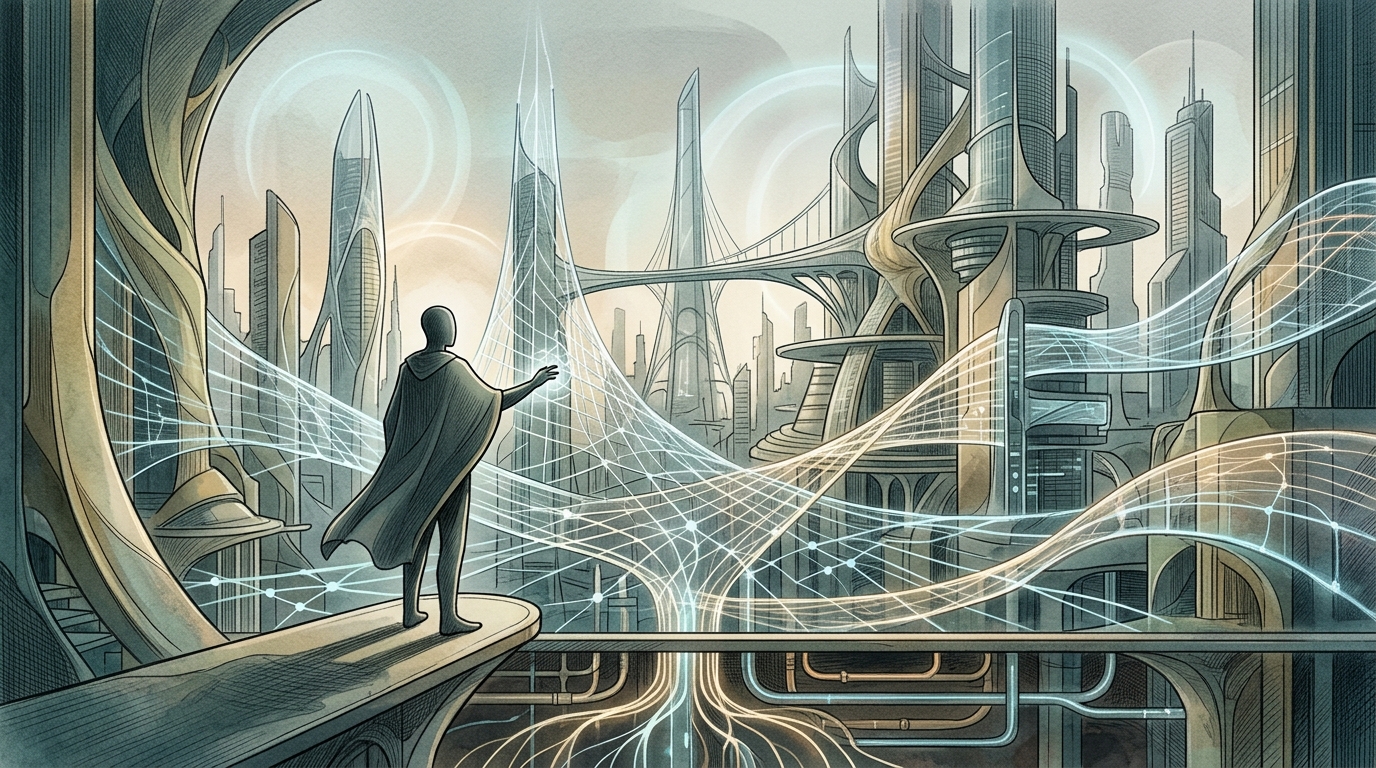
For decades, the internet model relied on centralized hubs—massive data centers located thousands of miles away from the end user. Pai argues that this architecture is now inadequate for the demands of modern Artificial Intelligence. Cloudflare, through its Workers network, is redefining the concept of computing power by moving code execution to the "edge" of the network, as close to the user as possible.
This paradigm shift enables what Pai calls the "instant experience." When data processing happens in milliseconds, applications cease to appear as static tools and begin to function as extensions of human thought. The ability to run AI models directly on the network, without the need for costly and slow data transfers to centralized servers, is the foundation upon which our "sci-fi" future is being built.
AI as an Infrastructure Component
The central idea of Pai's approach is that AI should not be treated as a separate "add-on," but as a core component of infrastructure. With Cloudflare Workers AI, developers can now integrate machine learning capabilities with the same ease they would add a line of CSS code. This democratization of access to high-performance GPUs globally is changing the game for startups.
- Latency Reduction: Running inference at the edge virtually eliminates delay.
- Data Privacy: Data doesn't need to travel across foreign jurisdictions, remaining local and secure.
- Scalability: The infrastructure automatically adjusts to demand without the need for manual server management.
Pai points out that the challenge is no longer the power of the models themselves, but the ease with which they can be deployed and utilized. "Science fiction" becomes reality when technology becomes invisible.
The Developer of the Future
In this new landscape, the role of the developer is being transformed. Pai, having moved from the React team at Meta to Cloudflare, knows well how tools shape thinking. He argues that we are moving from an era of "resource management" to an era of "capability composition." Developers no longer worry about memory or CPUs, but about how to compose different intelligent systems to solve complex problems.
"The future is not about writing more code, but about writing the right code that orchestrates global intelligence," he notes.
This evolution brings with it ethical questions. As infrastructure becomes smarter and more autonomous, who controls the decisions made at the edge? Cloudflare seems to be betting on open architecture and standards that allow for interoperability, avoiding vendor lock-in, which Pai considers crucial for maintaining a free and innovative internet.
Implications for the Digital Ecosystem
Sunil Pai’s perspective offers a roadmap for how businesses and creators can navigate the next decade. "Building science fiction" requires the courage to abandon old methods and embrace a distributed, intelligent architecture. For the global market, this shift to the edge offers unique opportunities for enhancing digital sovereignty and developing localized solutions that compete on a global scale without the need for traditional, centralized data center investments. The infrastructure of the future is already here; it's just distributed across the network's edge.