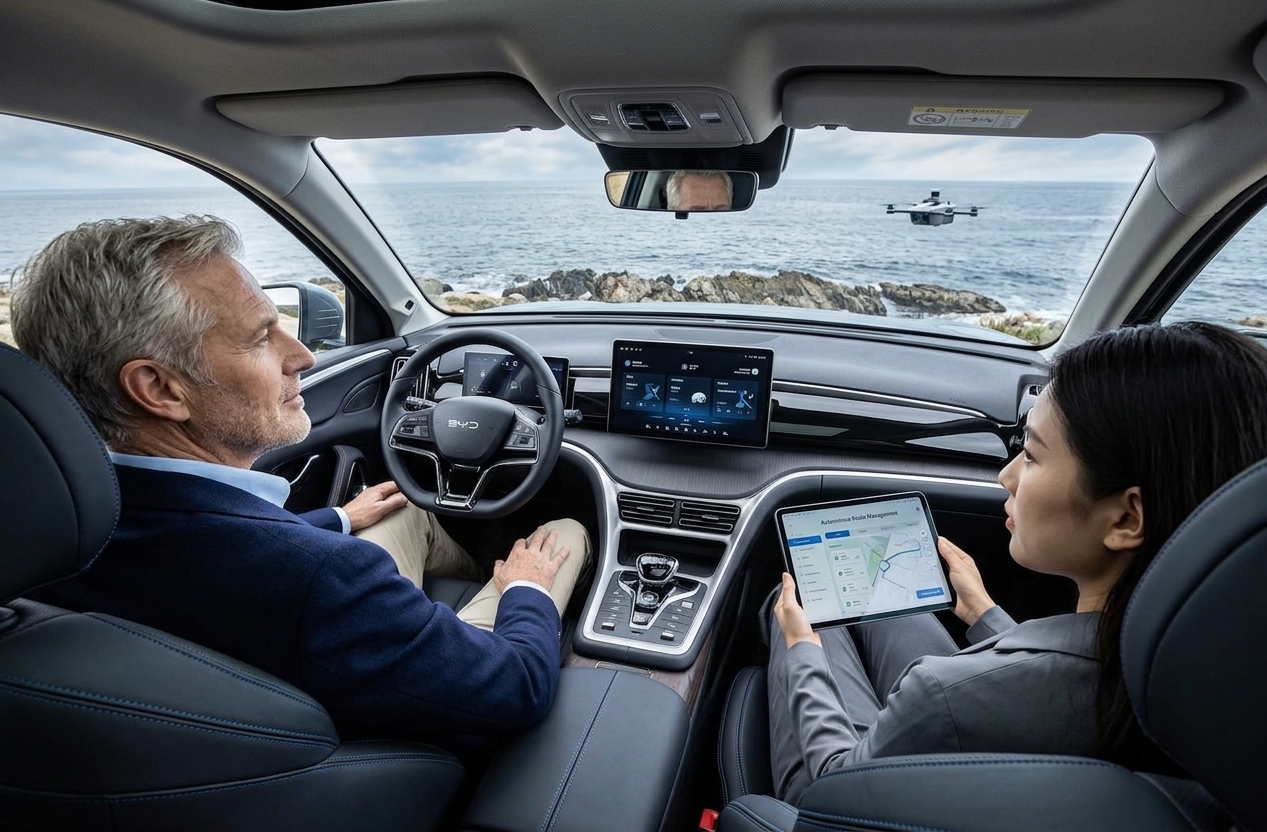
In the streets of Wuhan, a city that once became globally known for very different reasons, a silent revolution is unfolding today. Thousands of white vehicles, equipped with spinning LiDAR sensors and high-definition cameras, traverse the boulevards without a single human in the driver's seat. This is not a scene from a science fiction movie, but the daily reality of Baidu's Apollo Go service. China, having already conquered the global electric vehicle (EV) market, is now setting its sights on the next big bet: the complete automation of transportation.
The Advantage of Scale and State Support
China's success in EVs was no accident; it was the result of a decade-long strategy combining subsidies, control of the battery supply chain, and protectionism. In the case of robotaxis, Beijing is applying a similar playbook. While in the US, Waymo and Cruise face strict regulatory scrutiny and local backlash following accidents, Chinese authorities have turned entire metropolises into living laboratories. Wuhan now boasts the world's largest autonomous taxi fleet, offering rides at prices that rival even the cost of a bus ticket.
The "V2X" (Vehicle-to-Everything) strategy is the key to Chinese superiority. Unlike Tesla's approach, which relies almost exclusively on the vehicle's vision (cameras-only), China is investing in "smart roads." Sensors embedded in traffic lights and road infrastructure communicate with the vehicles, providing them with information beyond their line of sight. This collective intelligence reduces the computational burden on each individual car and increases safety levels in complex urban environments.
Economic Disruption and Social Friction
The economic equation of robotaxis is relentless. The largest cost in ride-hailing services is the human factor—the driver. By removing this cost, companies like Baidu, Pony.ai, and WeRide aim for profit margins that traditional taxi companies cannot even imagine. However, this transition is not bloodless. In China, protests from professional drivers have begun to mount. The phenomenon of "21st-century Luddites" is returning as millions of jobs are threatened by automation.
Furthermore, the cost of the vehicles themselves is dropping dramatically. Baidu recently announced that its latest model, the RT6, costs approximately $35,000—a price comparable to a conventional passenger car. When the cost of technology drops this low, mass adoption ceases to be a question of "if" and becomes a question of "when."
Geopolitical Hurdles and the "Data Iron Curtain"
Despite domestic success, the international expansion of Chinese robotaxis faces a wall of suspicion. The United States and the European Union are concerned about data security. An autonomous vehicle is essentially a "computer on wheels" that constantly maps its environment with cameras and sensors. The possibility of this data ending up with foreign intelligence services has led to proposals for a total ban on Chinese autonomous driving software in Western markets.
China is responding by strengthening its own self-sufficiency in semiconductors. Despite sanctions on high-performance Nvidia GPUs, Chinese giants like Huawei are developing their own AI chips specialized for driving. The race for autonomy is no longer just commercial; it is a race for technological sovereignty in the 21st century.
Conclusion: A New Paradigm of Movement
China is demonstrating that it has the will and the resources to lead the robotaxi era. Its ability to quickly scale production and implement flexible regulatory frameworks gives it an edge that the West is struggling to follow. However, success will not be judged by algorithms alone. It will be judged by the Chinese state's ability to manage social unrest from job losses and by its companies' ability to convince the rest of the world that their vehicles are safe—not just on the roads, but in the digital sphere as well.