In a move that signals the end of a period of intense political and technological friction, OpenAI today announced the full commercial release of its GPT-5.6 model. This development comes immediately after the lifting of restrictions by the U.S. government, which had placed the model under a "limited preview" status for national security reasons. The Trump administration's decision to allow the public rollout is seen as a victory for Silicon Valley, which has been pushing for faster development to maintain a competitive edge against international rivals.
The Regulatory Whirlwind and the Political Compact
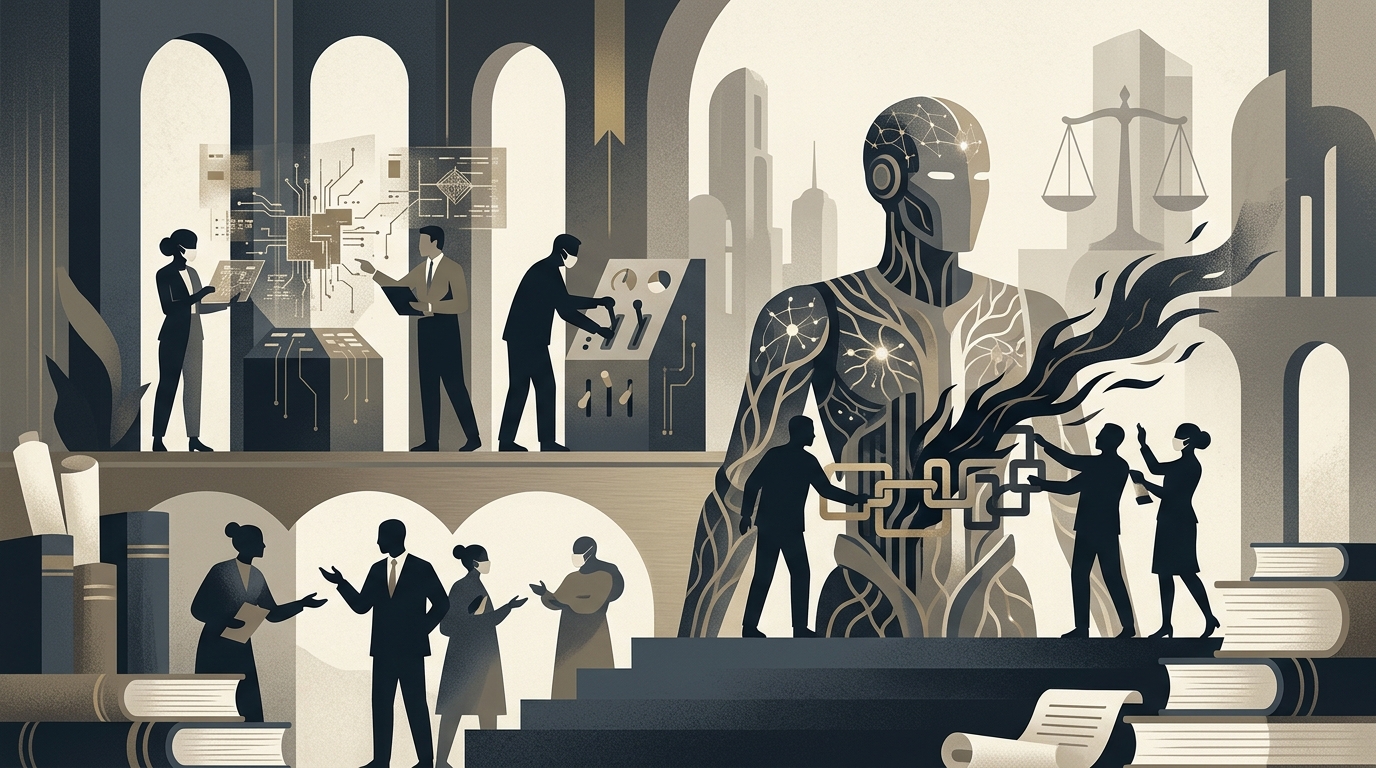
The delay in releasing GPT-5.6 was not due to technical hurdles, but rather an unprecedented vetting process by the newly established AI Safety Board. Concerns centered on the model's advanced capabilities in coding and cybersecurity, with some officials fearing it could be weaponized to create sophisticated cyber-warfare tools. However, after intensive deliberations and the integration of additional "safety guardrails" requested by Washington, OpenAI received the final nod.
The agreement includes the establishment of a direct communication line between OpenAI and federal agencies to monitor any "emergent hazardous behaviors" from the model. This close state-corporate partnership is drawing fire from privacy advocates, but for OpenAI, it represents the necessary price for maintaining its market dominance in an increasingly geopolitical tech landscape.
GPT-5.6: More Than an Incremental Update
While the numbering suggests a minor iteration, GPT-5.6 represents a qualitative leap in logical processing. According to the company, the new model exhibits 40% fewer hallucinations compared to its predecessor and features a context window reaching 2 million tokens, allowing for the analysis of entire codebases or legal archives in seconds.
- Enhanced Reasoning: The model utilizes a new "inner monologue" architecture, where it verifies its steps of thought before providing a final answer.
- Native Multimodality: Real-time video and audio processing are now integrated into the core of the model, eliminating the need for external plugins.
- Agency: GPT-5.6 can execute complex tasks across multiple software environments, functioning more as an "agent" than a simple chatbot.
The Revolution of ‘ChatGPT Work’
The day's major surprise was the unveiling of ChatGPT Work. This is a radical redesign of OpenAI’s enterprise offering. Unlike the previous ChatGPT Enterprise, 'Work' is not just a chat interface; it is an AI operating system. ChatGPT Work can integrate directly into a company's ERP and CRM systems, making decisions regarding supply chain logistics, personnel management, and sales strategy.
"We don't just want to help people write emails. We want to create an infrastructure where AI handles 80% of administrative tasks, allowing humans to focus on creativity and strategy," said OpenAI's CEO.
This new platform also introduces "Persistent Agents," digital entities that reside within the company's network, learn from daily operations, and execute tasks autonomously, even when the user is offline. This raises serious questions about the future of middle-management jobs, as the performance of these agents promises to exceed human speed at a fraction of the cost.
Socio-Economic Implications
The release of GPT-5.6 and ChatGPT Work comes at a time when the global economy is struggling to adapt to the speed of the AI revolution. The U.S. government's approval indicates a clear preference for "controlled acceleration." However, the concentration of such power within a single company, now closely tied to state mechanisms, is causing skepticism in Europe and Asia.
Analysts predict that ChatGPT Work could lead to a new era of "algorithmic management," where decisions in large corporations are made based on data processed by OpenAI’s models. The question that remains unanswered is who will ultimately control these algorithms and what happens when corporate profitability goals clash with social welfare. July 9, 2026, will be remembered as the day AI ceased to be a tool and became the invisible manager of our professional future.