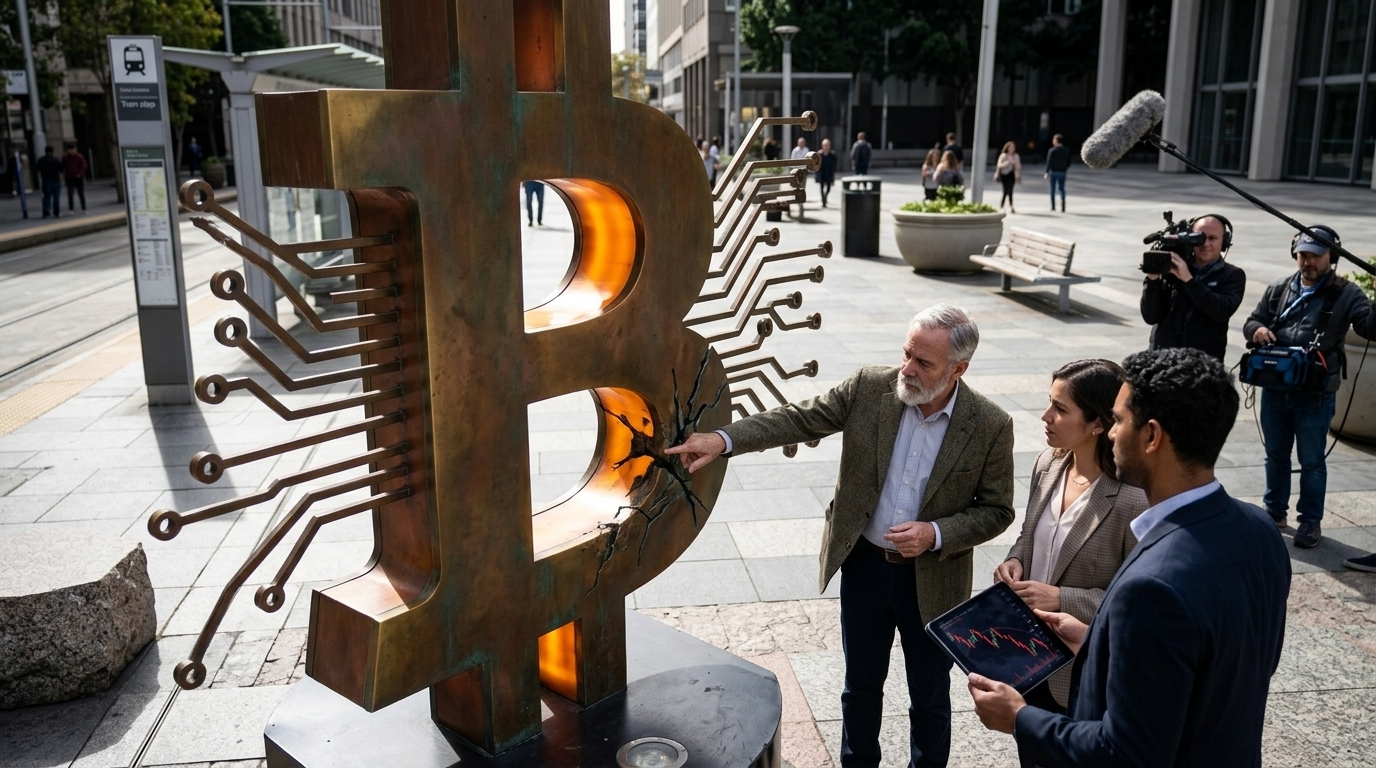
The traditional image of a Venture Capitalist (VC) typically involves bespoke suits, power lunches in Mayfair or Sand Hill Road, and an almost mystical reliance on "gut feeling." However, Nik Storonsky, the billionaire founder and CEO of Revolut, is intent on dismantling this edifice. In a statement that has sent shockwaves through the global financial scene, Storonsky argued that Artificial Intelligence (AI) is not just a support tool, but the future replacement for VCs themselves.
The End of Intuition and the Rise of Data
For decades, selecting a startup for investment relied on what is known as "pattern matching" – the ability of an experienced investor to recognize successful traits in founders. Storonsky contends that this process is inherently flawed, riddled with biases, and extremely inefficient. "Humans are subjective. They get tired, they are influenced by personal relationships, and they often miss opportunities because they don't fit the stereotype they have in mind," he notes.
The alternative proposed by Storonsky, which he implements through his own fund, Quantum Light, is based exclusively on data. His AI model analyzes millions of data points: from code uploaded by developers on GitHub to website traffic, LinkedIn hiring trends, and financial metrics leaking into the market. When the algorithm detects an "anomaly" – a company growing at off-the-chart rates – it alerts the team for immediate investment.
Quantum Light: The Experiment That Became Reality
Quantum Light is not just a theoretical approach. It is a $200 million fund that operates like a talent search engine. Unlike traditional VC funds that employ armies of associates to comb the market, Quantum Light uses a small team of data scientists and engineers. The promise is simple: faster decision-making, lower management fees, and, most importantly, superior returns.
Storonsky believes AI can democratize access to capital. "A founder in Athens or Bucharest who lacks connections in London or Silicon Valley is currently ignored. AI doesn't care where you went to school or who you know. It only cares about your numbers," he emphasizes. This shift from "social capital" to "data capital" could radically alter the map of global innovation.
Reactions and Human Resistance
Naturally, the Venture Capital industry isn't surrendering without a fight. Many argue that early-stage (seed) investing is more art than science. "How can an AI assess a founder's passion or their ability to inspire a team during a crisis?" critics ask. Building a company is not just linear growth; it involves psychology, strategic maneuvering, and personal relationships that an algorithm struggles to quantify.
Furthermore, there is the issue of "value add." VCs often market themselves as advisors and mentors who open doors. Storonsky responds to this with cynicism: "Most VCs provide zero actual value after the check is signed. The best thing they can do is stay out of the way." If this view gains traction, then AI's advantage – speed and pricing accuracy – will render the traditional model obsolete.
The Future: Hybrid Model or Full Automation?
Despite the Revolut CEO's categorical stance, the prevailing trend for 2026 appears to be hybrid. Industry giants like Sequoia and Andreessen Horowitz are already integrating AI tools for sourcing, but they retain human judgment for the final decision. However, the pressure for returns in a high-interest-rate environment makes AI efficiency increasingly attractive.
- Automated Sourcing: AI can monitor thousands of startups simultaneously, a feat impossible for any human team.
- Bias Mitigation: Algorithms can eliminate racial and gender biases that have long plagued the VC world.
- Execution Speed: The due diligence process can be compressed from weeks into mere hours.
- Risk Analysis: Predicting the probability of failure based on historical data of similar ventures.
In conclusion, Storonsky's challenge is not just about technology; it’s about the very structure of power in the investment world. If AI can indeed replace VCs, then the era of investment "gurus" is nearing its end, giving way to the era of engineers and data. Whether founders will prefer a check from a robot or a handshake from a human remains to be seen.