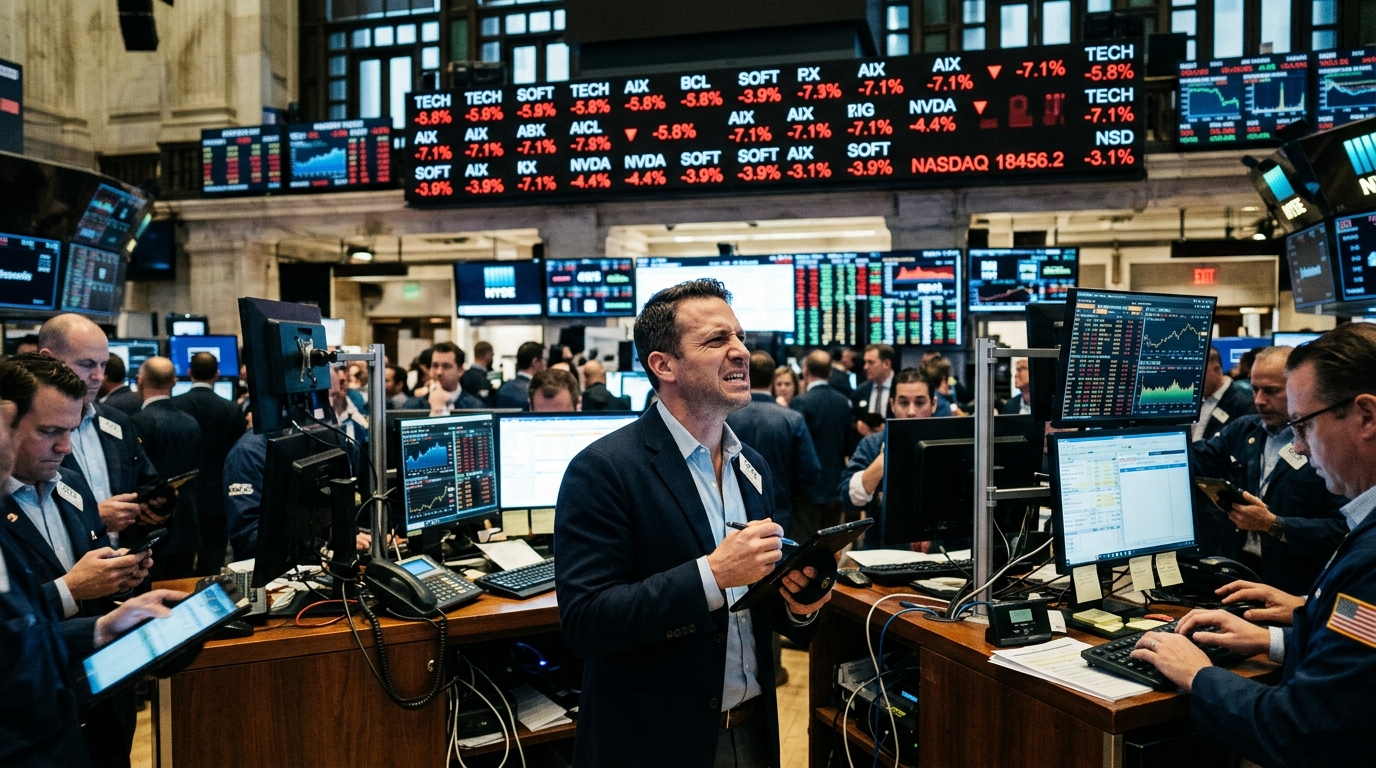
As we navigate April 2026, the global financial community is in a state of high alert. The emergence of the Mythos protocol, an autonomous AI system managing liquidity and risk assessment in real-time, has polarized central bankers from Frankfurt to Washington. Mythos is not just another trading tool; it is a quantum-resistant algorithm that promises to eliminate human error from the markets. However, the question remains: is Mythos the lifeline for a crumbling system, or the 'Trojan Horse' that will deliver the final blow to the economic sovereignty of nations?
The Promise of Algorithmic Order
For its proponents, Mythos represents the pinnacle of financial engineering. In a world where geopolitical tensions and inflation create constant turbulence, Mythos acts as a global stabilizer. Utilizing advanced predictive models, the system can redistribute capital in milliseconds, preventing bank runs before they even manifest. Its ability to execute 'smart' settlements without the need for intermediaries has already reduced the operating costs of systemic banks by 30% in the first quarter of 2026 alone.
In Europe, the ECB watches with a mixture of awe and trepidation. The integration of Mythos into Eurozone interbank transactions could signify the definitive completion of the Banking Union, as the algorithm recognizes neither borders nor national preferences. "It is the first time in history that trust is not based on institutions, but on mathematical proofs," says a leading analyst in London. The transparency offered by Mythos is indisputable: every capital movement is traceable and justified by market data.
The Perils of the Black Box and Systemic Fragility
Despite the benefits, the dark side of Mythos sends shivers down regulators' spines. The primary issue lies in the opacity of the algorithm's decision-making—the so-called 'black box' problem. If Mythos decides that a specific economy or sector is 'unsustainable,' the automated withdrawal of capital could trigger an instantaneous collapse before human policymakers have time to react. Speed, the system's greatest asset, becomes the greatest enemy of stability during times of crisis.
- Algorithmic Contagion: A flawed assessment in one market can cascade through the entire system.
- Loss of Monetary Control: Central banks risk becoming decorative if Mythos controls the flow of money.
- Cyber Threats: Despite quantum protection, concentrating such power in a single protocol creates a unique target for malicious actors.
The risk of a global-scale 'Flash Crash' is now visible. Critics argue that Mythos lacks 'human judgment'—the ability to show leniency or engage in political interventions that often save social cohesion at the expense of pure economic efficiency. In regions with a history of financial trauma, public opinion remains deeply skeptical of algorithms deciding the fate of nations based on cold data points.
The Clash with Political Sovereignty
Mythos is not merely a technical issue; it is profoundly political. Washington is already considering legislation requiring a 'kill switch' for the protocol—a demand that Mythos creators deem impossible due to its decentralized nature. The clash between technological autonomy and state power is reaching a breaking point. If the system proves more reliable than governments in managing wealth, then the very concept of the state as a protector is called into question.
"We don't fear that Mythos will fail. We fear that it will succeed so thoroughly that it will make human leadership obsolete," states a member of the European Parliament's Committee on Economic Affairs.
In conclusion, Mythos is the mirror of our own ambitions and fears regarding artificial intelligence. It may be the architect of a new era of abundance and stability, or the catalyst for a chaotic deconstruction of global capitalism as we know it. The decision to embrace or restrict it will define the next decade for humanity.