In an era where discussions about professional advancement are dominated by technical prowess in Artificial Intelligence (AI) and digital literacy, a group of top Silicon Valley leaders is bringing back a timeless, yet often neglected truth: mindset outweighs knowledge. Carl Eschenbach, former CEO of Workday and current head of UIPath, along with Amazon’s Andy Jassy, argue that the 'right attitude' is the catalyst that transforms an average employee into a leader, especially in a work environment being violently reshaped by automation.
The Carl Eschenbach Pivot: From Arrogance to Humility
Eschenbach didn’t start his career as the ideal leader. In recent statements, he admitted that in his early steps, his attitude was his biggest obstacle. "I thought I knew everything," he confesses. The change came when he realized his career had stalled not due to a lack of skills, but because of a defensive and confrontational mindset. Once he decided to adopt a learning and collaborative stance, doors began to open one after another.
This admission carries significant weight today. For Gen Z, entering the job market with the anxiety that AI will make entry-level positions obsolete, Eschenbach offers a different perspective. Technology can write code or analyze data, but it cannot demonstrate empathy, team spirit, or the hunger for self-improvement that characterizes an employee with a high 'Attitude Quotient' (AQ).
Andy Jassy: The 'Sponge' Philosophy
Following the same logic is Jeff Bezos’s successor at Amazon, Andy Jassy. Jassy frequently refers to the importance of being a 'sponge.' According to him, the most successful people at Amazon aren't necessarily those with the most impressive degrees, but those who maintain an insatiable curiosity and a positive approach toward challenges.
"Your attitude is the one thing you can completely control in a chaotic environment," Jassy maintains.
At Amazon, a company at the forefront of the AI revolution, the emphasis on mindset shows that the more tasks are automated, the more the value of 'human' traits increases. The ability to accept criticism without taking offense and to seek solutions instead of culprits is what Jassy calls the 'invisible advantage.'
Gen Z and the Ghost of AI
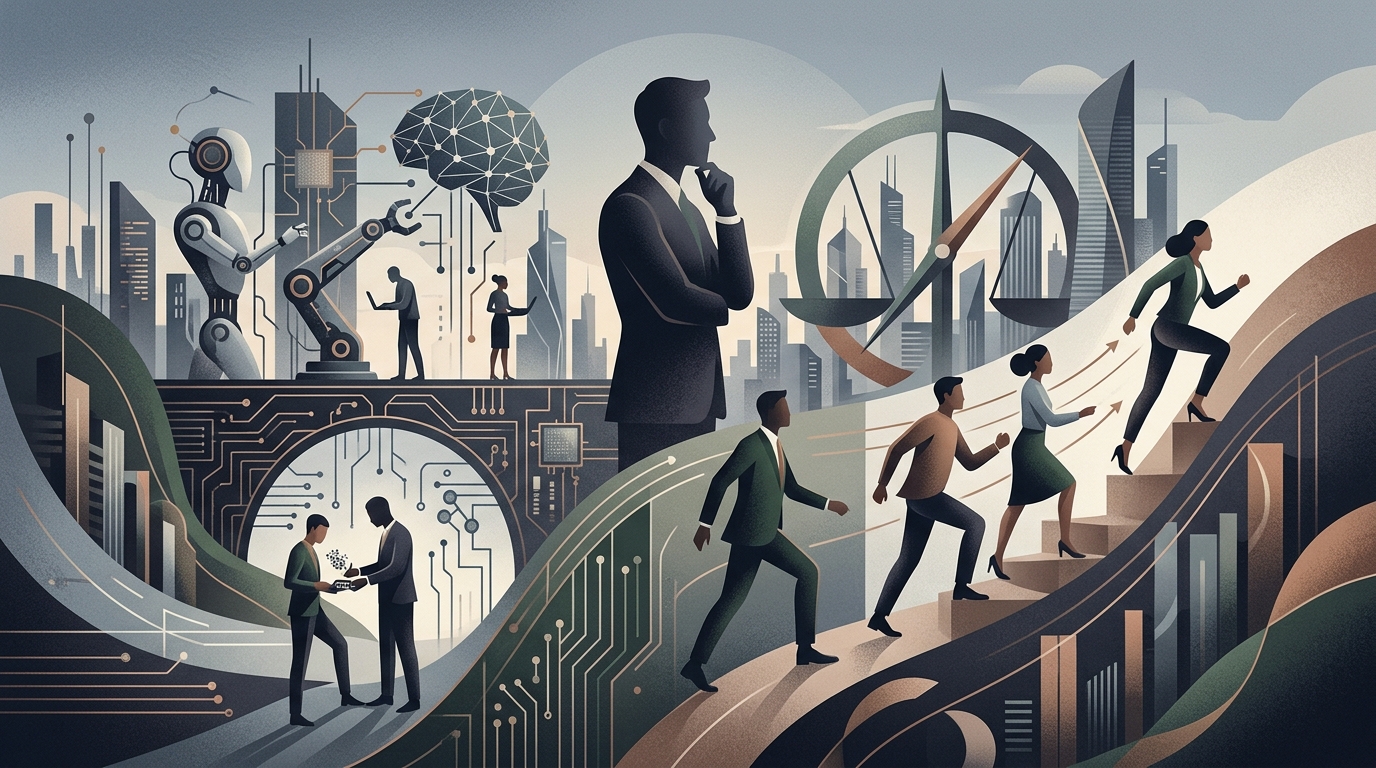
The current juncture is particularly difficult for young professionals. Many feel that the corporate 'ladder' is broken. If AI can do the work of a junior analyst, how will the young person gain the experience needed to become a senior? The answer from Eschenbach and Jassy is that AI doesn't remove the ladder, but it changes its rungs.
- Adaptability: The ability to learn new AI tools is technical, but the desire to do so is a matter of mindset.
- Human-Machine Collaboration: Workers who view AI as a partner rather than a threat emerge faster.
- Failure Management: In a fast-paced environment, staying calm in the face of mistakes is critical.
The danger for Gen Z isn't a lack of knowledge, but 'resignation' due to fear. Adopting a cynical attitude toward work (the so-called 'quiet quitting') may act as a defense mechanism, but according to top CEOs, it is a surefire recipe for professional stagnation.
Conclusion: A Return to Human Values
As we head toward the latter half of the 2020s, technology will continue to surprise and disrupt. However, the advice of Eschenbach and Jassy remains timeless. A career is not a race against machines, but a marathon of personal growth. Attitude is not just a 'soft skill'; it is the foundation upon which every success is built, especially when the ground beneath our feet is unstable. The young people who manage to combine technological intelligence with humility and diligence will be the ones who define the future of work.