Urbanization is one of the defining challenges of the 21st century. As the global population increasingly clusters in urban centers, city infrastructures are facing unprecedented strain. In this context, Artificial Intelligence (AI) is emerging as the catalyst for the creation of 'Smart Cities,' with transportation at the forefront of this radical transformation. From Hanoi, Vietnam, to Singapore and London, integrating machine learning algorithms into mobility systems is no longer a sci-fi scenario but a prerequisite for urban viability.
Real-Time Traffic Management
Traditional traffic management relied on static models and timed signals that often failed to adapt to sudden changes in flow. AI is shifting this paradigm by utilizing data from IoT sensors, cameras, and vehicle GPS to create a 'digital twin' of the city. Algorithms can now predict congestion before it occurs and dynamically adjust traffic lights, reducing idle time and carbon emissions.
For instance, in emerging economies like Vietnam, using AI to monitor the flow of millions of motorcycles allows authorities to optimize bus routes and reduce accidents. AI's ability to process vast amounts of data in milliseconds enables immediate response to emergencies, directing first responders through the fastest possible routes and potentially saving lives during the 'golden hour' of medical intervention.
Predictive Maintenance and Public Transit
One of the less visible but profoundly impactful areas is predictive maintenance. AI systems analyze data from train and bus engines to identify potential failures before they lead to service disruptions. This not only slashes operational costs for municipalities but also boosts the reliability of public transit, encouraging citizens to opt out of private car ownership.
- Reduction in vehicle downtime by up to 30%.
- Route optimization based on real-time passenger demand.
- Energy savings through intelligent driving assistance systems.
Furthermore, AI facilitates 'Mobility as a Service' (MaaS) ecosystems, where citizens can plan and pay for their entire journey—combining buses, subways, and bike-sharing—through a single app that suggests the greenest or fastest route based on live conditions.
Autonomous Vehicles and the Future of Urban Mobility
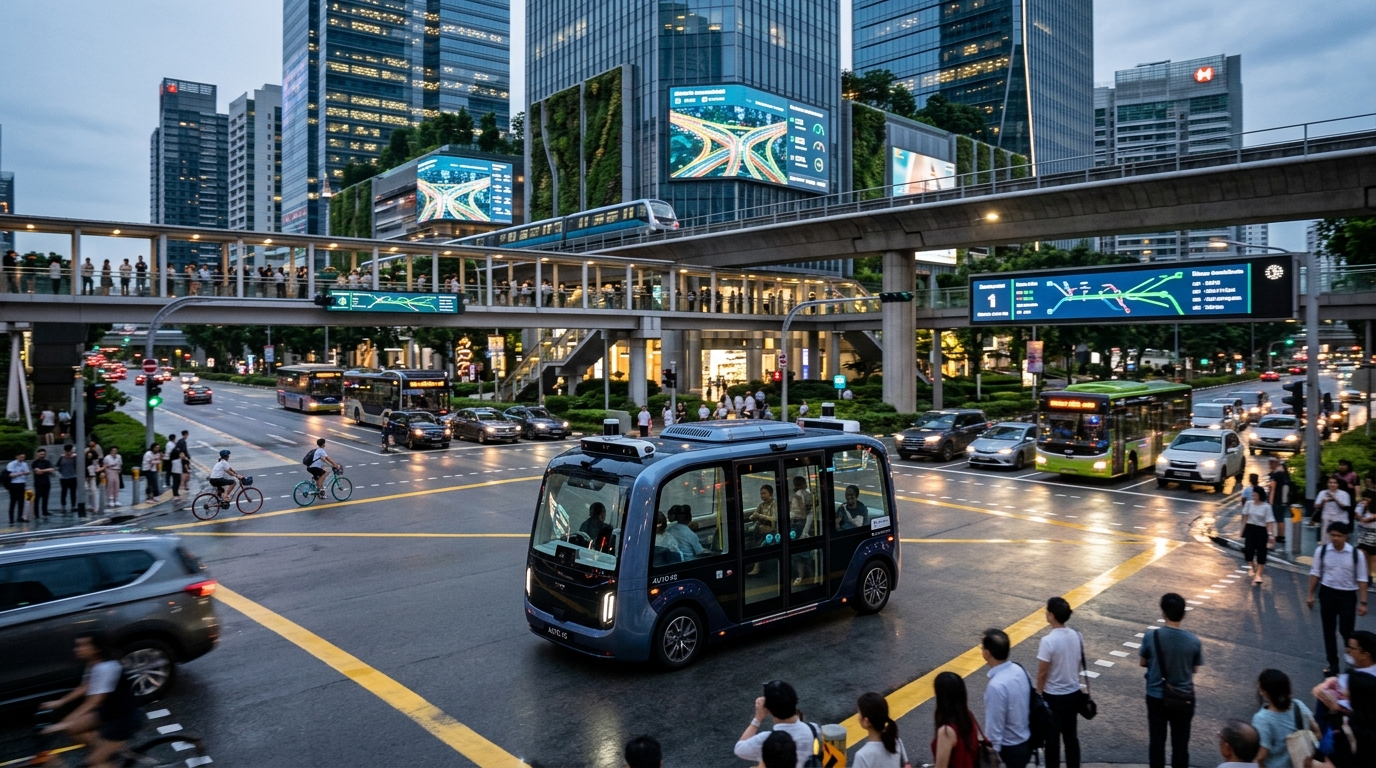
No discussion of smart cities is complete without mentioning Autonomous Vehicles (AVs). While their full-scale deployment on public roads is still years away, trials in controlled environments are setting the stage. Driverless shuttles are already operating in university campuses and business parks globally. AI serves as the 'brain' of these vehicles, allowing them to navigate safely, recognize pedestrians, and communicate with other vehicles (V2V communication) to prevent collisions and streamline flow.
"Artificial Intelligence is not merely an optimization tool; it is the foundation upon which social equity in mobility will be built," state urban planning experts.
Challenges: Privacy and Ethics
Despite the evident benefits, implementing AI in transportation raises significant concerns. The continuous monitoring of traffic and movement patterns triggers alarms regarding personal data protection. Who owns this data, and how can we ensure it isn't used for unauthorized surveillance? Moreover, there is the risk of a 'digital divide,' where smart city technologies become a luxury of wealthy nations or affluent districts, leaving marginalized communities behind.
In conclusion, Artificial Intelligence is transforming our cities into living, thinking organisms. The success of this transition depends not only on the technical prowess of the algorithms but on the ability of governments to establish an ethical and functional framework that prioritizes human well-being and environmental sustainability. The road ahead is complex, but the destination—a cleaner, faster, and safer urban experience—is well worth the journey.