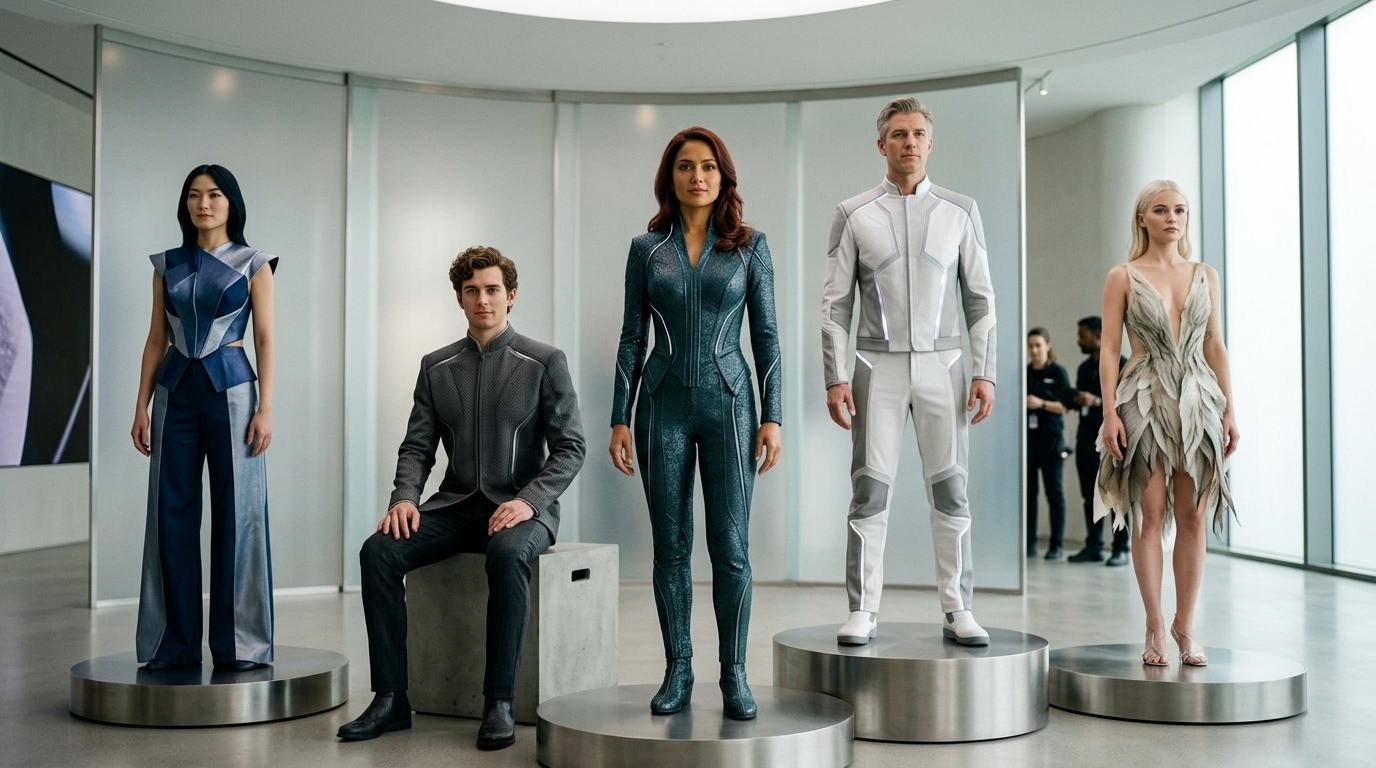
The history of robotics has been defined for decades by a singular challenge: the "Uncanny Valley." This is the psychological dip where a robot looks so human-like that its minor imperfections in movement and expression evoke a sense of revulsion or unease in the observer. Today, Chinese firm UBTech Robotics claims that this valley has finally been bridged. With the unveiling of the Uworld U1, the first hyper-realistic android destined for mass production, humanity enters a new, uncharted era.
Technical Mastery and Micro-Expressions
The Uworld U1 is far more than a metallic skeleton draped in silicone. UBTech has utilized advanced polymer materials that simulate the texture, elasticity, and even the temperature of human skin. Beneath the surface, a network of dozens of micro-actuators allows the robot to perform subtle movements previously thought to be the exclusive domain of biological beings: the slight flutter of eyelids, the twitch of muscles around the mouth during speech, and the ability to "mirror" the emotions of its interlocutor.
The heart of the system, however, lies in its artificial intelligence. By integrating the latest generation of Large Language Models (LLMs), the U1 doesn't just follow programmed commands. It understands the context of a conversation, recognizes sarcasm, and adjusts its body language according to the social setting. The mass production of these models means that this technology will not be confined to elite laboratories but will soon be available for widespread commercial application.
From Customer Service to Domestic Care
The applications for the Uworld U1 are numerous and are already sparking intense debate among labor market analysts. UBTech is initially targeting the service sector: hotel receptions, airport customer service, and museum tours. In these environments, the presence of a figure indistinguishable from a human can reduce user anxiety and provide a "warmer" experience compared to cold, impersonal touchscreens.
"We are not just building tools. We are building companions that can integrate into the social fabric without causing alienation," a company spokesperson stated during the launch event.
However, the most critical application lies in elderly care. In rapidly aging societies—such as China, Japan, and parts of Europe—these androids could provide not only practical assistance but also emotional support. The U1’s ability to read the needs of a lonely individual and respond with empathy (albeit simulated) represents a radical shift in how we perceive social welfare and the role of technology in the domestic sphere.
Ethical Dilemmas and the Politics of Identity
Despite the excitement, the emergence of androids that "cannot be distinguished from humans" raises profound ethical questions. The foremost concern is deception. If a human cannot tell whether they are speaking to a machine or a biological being, issues of transparency and consent arise. The European Union, through its AI Act, is already considering strict regulations that would require robots to carry identification marks or explicitly state their nature at the start of any interaction.
Furthermore, there is the risk of psychological dependency. The creation of hyper-realistic companions could lead to social isolation, as individuals might come to prefer the "perfect" and controlled behavior of an android over the complex and often conflict-ridden nature of human relationships. Finally, the geopolitical dimension cannot be ignored. China, through UBTech, appears to be winning the race for robotics supremacy, turning this technology into a powerful tool for soft power and economic dominance on the global stage.
Conclusion: A World of Two Species?
The Uworld U1 is merely the beginning. As mass production drives down costs, the presence of androids in our daily lives will become the norm rather than the exception. The challenge for humanity will no longer be technical, but existential. We must redefine what makes us unique in a world where a machine can accurately copy our every expression, every movement, and perhaps soon, our every thought. The Uncanny Valley may have been crossed, but the road ahead is filled with new, unfamiliar challenges that will test the very core of our social and moral structures.