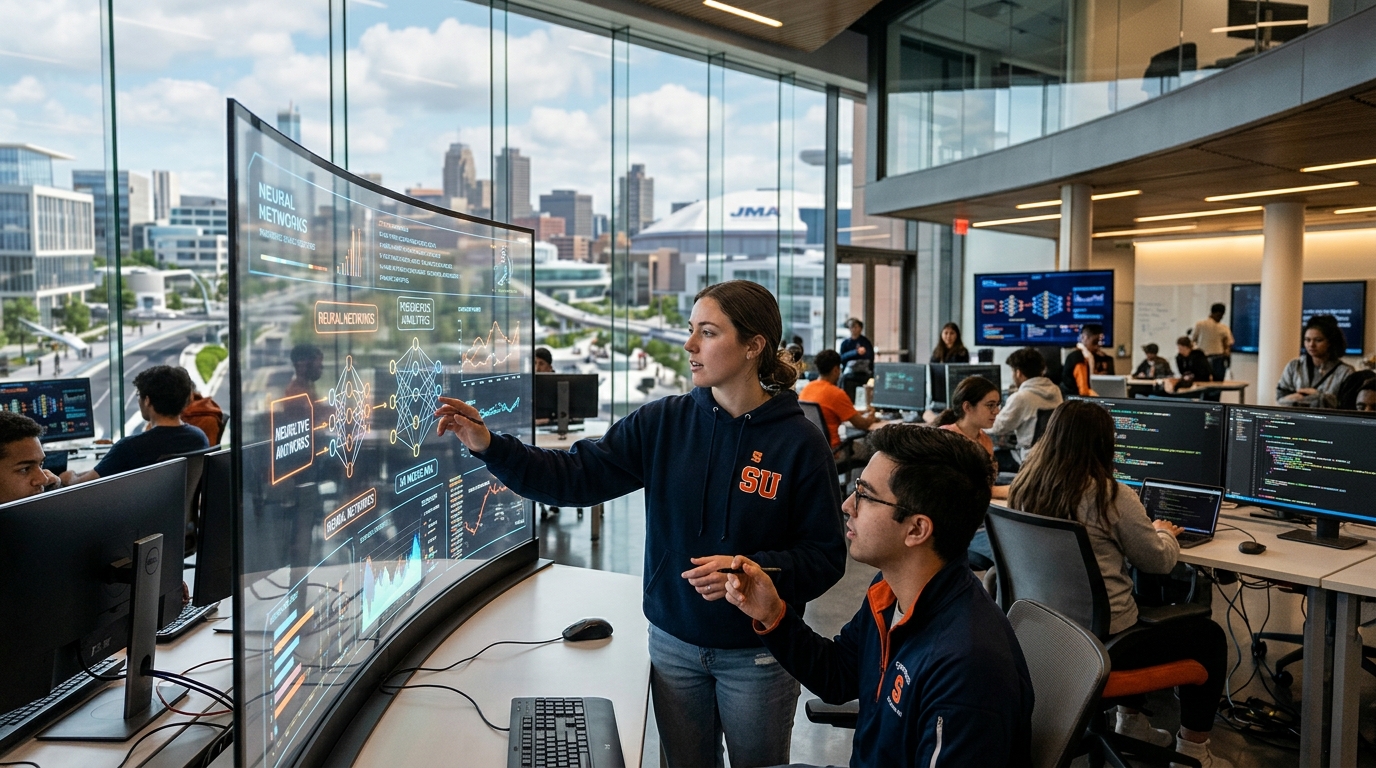
In an era where higher education in the United States faces an unprecedented demographic and economic crisis, Syracuse University is making a bold strategic move. The announcement of new undergraduate and graduate degree programs exclusively focused on Artificial Intelligence (AI) is not merely an academic upgrade; it is a calculated bid for survival in an environment where student enrollment is steadily declining.
The Enrollment Cliff and the Imperative for Innovation
For years, education analysts have warned of the so-called "enrollment cliff" projected for 2025-2026. The decline in birth rates during the 2008 financial crisis is now manifesting as a smaller pool of high school graduates seeking a college education. Syracuse, a private institution with a storied history, has not been immune to these pressures. Falling enrollment numbers strain budgets and force administrations to rethink the very "product" they offer to prospective students.
Artificial Intelligence has emerged as the potential silver bullet. According to university leadership, these new AI programs will not be confined to the College of Engineering and Computer Science. Instead, they will cut across disciplines, integrating with the Newhouse School of Public Communications and the Whitman School of Management. The rationale is straightforward: if a degree does not guarantee immediate professional relevance in tomorrow's economy, students will simply look elsewhere.
Curriculum Design: Moving Beyond Code
The new AI degrees at Syracuse promise a holistic approach that distinguishes them from traditional computer science tracks. The focus is not just on writing code or training Large Language Models (LLMs), but on understanding the broader ecosystem of machine intelligence. Key pillars of the curriculum include:
- AI Ethics and Society: Analyzing algorithmic bias and the socio-economic implications of widespread automation.
- Applied Machine Learning: Hands-on experience in sectors like healthcare diagnostics, climate modeling, and national security.
- Governance and Policy: Preparing students to navigate the complex regulatory landscape that is currently being shaped in Washington and Brussels.
"We are not just training technicians; we are educating the leaders who will define how AI serves humanity, rather than the other way around," stated a senior university official during the program's launch event.
The Credibility Challenge and Market Realities
However, this pivot is not without its detractors. Some academics question whether creating specialized AI degrees is a knee-jerk reaction to a technological trend. There is a legitimate risk that these programs could become obsolete before the first cohort even graduates, given the dizzying pace of AI development. Furthermore, the high cost of tuition remains a significant barrier, and a shiny new tech label may not be enough to offset the burden of student debt for many families.
Syracuse’s strategy reflects a broader trend in American higher education, where universities are evolving from centers of classical liberal arts education into skill-focused incubators for the labor market. The success of this initiative will be measured by whether graduates can secure high-paying roles that justify the investment, especially as AI itself begins to automate entry-level white-collar tasks.
Conclusion: The Future of the University
Syracuse University is placing a significant bet on its future. If successful, it could provide a blueprint for how traditional institutions can reinvent themselves in the digital age. If it fails, it may be remembered as a costly marketing exercise that failed to address the underlying structural issues of the education sector. What is certain is that Artificial Intelligence is not just changing how we work; it is fundamentally reshaping how we prepare for the world.