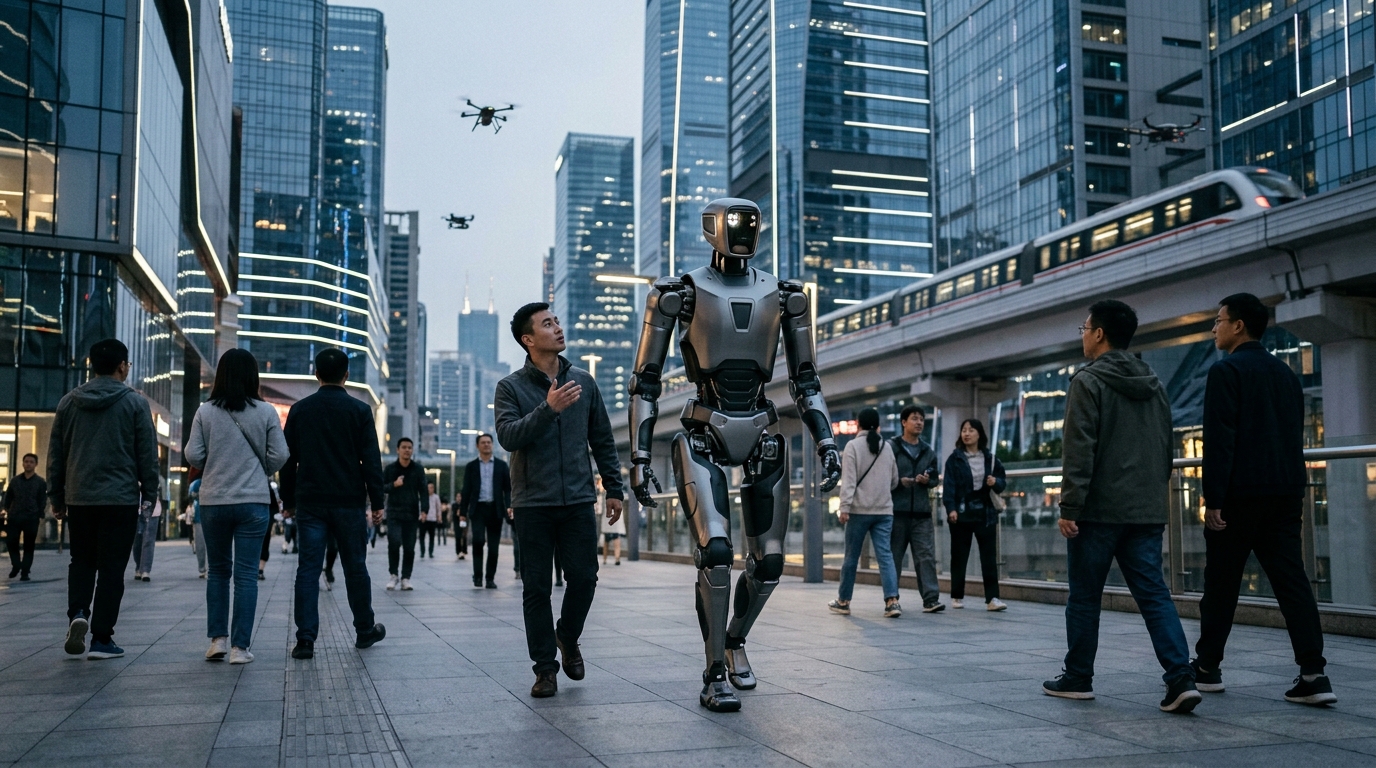
The history of robotics is transitioning from the stage of static automation to the era of "Embodied AI." According to recent market analyses, the AI robotics sector is poised for "blatant growth" in the coming years, fundamentally reshaping the global economy. These are no longer mere machines executing pre-programmed movements on an assembly line; they are entities that perceive, learn, and interact with the physical environment in ways that were, until recently, the stuff of science fiction.
The Driving Force: From LLMs to Multimodal Foundations
The primary catalyst for this vertical ascent is the evolution of Large Language Models (LLMs) into Multimodal Models (LMMs). The ability of a robot to "understand" visual data, process voice commands in natural language, and translate this information into motor actions has bridged the gap between software and hardware. Companies like OpenAI, Google, and NVIDIA are investing billions into "robotics foundation models," which allow robots to generalize knowledge rather than being programmed for a single, specific task.
- Autonomy in Unstructured Environments: New robots can operate in warehouses and homes without prior mapping or rigid constraints.
- Reduced Training Costs: Learning through reinforcement learning and high-fidelity simulations accelerates time-to-market for new models.
- Versatility: The same robotic platform can switch from a packaging role to quality control with a simple software update.
The Rise of Humanoids and Industry 5.0
2026 marks a watershed year for humanoid robots. With Tesla’s Optimus, Figure 02, and Boston Dynamics’ Atlas entering pilot production phases, the conversation has shifted from "if" to "when." These robots are designed to fill jobs characterized as "3D" (Dirty, Dull, Dangerous). However, economic analysis suggests their penetration will soon extend to the service sector, healthcare, and complex logistics.
"We are not just building tools. We are building collaborators that can understand the context of human intent," industry leaders assert.
The market is driven not only by technological supply but by imperative demand. Aging populations in developed economies and labor shortages in critical sectors make automation a necessity for maintaining global productivity. Asia, led by China and Japan, currently leads in adoption rates, but the US and Europe are accelerating investments to ensure technological sovereignty in this new arms race.
Challenges and Ethical Dilemmas
Despite investor optimism, this "blatant growth" brings significant challenges. Safety in human-robot interaction remains a top priority, as accidents in industrial settings can have fatal consequences. Furthermore, the issue of labor displacement remains at the heart of the social dialogue. The transition requires a radical retraining of the workforce and, perhaps, a new social contract regarding the distribution of wealth generated by autonomous machines.
In conclusion, the AI robotics market is not just a growing sector; it is the catalyst for a new industrial revolution. Its success will be judged by our ability to integrate these machines in a way that augments human creativity rather than undermining it.