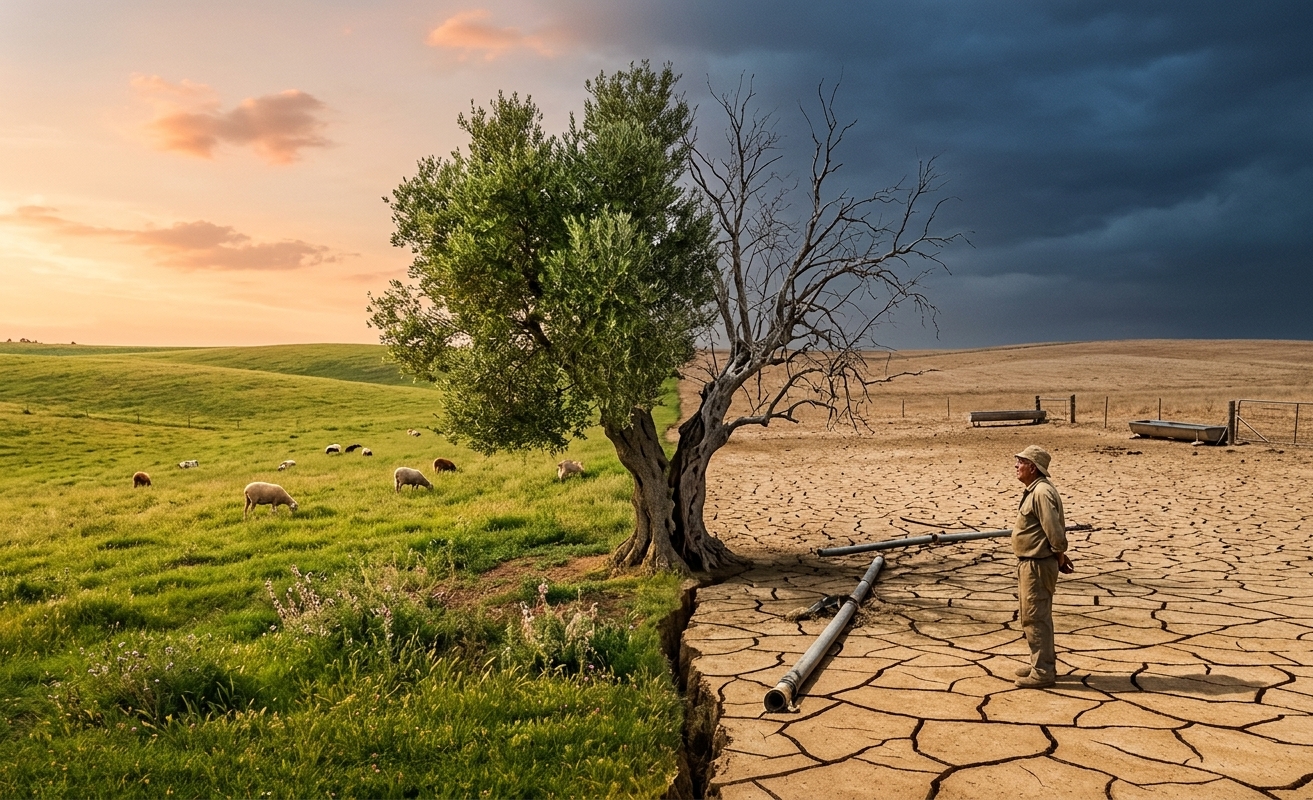
As we navigate the middle of 2026, humanity stands at one of the most critical junctures in its history: the rapid loss of biodiversity and the looming collapse of vital ecosystems. Yet, a new beacon of hope is emerging from the laboratories of Silicon Valley and global research centers. Artificial Intelligence (AI), once perceived primarily as a threat to human labor, is proving to be nature's most formidable ally. AI's capacity to process vast amounts of real-time data allows scientists to understand and protect the planet in ways that were unimaginable just a decade ago.
The Revolution of Acoustic Monitoring and Satellites
One of the most striking applications of AI in conservation is the use of bioacoustics. In tropical forests from the Amazon to the Congo, researchers have deployed thousands of autonomous sound sensors. These devices record the forest's soundscape 24/7. This is where AI steps in: deep learning algorithms can identify the calls of rare bird species, the sound of chainsaws from illegal loggers, or even the distinct crack of a poacher's rifle. Analysis that previously took human researchers months is now completed in seconds, enabling authorities to intervene almost instantly.
Simultaneously, satellite monitoring has reached a new level of granularity. Systems like Microsoft’s Planetary Computer and Google Earth Engine utilize AI to analyze high-resolution imagery, detecting land-cover changes at a scale of just a few meters. This allows for precise calculations of carbon sequestration in forests and the monitoring of coral reef health, providing policymakers with the empirical evidence needed to enforce environmental regulations effectively.
Predictive Modeling and the Fight Against Extinction
AI is not limited to documenting the present; it is also helping us forecast the future. By employing complex climate models, scientists can now predict how climate change will impact specific habitats. For instance, algorithms can identify which regions will remain cool enough to host species migrating due to rising temperatures, facilitating the creation of "climate refugia." Furthermore, AI is being utilized in genetics to save species on the brink of extinction by analyzing genomes to identify the most resilient individuals for breeding programs.
"Artificial Intelligence gives us the eyes and ears we need to monitor the planet at a scale that humans alone could never achieve," notes a leading biologist from Conservation International.
However, the deployment of AI is not without its hurdles. The immense computational power required to train these models carries its own environmental footprint. The irony of using energy-intensive data centers to save the climate is a paradox that the tech community is actively addressing through "Green AI" initiatives and the transition to renewable energy sources for server operations.
Ethics and the Social Dimension: Empowering Local Communities
An often-overlooked aspect is how AI can democratize conservation efforts. In many instances, indigenous populations—the most effective guardians of biodiversity—are gaining access to AI tools that allow them to map their territories and document land violations. Mobile applications that identify plant and animal species enable "citizen scientists" to contribute to global databases, turning every hiker into a potential field researcher.
In conclusion, Artificial Intelligence is not a silver bullet, but a powerful force multiplier for human endeavor. Its success will depend on the synergy between governments, tech giants, and local communities. If deployed ethically, AI could be the tool that allows us to restore balance with the natural world before it is too late. The challenge for 2026 and beyond is ensuring that technology serves life itself, rather than just the bottom line.