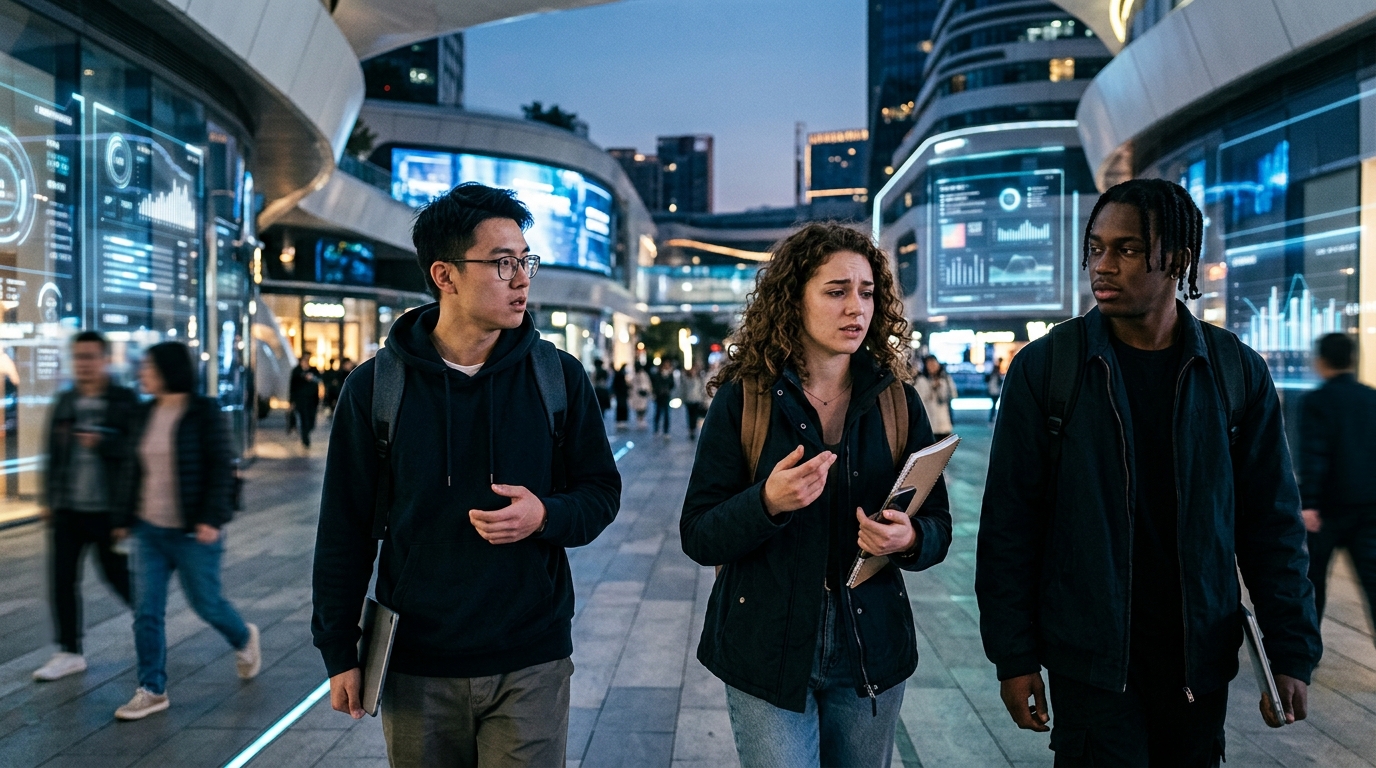
In a world being reshaped at lightning speed by algorithms, traditional education often feels like it is chasing a train that has already left the station. A recent report by U.S. News & World Report highlights a critical pivot: the need for an "outside-the-box" approach to Artificial Intelligence (AI) education that caters to everyone, regardless of age, background, or economic status. We are no longer just talking about code and mathematics; we are discussing a new type of digital literacy that is becoming essential for survival in the 21st century.
Beyond the Programmer Stereotype
For decades, high technology was seen as the fortress of the few—those with degrees in computer science or data science. However, the advent of Generative AI has torn down these walls. Modern educational approaches now focus on "understanding logic" rather than just "writing code." Students in remote areas, mid-career professionals looking for a pivot, and even artists are discovering that AI is a tool that can be trained to speak their own language.
New educational initiatives are utilizing gamification, experiential workshops, and open-access platforms to demystify how large language models function. In many regions, we see a growing trend for seminars connecting AI to agriculture or tourism, proving that this knowledge isn't just for Silicon Valley. The challenge is to transform the fear of replacement into excitement for human-machine collaboration.
Ethics and Critical Thinking as Core Subjects
An "outside-the-box" education cannot be purely technical. The U.S. News report emphasizes that teaching the ethical use of AI is just as important as teaching prompt engineering. In an environment where fake news and algorithmic biases are daily risks, the citizen of the future must be able to question the output provided by a machine. Critical thinking is emerging as the ultimate "soft skill" of our era.
- Analyzing algorithmic bias: How past data can poison the future.
- The importance of intellectual property in the age of Generative AI.
- Ensuring privacy and understanding the boundaries between human and artificial creativity.
These topics are no longer luxuries for academic symposia; they are being integrated into the curricula of schools and community centers. Education must create "thinking users" rather than just "technology consumers."
Democratizing Knowledge and the Skills Gap
The biggest challenge remains accessibility. While tech giants offer free certifications, the gap between those with high-speed internet and modern hardware and those without remains vast. "Alternative" education proposes solutions such as offline learning and the use of low-spec hardware to run AI models locally.
"AI education is the new civil right. Anyone left behind will find themselves in a new form of digital illiteracy that will exclude them from the labor market and social participation."
In conclusion, the shift toward a more holistic and accessible AI education is not just an educational trend but a social necessity. As 2026 progresses, the ability to understand and direct technology will determine who prospers in the new economy. Knowledge must flow freely, outside the narrow confines of university lecture halls, reaching every corner of the globe.