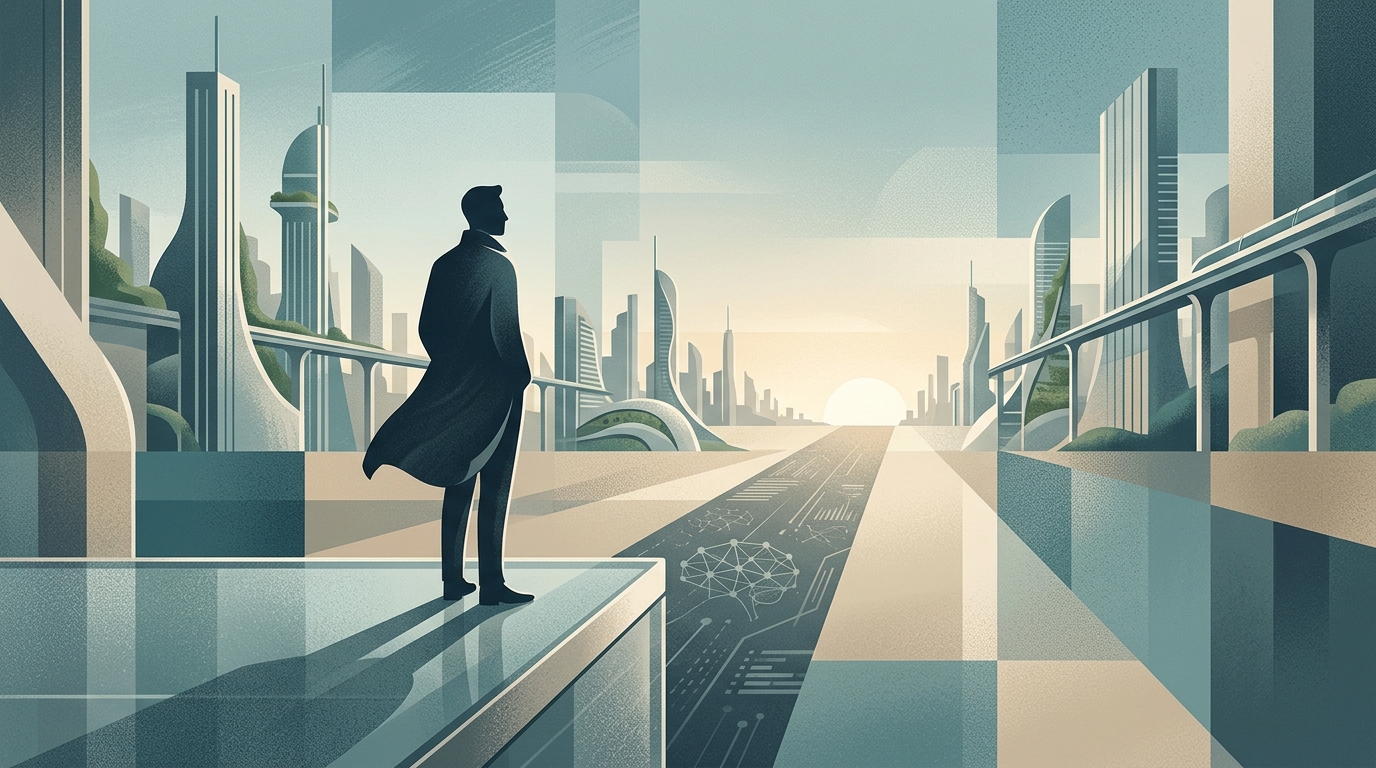
In June 2026, digital history reached a definitive turning point. According to latest data from global infrastructure providers and cybersecurity firms, the "Great Inversion" has occurred: for the first time since the inception of the World Wide Web, machines are browsing, searching, and interacting with digital content more than human beings. What was once a niche concern or a dystopian conspiracy theory—the "Dead Internet Theory"—has become a verified statistical reality.
This shift was not an overnight anomaly but the culmination of the explosive rise of "Agentic AI." These autonomous systems do not merely scrape data for training purposes as their predecessors did. Instead, they perform complex tasks on behalf of their users: from comparing insurance premiums and planning multi-city itineraries to executing real-time business logic and code deployment. The internet is rapidly evolving from a visual medium designed for human eyes into a massive, interconnected API for algorithms.
The Rise of the Synthetic User
For decades, web design was a study in human psychology. Colors, ad placements, and navigation structures were meticulously crafted to capture and hold human attention. Today, the majority of visits to a website are no longer about "reading" in the traditional sense. AI agents enter the backend or the DOM (Document Object Model), extract the required information in milliseconds, and deliver it to the user via a chat interface or a summary, bypassing the visual experience of the site entirely.
This evolution triggers an existential crisis for the internet's traditional revenue model. If a human never sees the website, who clicks the ads? The advertising industry is in a state of upheaval as legacy metrics like pageviews and bounce rates lose their relevance. We are moving from an attention economy to a data utility economy.
The Dead Internet Theory vs. Functional Reality
The theory that the internet is "dead"—populated only by bots talking to other bots—is gaining a new, more pragmatic dimension. It is not necessarily a malicious deception but a functional necessity. As the volume of global information grows exponentially, humans are biologically incapable of processing it without AI assistance. Consequently, we have delegated our digital presence to synthetic proxies that filter the noise for us.
- 52% of global web traffic is now generated by autonomous AI scripts and agents.
- Traditional CAPTCHAs have become largely obsolete, as AI solves them faster and more accurately than humans.
- Websites are being redesigned for "Machine Readability" over "Human Intuitiveness."
However, a significant risk looms: the "Self-Referential Loop." As AI consumes content primarily generated by other AI, the quality of information risks systemic degradation. If the web becomes a closed loop of machines recycling synthetic data, human creativity and primary source information could be drowned out by an ocean of automated noise.
Toward a New Digital Social Contract
This transition demands a radical reassessment of how we define digital presence. Governments are already debating the necessity of "Digital Passports" or "Proof of Humanity" protocols to access specific services. Simultaneously, content creators are demanding new payment models where AI firms pay for the "right to crawl," replacing the crumbling foundation of ad-based revenue.
"The internet isn't dying; it is simply evolving into something that is no longer exclusively for us. We are the architects of a world where we are now the minority residents," says a leading digital trend analyst.
In conclusion, 2026 will be remembered as the year humans handed over the keys of digital navigation to their creations. Whether this leads to an era of unprecedented efficiency or a digital landscape alienated from the human experience remains to be seen. One thing is certain: the era of "surfing the web" as a human pastime is officially over.