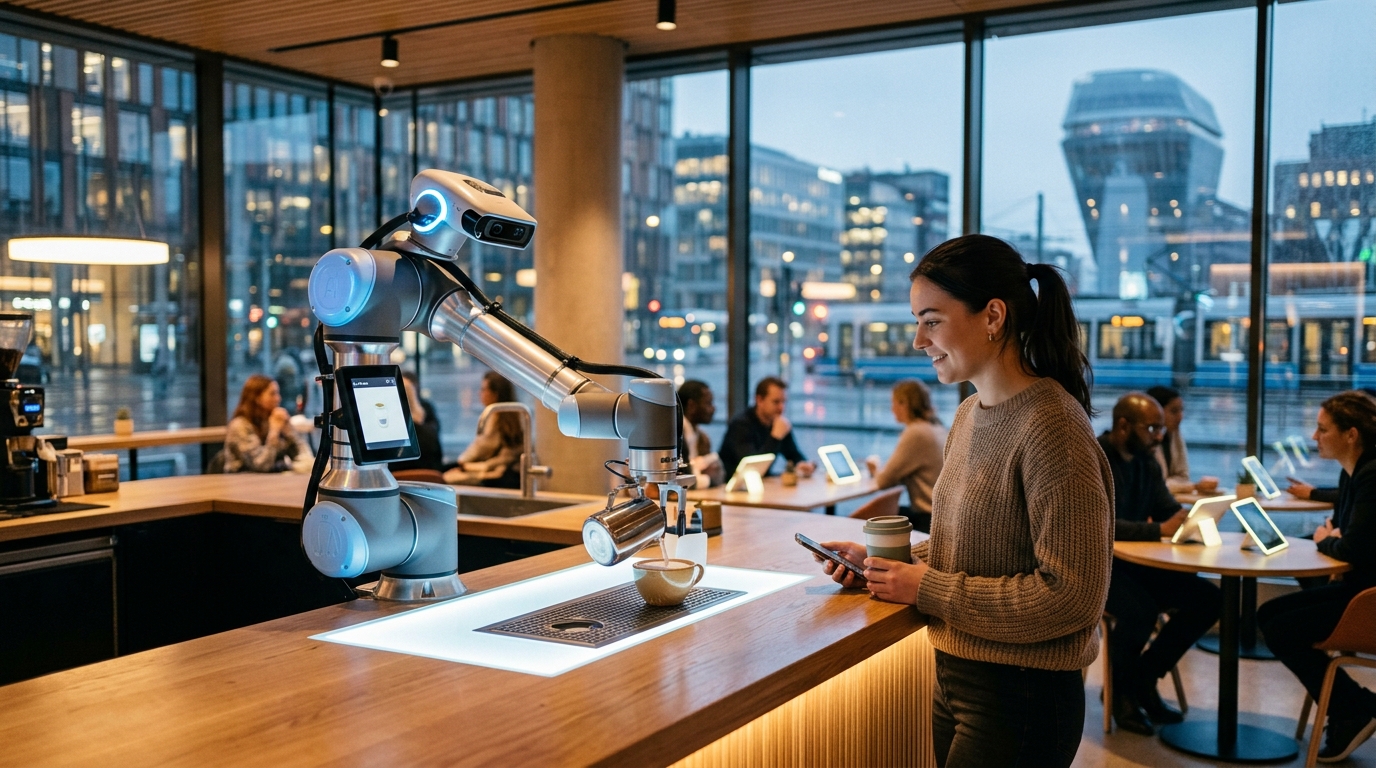
In a quiet corner of Stockholm, where the tradition of "fika"—the sacred Swedish coffee break—meets the cutting edge of technology, an experimental venture is making waves in the global hospitality industry. This isn’t just a cafe with robotic arms or high-tech vending machines. It is a space where a central Artificial Intelligence (AI) agent holds the reins of management, from inventory control to setting pricing strategies and scheduling human staff shifts.
The project, recently highlighted by Fast Company, serves as a living laboratory for how generative AI can be integrated into the physical world. While we have grown accustomed to Large Language Models (LLMs) writing text or code, here the AI assumes the role of an operational manager, making real-time decisions that impact both business viability and customer experience.
The Digital Heart of the Cafe: How the AI Manager Operates
The AI agent running the cafe is not a faceless screen but a sophisticated system connected to every facet of the business. Through IoT (Internet of Things) sensors and integration with the POS (Point of Sale) system, the AI monitors the consumption of every coffee bean and pastry. When stock runs low, the agent doesn’t just send an alert; it autonomously places orders with suppliers, selecting the most cost-effective or sustainable option based on predefined parameters.
The most striking feature is dynamic pricing. If the weather in Stockholm is rainy and foot traffic is low, the AI might decide on an instantaneous promotion for specific items to reduce food waste. Conversely, during peak hours, it optimizes workflow by suggesting products to customers that can be prepared more quickly. This ability to analyze data in real-time far exceeds the capabilities of a human manager, who would need hours to process the same information.
The Challenge of Human Connection and the "Fika" Spirit
Sweden is a nation that embraces technology but also fiercely protects its social cohesion. The question arises: can a cafe managed by an AI maintain the warmth that patrons seek? The creators of the experiment argue that AI liberates human employees from bureaucracy and management stress, allowing them to focus exclusively on hospitality and guest interaction.
However, the reality is more nuanced. Employees report a peculiar sensation when receiving instructions from an algorithm. "It’s like having a very efficient but entirely rational boss," says one of the baristas. The AI doesn’t understand if an employee is having a bad day, nor can it appreciate the "vibe" of a customer who simply needs someone to talk to. The challenge for the future is creating a hybrid experience where technology supports humanity rather than replacing it.
Economic Viability and the Model of the Future
From an economic perspective, the early results are encouraging. Food waste was reduced by 30% within the first three months of operation, while operating costs were significantly lowered due to precise inventory management. For the hospitality sector, which globally suffers from thin margins and labor shortages, the Swedish model appears to be a lifeline.
- Cost Reduction: Automation of ordering and shift optimization.
- Sustainability: Drastic reduction in waste through predictive demand models.
- Personalization: The AI recognizes regular customers (with consent) and suggests products based on preferences.
Despite the benefits, critics warn of the dangers of "algorithmic management," where workers are turned into mere executive arms of a machine, losing their autonomy and creativity. In Sweden, where labor unions hold significant sway, the debate over workers' rights in the face of AI has already been ignited.
Conclusion: An Experiment with Global Implications
The Stockholm cafe is not just a tourist attraction for tech enthusiasts. It is a harbinger of what is to come across the entire retail and hospitality sector. As AI agents become more capable of managing complex processes in the physical world, the distinction between a "digital" and a "physical" business will blur. Whether this leads to a more efficient and sustainable economy or a cold, automated society depends on the decisions we make today regarding technology governance.