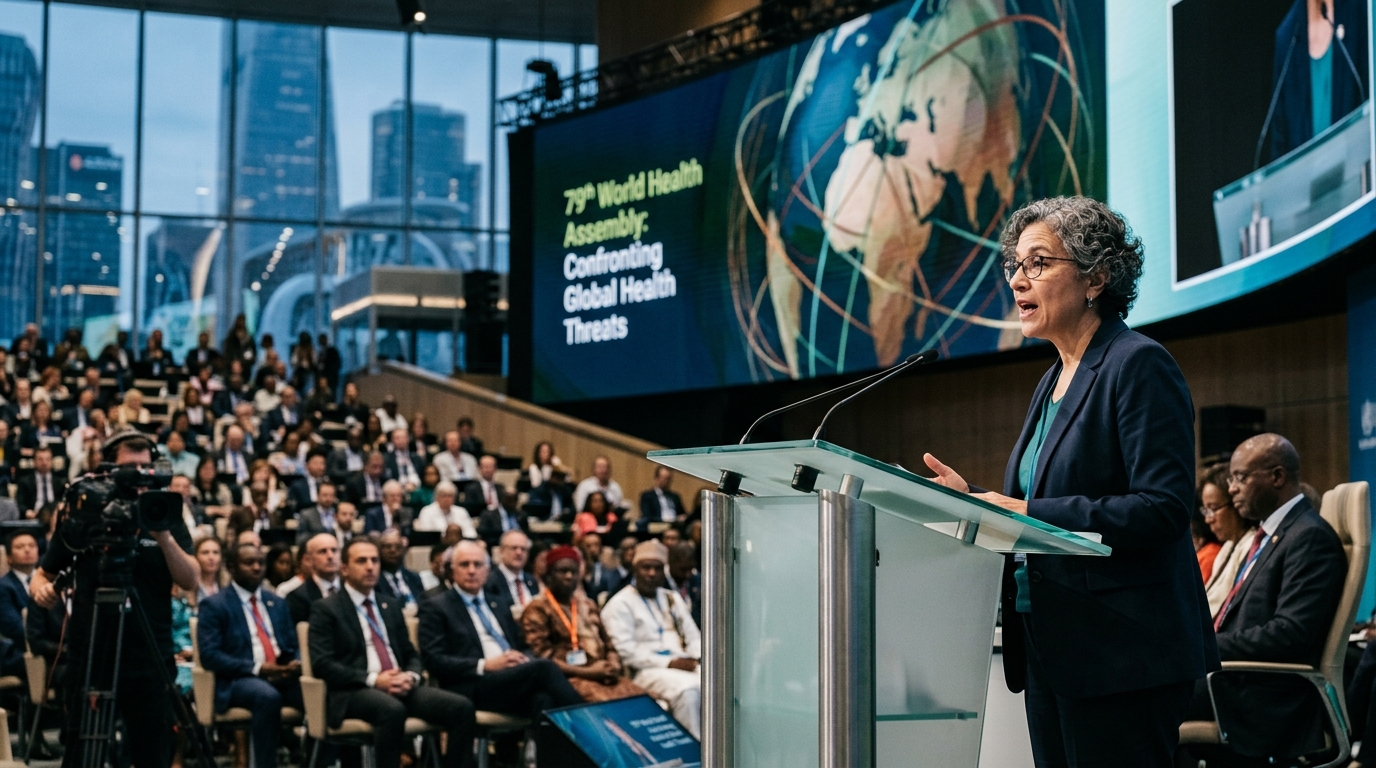
Today, May 18, 2026, the international community's focus shifts to Geneva as the 79th World Health Assembly (WHA) commences. Against a backdrop of profound geopolitical uncertainty and with the lessons of the past decade weighing heavily on every session, health ministers from the WHO's 194 member states are gathered to make pivotal decisions for global security. At the heart of this year's agenda are the recent outbreaks of Hantavirus in Latin America and new clusters of Ebola in Central Africa, stark reminders that zoonotic threats remain the preeminent challenge to public health.
The Resurgence of Lethal Pathogens: Hantavirus and Ebola
Despite significant leaps in medical technology, these viruses continue to instill fear due to their high mortality rates. Hantavirus, primarily transmitted by rodents, has seen an alarming spike in cases this year. Scientists are currently investigating whether shifting climate patterns have altered the migration and behavior of its carriers. Simultaneously, Ebola remains a persistent threat. New outbreaks in the Democratic Republic of Congo are testing the rapid response frameworks established over the last few years, questioning whether our global readiness has truly evolved.
The Assembly will evaluate the efficacy of second-generation vaccines and the feasibility of establishing a global stockpile that is immediately accessible to resource-limited regions. This discussion transcends medicine; it is deeply political. Access to life-saving interventions remains starkly unequal, despite the recurring rhetoric of 'health for all.' The challenge lies in converting these promises into a logistical reality that functions during a crisis.
The Pandemic Accord: A Final Stand for Global Governance
Perhaps the most critical element of this year's Assembly is the finalization of the International Pandemic Treaty (Pandemic Accord). After years of arduous negotiations, nations are nearing a consensus on how to share viral genetic information and ensure the equitable distribution of therapeutics and vaccines. However, significant friction persists. Developing nations are demanding ironclad guarantees for technology transfer, while the powerful economies of the Global North are lobbying to protect the intellectual property rights of their pharmaceutical giants.
- Equitable access to medical countermeasures: Creating a mechanism that ensures no nation is left behind during a surge.
- Data transparency: The obligation of states to report new outbreaks immediately without fear of economic repercussions or travel bans.
- WHO Financing: Finding a sustainable funding model that decouples the Organization from earmarked voluntary contributions that often come with political strings attached.
Artificial Intelligence in Epidemiological Surveillance
A major innovation under discussion is the integration of Artificial Intelligence (AI) into global surveillance systems. Modern predictive models can now synthesize satellite data, climate fluctuations, and social trends to identify potential spillover events before they escalate into full-blown epidemics. The WHO is proposing the creation of a 'Global AI Data Hub,' designed to serve as a digital sentinel for humanity.
"We can no longer afford to rely on reactive policies. Prevention through advanced technology and unwavering international cooperation is the only way to avoid another catastrophe on the scale of COVID-19," a senior official remarked during the opening ceremony.
In conclusion, the 79th World Health Assembly is far from a mere bureaucratic exercise. It represents a moment of reckoning for international health diplomacy. Its success will be measured by whether global leaders can transcend 'health nationalism' to build a genuine global safety net against the looming shadows of Hantavirus, Ebola, and the pathogens yet to come.