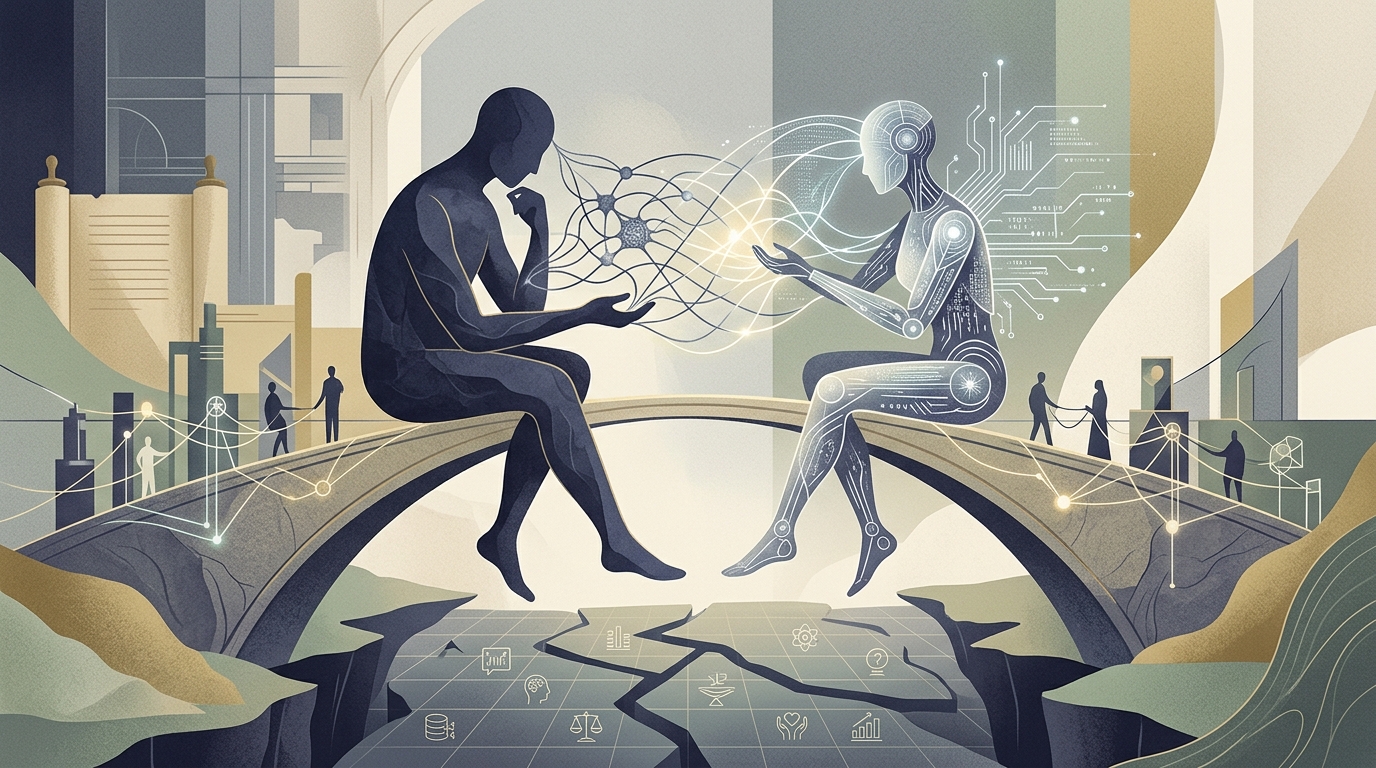
The promise of Artificial Intelligence (AI) in healthcare has always been one of optimization: faster diagnoses, personalized treatments, and more efficient resource management. However, a darker side of this technological revolution is now emerging, particularly in the United States, as health insurance giants integrate algorithms into their coverage approval processes. What corporations label as 'efficiency,' patients and physicians experience as an impersonal, mechanical denial of necessary care.
The Mechanical Gavel: How AI Replaced Clinical Judgment
At the heart of the controversy are algorithms like 'nH Predict,' a tool used by major insurance groups to forecast recovery times for patients in post-acute care facilities. According to recent investigations and class-action lawsuits, these systems often override the recommendations of attending physicians, imposing rigid discharge timelines based on statistical averages rather than the individual needs of the patient.
The problem lies in the 'black box' nature of these algorithms. Doctors report that coverage denial decisions are issued with mathematical precision, often exactly at the moment the system predicts a patient 'should' have recovered, regardless of whether they can actually stand on their feet or if they are at high risk of relapse. This automation of denial creates a dangerous precedent where statistical probability outweighs clinical reality.
'Unintended' Consequences or a Strategy for Profit Maximization?
The term 'unintended consequences' is frequently used by tech proponents to describe algorithmic errors. However, critics argue that when an algorithm systematically leads to fewer payouts from the insurer's side, the result is not accidental but structural. The consequences for elderly and vulnerable patients are devastating: premature evictions from nursing facilities, financial exhaustion of families trying to cover costs out-of-pocket, and a generalized erosion of trust in the healthcare system.
In many cases, patients who appeal these decisions are vindicated at a rate exceeding 90% in secondary review boards. This statistic is telling: if the vast majority of algorithmic denials are overturned by human judges, then AI is not functioning as a tool for precision, but as a firewall for corporate profits, betting on the fact that most patients will lack the stamina or resources to file an appeal.
Regulatory Pushback and the Future of Transparency
Regulatory bodies, such as the Centers for Medicare & Medicaid Services (CMS) in the US, have begun to intervene. New rules now explicitly state that insurers cannot rely solely on algorithms to limit coverage beyond traditional Medicare criteria. The requirement for 'human-in-the-loop' is becoming the new regulatory mantra, but its practical implementation remains challenging.
- Insurers must demonstrate that algorithms take into account individual medical history.
- Transparency regarding the training data of AI models is becoming mandatory.
- Physicians are gaining the right to challenge algorithmic decisions through simplified procedures.
The challenge for the future is balance. AI can indeed identify cases of fraud or unnecessary spending, which is vital for the sustainability of healthcare systems. However, when technology is used as a weapon for cost-cutting at the expense of human dignity, society must set strict boundaries. Health is not a linear optimization problem; it is a deeply human condition that requires empathy—something no code can, for now, simulate.
"Technology should be the doctor's crutch, not their replacement," says one of the plaintiffs in a class-action lawsuit against a major insurer.
In conclusion, the case of 'unintended consequences' in health insurance serves as a critical lesson in AI ethics. As we move toward an era of total automation, ensuring that humans remain at the center of decision-making is not just a legal necessity but a moral imperative that will define the quality of our civilization in the coming decades.