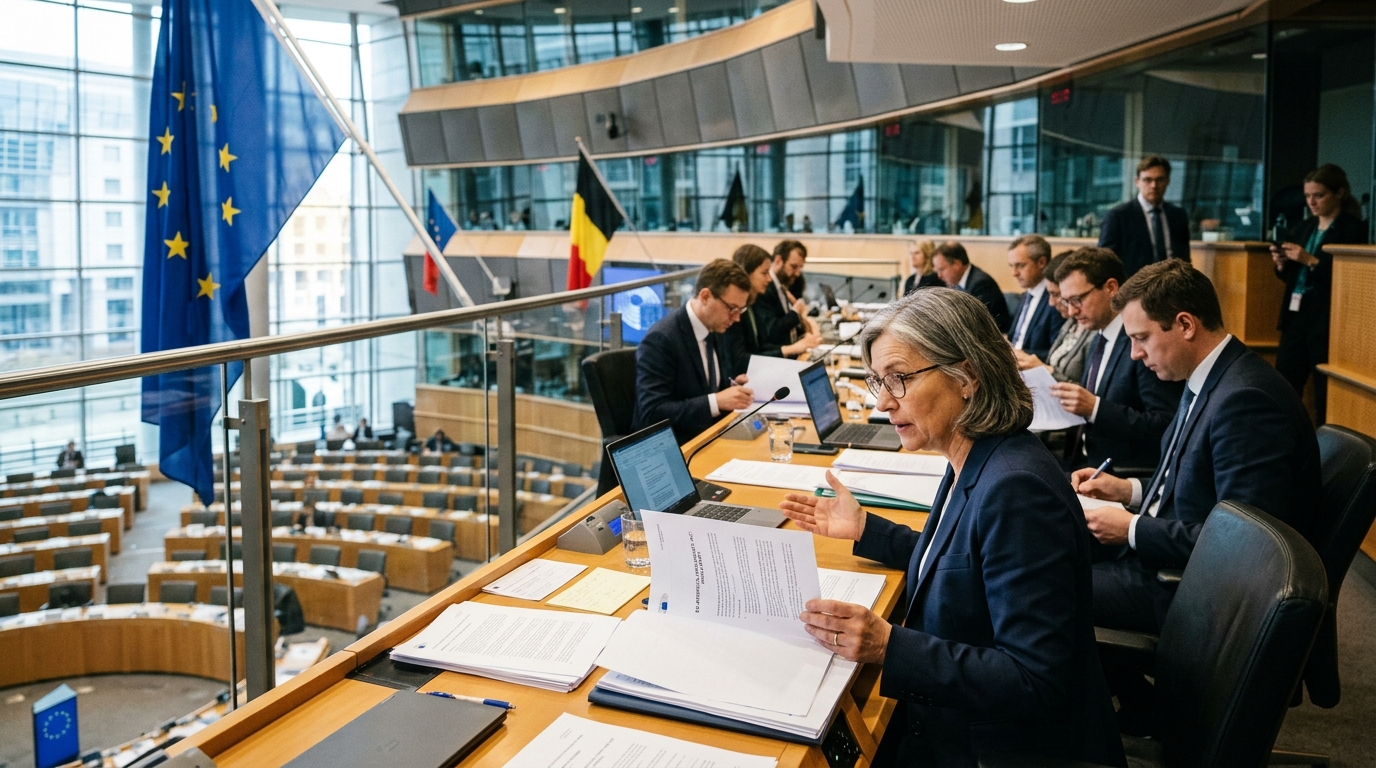
The rapid evolution of Generative Artificial Intelligence (AI) has brought a darker side that threatens the privacy and dignity of millions, predominantly women. 'Nudification' apps, which use AI to digitally remove clothing from photos of dressed individuals with chilling realism, have become tools of harassment, revenge, and humiliation. In a decisive move to curb this crisis, the European Union is finalizing a robust legal framework aimed at the total ban and criminalization of these practices across all member states.
The Legislative Arsenal: The Directive on Violence Against Women
At the heart of the EU's crackdown is the new Directive on combating violence against women and domestic violence. For the first time at the EU level, the creation, distribution, and possession of non-consensual sexual material generated or altered via AI (deepfakes) will be categorized as a criminal offense. Brussels recognizes that digital violence is no less traumatic than physical violence, and this legislation fills a massive void that previously allowed creators of such apps to operate in a 'grey zone' of legal ambiguity.
The new laws do not merely target the users who generate the content; they extend to the platforms and developers who facilitate these acts. Under the new framework, tech companies will be mandated to remove such content immediately upon notification, while developers of apps whose primary or sole purpose is 'digital undressing' will face severe prison sentences and crippling fines.
The Technological Challenge and App Store Accountability
Enforcement remains one of the most complex hurdles due to the decentralized nature of the internet. Many of these applications are not hosted on mainstream platforms like Apple’s App Store or Google Play but are instead distributed through websites based in third-party jurisdictions. However, the EU intends to leverage the Digital Services Act (DSA) to compel search engines and internet service providers to block access to such services within European borders.
- Mandatory AI Labeling: Every AI-generated image must carry invisible watermarks indicating its synthetic origin.
- Victim Rights Empowerment: Victims will have the right to expedited judicial assistance to ensure the removal of material from across the entire web.
- App Store Liability: Platforms will be held legally responsible if they continue to permit the download of software that violates non-consensual content regulations.
Experts warn that the legislation must remain 'technology-neutral' to avoid becoming obsolete as AI evolves. The next generation of tools may run locally on user devices, bypassing central servers entirely, which necessitates a shift from targeting hosting providers to targeting the possession and use of the software itself.
Societal Implications and the Sanctity of the Human Image
Beyond legalities, the EU initiative sparks a profound debate on AI ethics. The ease with which an individual's face or body can be 'stolen' and placed into degrading scenarios represents an existential threat to the concept of consent. Across the globe, AI-powered 'revenge porn' incidents have surged, frequently targeting underage students, making the need for stringent regulation a matter of public safety.
"Technology cannot serve as an excuse for the violation of fundamental human rights. Our image is our identity, and the EU is sending a clear message: digital violence is violence, period," stated a senior European Commission official.
In conclusion, the ban on 'nudification' apps is more than just a software market regulation; it is a declaration of principles. Europe seeks to establish itself as the global regulator setting the boundaries between innovation and abuse, ensuring that the digital future remains safe for everyone, regardless of gender or status. This move sets a precedent that other jurisdictions will likely be pressured to follow as the human cost of unregulated AI becomes impossible to ignore.