The image of a robot patrolling a warehouse or a robotic arm sorting parcels with the precision of an experienced worker is no longer a science fiction scenario. Today, "Embodied Artificial Intelligence" (Embodied AI) is the spearhead of technological evolution, and the impressive part is that at the heart of this revolution beats Greek DNA. From the laboratories of Silicon Valley to the research centers of Athens and Crete, Greek scientists and entrepreneurs are redefining the relationship between humans and machines.
The Greek Stamp on Global Robotics
It is no coincidence that some of the most innovative companies in the field of robotics have been founded or are staffed by Greeks of the diaspora as well as the domestic scene. A characteristic example is Dexterity AI, led by Samir Menon, which has managed to give robots the ability to "feel" and adapt to their environment, solving problems that were considered insurmountable for decades. The use of advanced machine learning algorithms allows these machines to perform warehouse tasks with speed and flexibility that surpasses traditional automation systems.
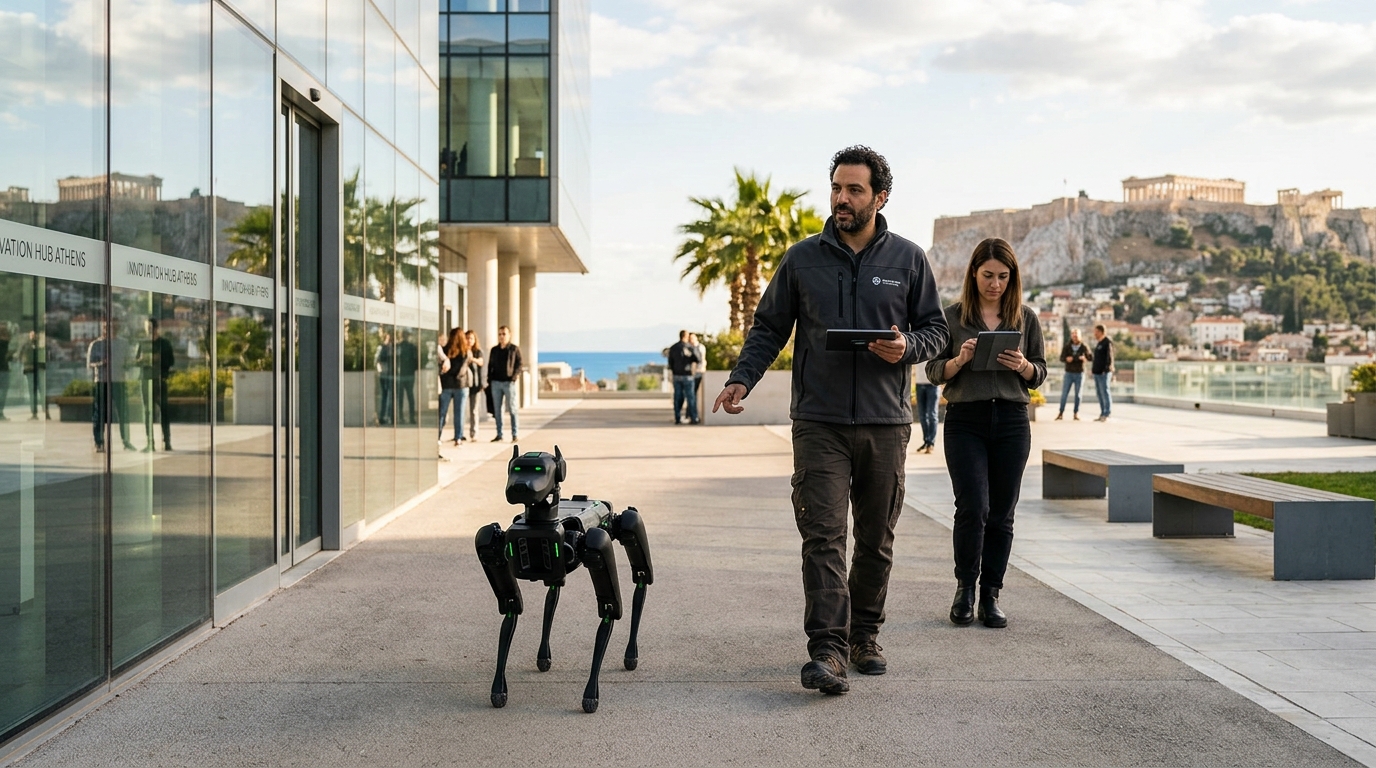
At the same time, in Greece, the National Centre for Scientific Research "Demokritos" and the Foundation for Research and Technology - Hellas (FORTH) continue to produce knowledge and technology that fuels the international market. The domestic startup ecosystem, although smaller in size, demonstrates remarkable extroversion, developing solutions for shipping, security, and precision agriculture. The connection between academic research and the labor market is now closer than ever, creating a new generation of engineers who are not afraid to compete with tech giants.
Guard Robots: A New Era in Security
The security sector is perhaps the one undergoing the greatest transformation. Guard robots, equipped with 360-degree cameras, thermal sensors, and facial recognition systems, offer a continuous presence that humans are unable to provide. These machines do not get tired, do not get distracted, and can operate under adverse weather conditions or in dangerous environments.
- Autonomy and Decision Making: Thanks to AI, robots can recognize suspicious behavior and alert the control center in real-time.
- Risk Reduction: In cases of fire or chemical leaks, robots enter the site first, providing critical information without risking human lives.
- Cost and Efficiency: In the long run, the use of robotic systems reduces the operating costs of security companies, allowing humans to focus on supervisory and strategic roles.
"Artificial intelligence does not replace humans; it gives them the tools to exceed their physical limitations," a sector executive characteristically states.
The Workers of the Future: From Production Lines to Daily Life
Beyond security, worker robots are taking over the burden of heavy industry and logistics. Their ability to collaborate with humans (Cobots) is changing the landscape in factories. In Greece, companies operating in the food and pharmaceutical sectors have already begun to integrate such technologies to increase their productivity and ensure the quality of their products.
The "Greek DNA" in these applications is not just about the origin of the creators, but also about a specific design philosophy: the emphasis on flexibility and adaptability. Unlike the rigid systems of the past, the new generation of robots is programmed to learn from its mistakes and continuously improve. This is particularly crucial for small and medium-sized enterprises, which need solutions that can be modified according to changing market needs.
Challenges and Ethical Dilemmas
Of course, this rapid development does not come without challenges. Automation raises serious questions about the future of employment. Although high-skilled jobs are being created, unskilled workers risk being marginalized. Furthermore, the use of robots in surveillance raises concerns about privacy protection and the possibility of misuse of the collected data.
The European Union, through the AI Act, is trying to establish a framework of rules that will ensure technology is developed with a human-centric approach. Greek scientists are actively participating in this dialogue, supporting a balanced approach that promotes innovation without sacrificing fundamental rights. The challenge for Greece is to leverage its talent and transform from a consumer to a producer of high technology, creating an environment that will encourage the repatriation of its brilliant minds.