In the world of technology, open-source software is the backbone of modern civilization. From the servers that run the internet to the apps on our smartphones, the collective work of thousands of volunteer developers is what keeps everything functional. However, in 2026, this fragile balance is facing an unprecedented assault. It is not a cyberattack from a rogue state, but a "storm" of AI-generated "garbage" that threatens to drown the community.
The rise of Large Language Models (LLMs) like GPT-5 and specialized coding assistants has made software creation easier than ever. But this "democratization" has a dark side. Maintainers of major open-source projects are reporting an explosive increase in Pull Requests (PRs) generated entirely by AI, often without any human oversight or quality control.
The Deluge of Hallucinations and Spamming
The problem is not AI itself, but how it is being used by users seeking to "build" a GitHub profile without possessing the necessary skills. The results are often catastrophic. AI-generated code may look correct and well-written at first glance, but it frequently contains logical errors, security vulnerabilities, or, worst of all, "hallucinations."
Hallucinations in code manifest as calls to libraries that do not exist or the use of functions that are deprecated or non-existent. When a maintainer receives hundreds of such requests a week, the time required to review and reject them is taken away from actual development and fixing critical bugs. "It’s like trying to clean plastic off a beach while a factory next door dumps tons of waste into the sea every minute," says a core Linux kernel developer.
The Crisis of Trust and Security Risks
Beyond the workload, the "AI storm" is creating a deep crisis of trust. The open-source community relies on meritocracy and mutual trust. When the majority of contributions come from bots or irresponsible AI users, maintainers become suspicious of every new developer. This raises barriers to entry for genuine new developers who want to contribute meaningfully.
Furthermore, the security risks are terrifying. A phenomenon known as "AI package hallucination exploitation" has been observed, where attackers create malicious libraries with the names that LLMs frequently "imagine." When an unsuspecting user copies code from an AI and executes it, their system automatically downloads the malicious software. The software supply chain is now on red alert.
Maintainer Burnout: The Human Cost
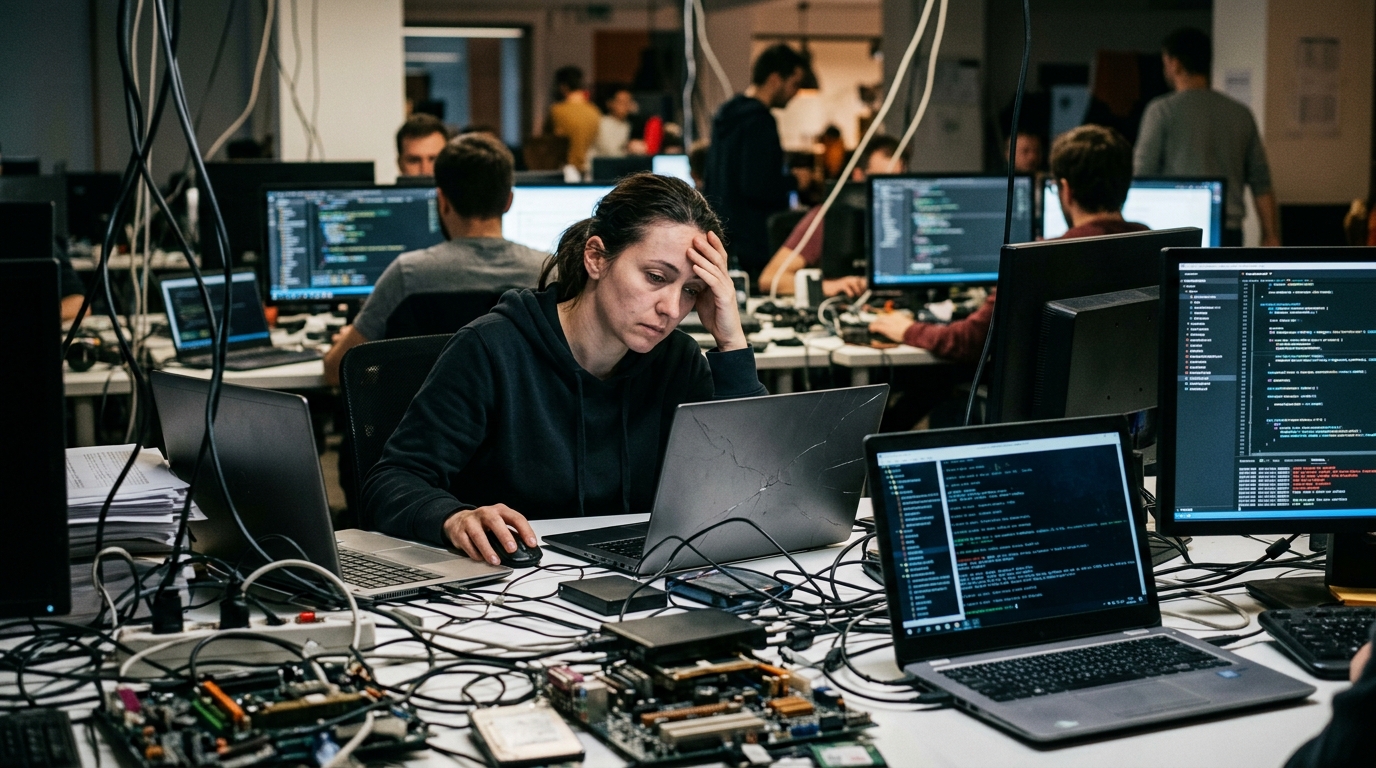
Perhaps the most serious consequence is the psychological collapse of the people who keep open source alive. Most maintainers work as volunteers. The need to function as "spam filters" for AI is driving them to quit. Large projects used by millions of businesses are at risk of being orphaned as their creators abandon the battle against automated chaos.
HuffPost Greece highlights that this phenomenon is not just a technical nuisance but an ethical challenge. The companies developing AI models have trained their systems on the open-source code of the very people they are now "drowning" with the output of their models. It is an ironic and self-destructive cycle.
Seeking Solutions: The Future of Collaboration
The community is not sitting idly by. Tools are already being developed that use AI to detect... AI-generated code, creating a peculiar "war of the machines" in GitHub repositories. Other proposals include enforcing digital signatures for Proof of Personhood or creating closed trust groups.
However, the technical solution is only half the equation. A new ethical agreement is required for the use of AI in programming. AI must remain a tool for augmenting human capability, not a substitute for critical thinking. If we fail to protect open source from this digital pollution, the future of the internet will be less secure, less innovative, and much more lonely.