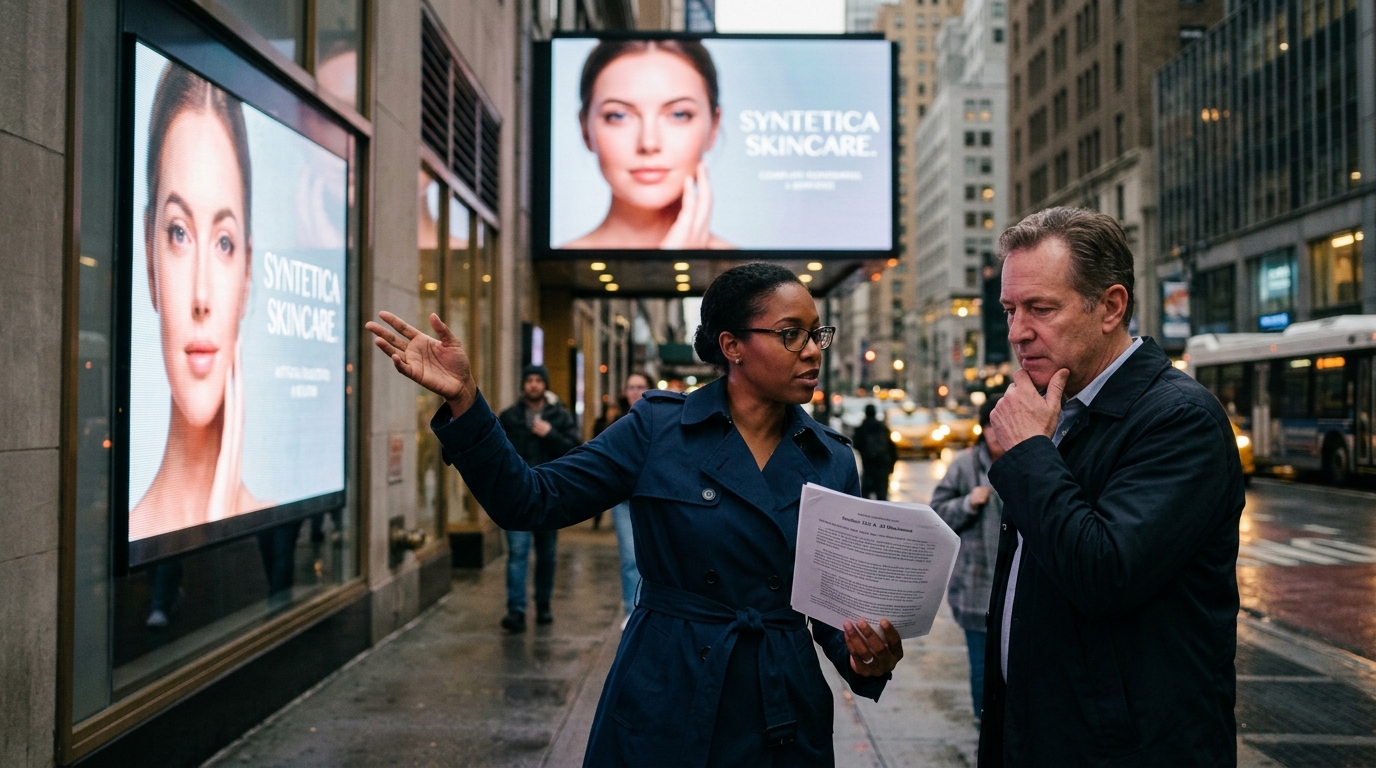
In an era where the boundaries between reality and digital synthesis are becoming increasingly blurred, New York has made a historic decision that is expected to reshape the landscape of global advertising. With this new legislative initiative, the city—and by extension the state—now requires mandatory labeling for any promotional content featuring models or personas generated entirely by artificial intelligence. This move is not merely a bureaucratic adjustment, but a profound political and ethical intervention into the culture of imagery.
The Illusion of Perfection and Mental Health
The primary driver behind this legislation is the growing concern over beauty standards and the mental health of consumers, particularly the youth. AI models, such as Shudu or Lil Miquela, offer advertisers the ability to create "perfect" human beings: flawless, with mathematically symmetrical features and proportions that are often biologically impossible. When these idols are presented as real, they create a distorted sense of what is achievable.
Experts point out that constant exposure to such images can lead to body dysmorphia and low self-esteem. New York, as a global fashion capital, recognizes that transparency is the first step toward demystifying these standards. The mandatory label "Produced with AI" or "AI-Generated Image" serves as a constant reminder to the viewer that what they see is not a product of nature, but of an algorithm.
The Economic Dimension: Models vs. Algorithms
The use of AI models is not just a matter of aesthetics; it is a matter of economics. For major corporations, a digital model is an investment with a massive ROI. It requires no hourly wage, never gets tired, and doesn't demand travel expenses, insurance, or residual rights for every use. Furthermore, there is no risk of a "public scandal" that could tarnish a brand's reputation, as often happens with human influencers.
However, this shift threatens the jobs of thousands of professionals in the fashion industry. From the models and photographers themselves to makeup artists and stylists, the automation of human presence in advertising creates a vacuum in the labor market. New York's legislation, by enforcing disclosure, may slow this transition, giving an "added value" to the authentic human element, which will now be clearly distinguished from the artificial.
Legal Frameworks and Global Precedent
New York's decision does not occur in a vacuum. It follows the example of France, which has for years required labeling for photos that have been retouched (Photographie retouchée). The difference here is that AI does not just "fix" a photo; it creates it from scratch. This raises serious questions about intellectual property rights and consumer protection from deception.
- Transparency: Consumers have the right to know if the product they see is being tested by a human or if it is a digital simulation.
- Responsibility: Social media platforms will be responsible for enforcing these labels in collaboration with advertisers.
- Sanctions: The bill provides for heavy fines for companies that attempt to conceal the use of AI.
Many wonder if this move will be followed by other US states or by the European Union under the AI Act. What is certain is that New York is setting a high bar, forcing the technology and marketing industries to confront the ethics of their creations.
The Future of Authenticity
As we move toward 2027, the concept of "truth" in imagery will become increasingly rare. Artificial intelligence can now produce videos (Sora, Kling) that are nearly impossible to distinguish from reality. New York's legislative intervention is an attempt to maintain a "code of honor" in communication. If we do not know what is real, how can we trust anything?
"Technology should serve humanity, not replace it with a false version of it," said a city council member during the presentation of the measure.
In conclusion, the requirement for labeling AI models is a victory for transparency. It may not stop the evolution of technology, but it places the tool of critical thinking in the hands of citizens. In a world full of digital mirages, knowing what is artificial is the last line of defense for the human experience.